
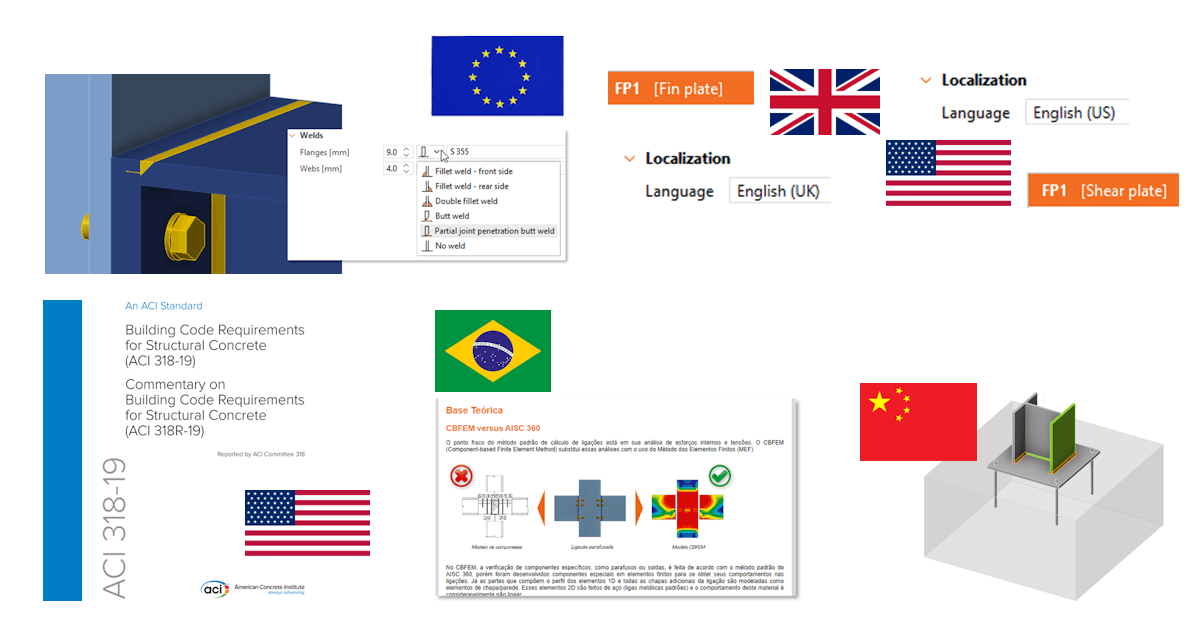


The major regional improvements of version 25.0 are:
Implementation of ACI 318-19 into steel apps
Anchoring checks for the Chinese code (GB)
Theoretical Background for AISC in Brazilian Portuguese
PJP welds for Eurocode (EN)
Partial joint penetration butt welds (PJP) are very often used in situations when the design asks for a smooth geometry, e.g., end plates used for tubular cross-sections in architecture-sensitive structures. Butt welds are not cost-effective, so partial penetration joints are a good choice.
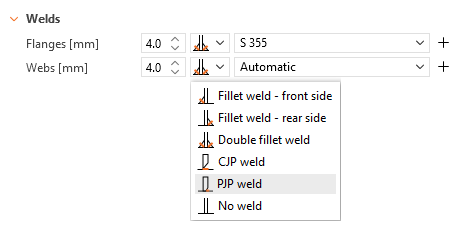
In dedicated operations, the PJP welds can be selected from the drop-down menu.
In the Results tab, the PJP welds are depicted using a special symbol.
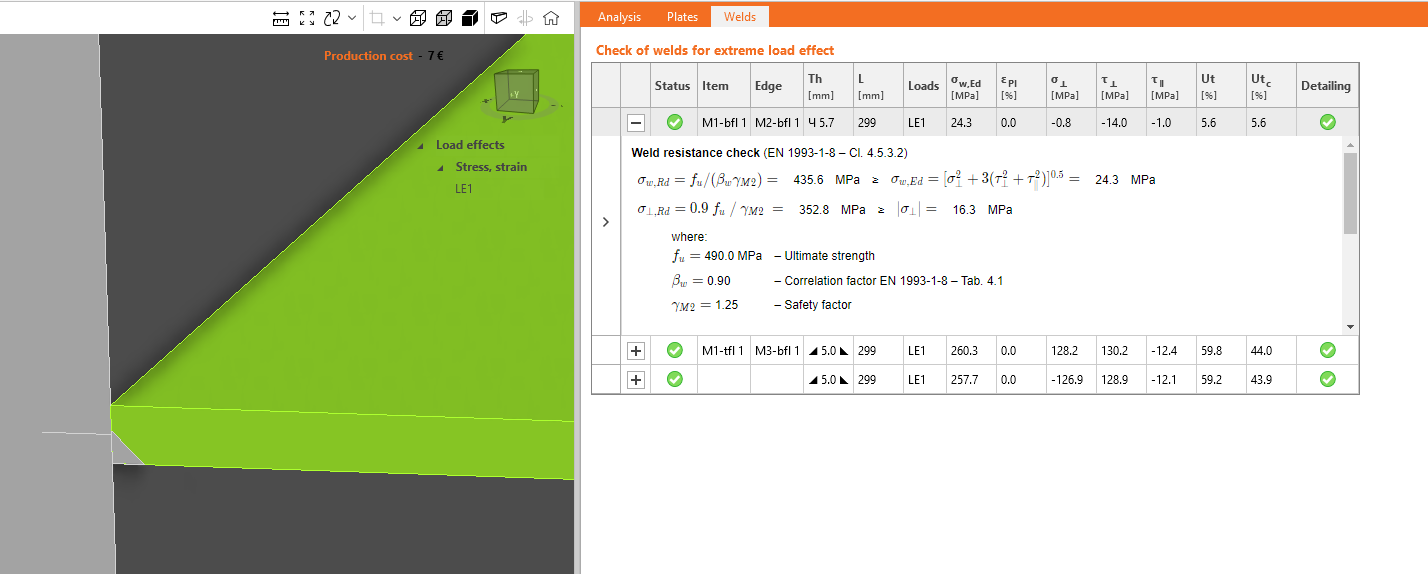
PJP welds are not included in Autodesign of welds.
PJP welds are supported by other standards as well.
Implementation of ACI 318-19 into Steel apps
The latest version of ACI (ACI 318-19) is now implemented in the Connection application. The user can easily choose which version of AISC and which version of ACI will be used in the project and can change it anytime while working in the model.
You can choose which version of steel code and which version of concrete code will be used in the new project in the wizard. It can be combined according to your preferences:
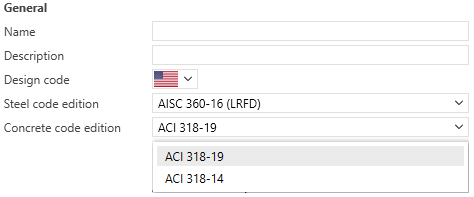
When the model is already created, the code version can be easily changed in the project info dialog:
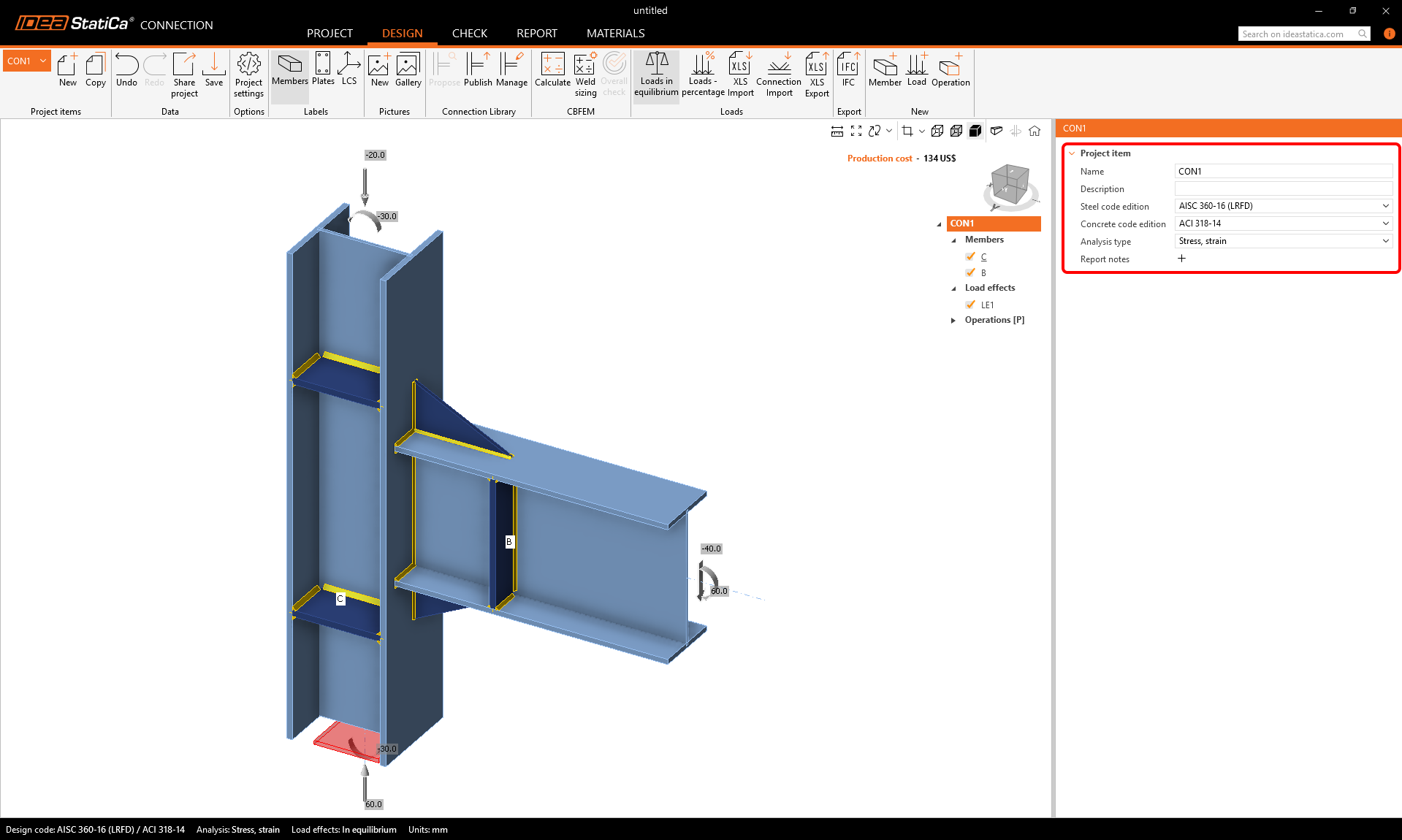
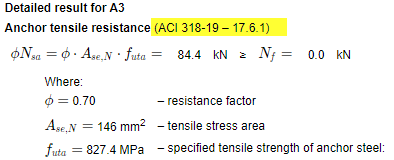
The code references to the selected code version are then used in the report.
The same options are available in IDEA StatiCa Checkbot.
The currently implemented codes for AISC users:
AICS
- AISC 360-10 / 360-16 / 360-22 (LRFD)
- AISC 360-10 / 360-16 / 360-22 (ASD)
ACI
- ACI 318-14 / ACI 318-19
Released in IDEA StatiCa version 25.0.
UK and US English
The terminology used in IDEA StatiCa Connection that is familiar to your regional language makes the adoption and usability of the software much easier and enjoyable.
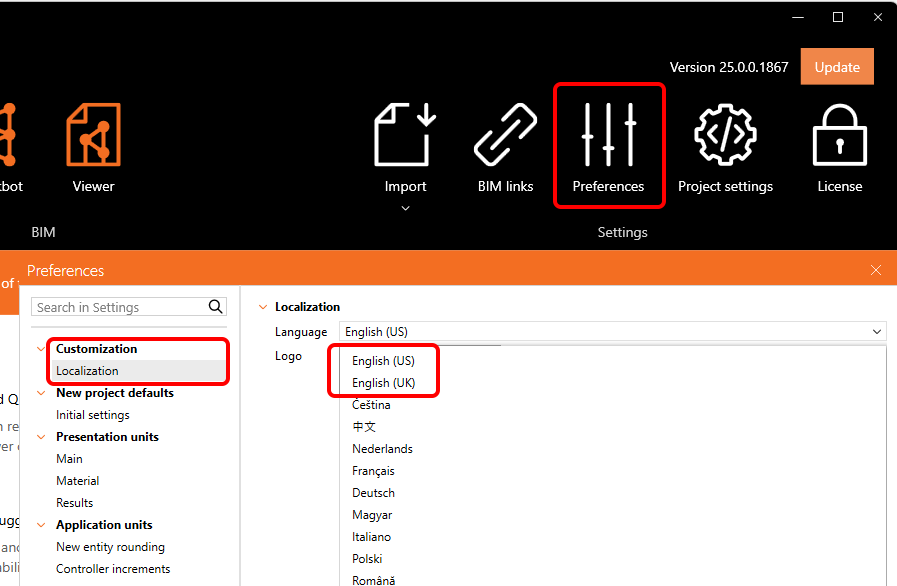
The original English language was renamed to English (US) and a new version of English (UK) was added. English (US) is used as default. You can change your local language in Preferences.
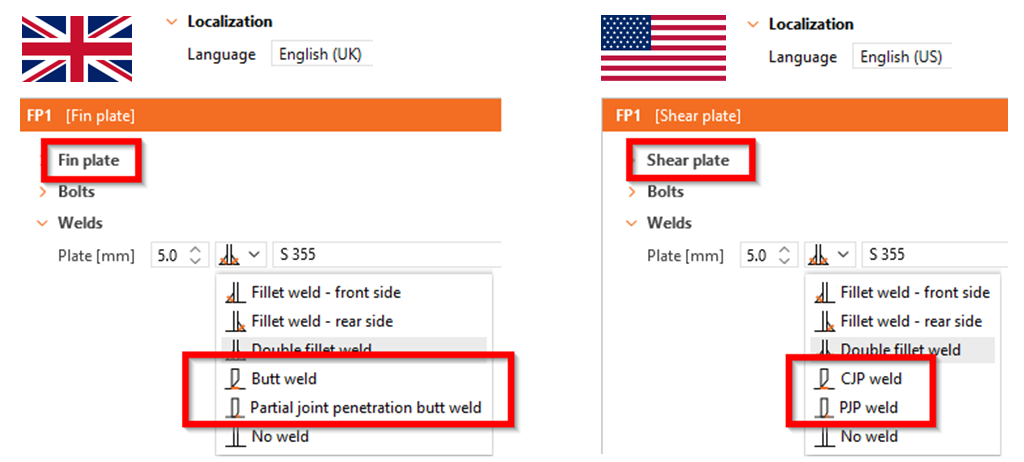
According to the set language, the proper terms of the different manufacturing operations are presented in the model.
Released in IDEA StatiCa version 25.0.
Update of AISC-341 MPRL
Minor modifications of the differences in Ry and Rt, which are used in capacity design for dissipative items, were introduced.
Released in IDEA StatiCa version 24.1.3.
CSA S16:19 weld update
An update was introduced for the weld check according to the Canadian standard: No directional strength increase for a single-sided fillet weld is considered in the weld check.
When a single-sided fillet weld is selected and connected plates are not parallel (with small tolerance), the directional strength increase is not applied.
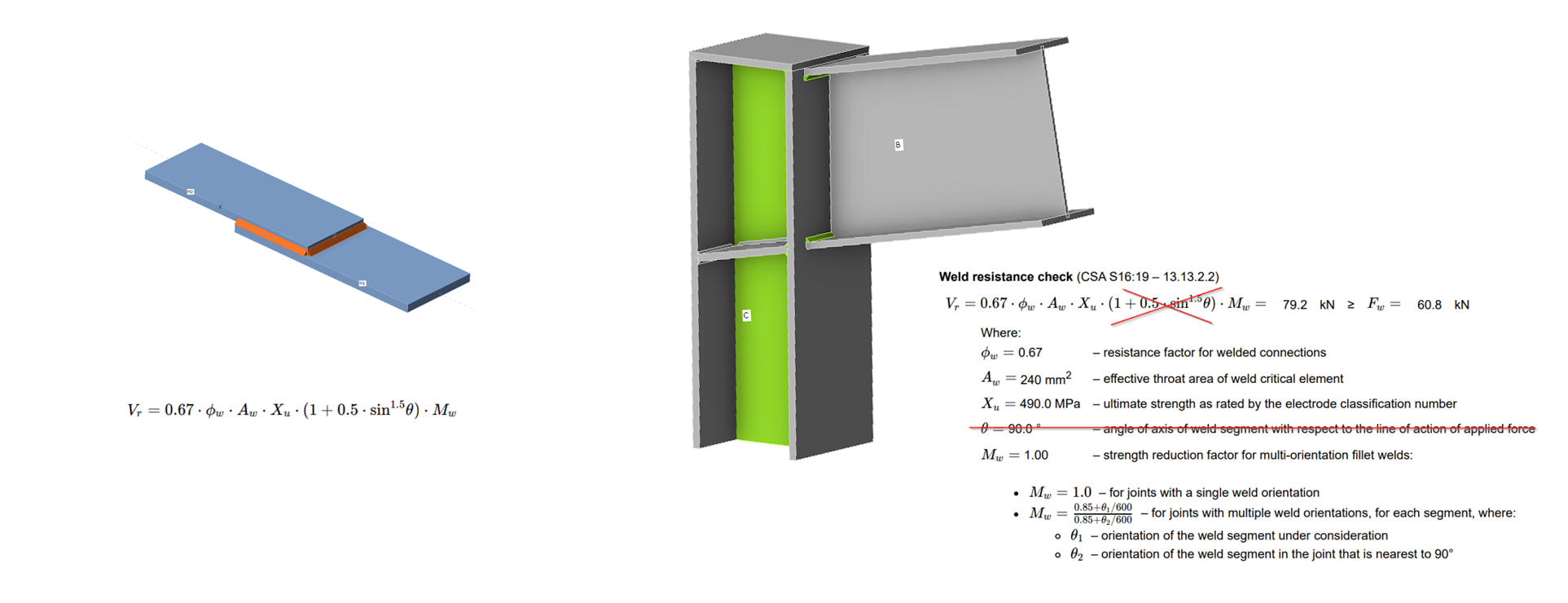
This also affects the calculation of weld strength for Autodesign of welds and applies to all code versions of CSA (also S16-14).
Released in IDEA StatiCa version 25.0.
Anchoring checks for the Chinese code (GB)
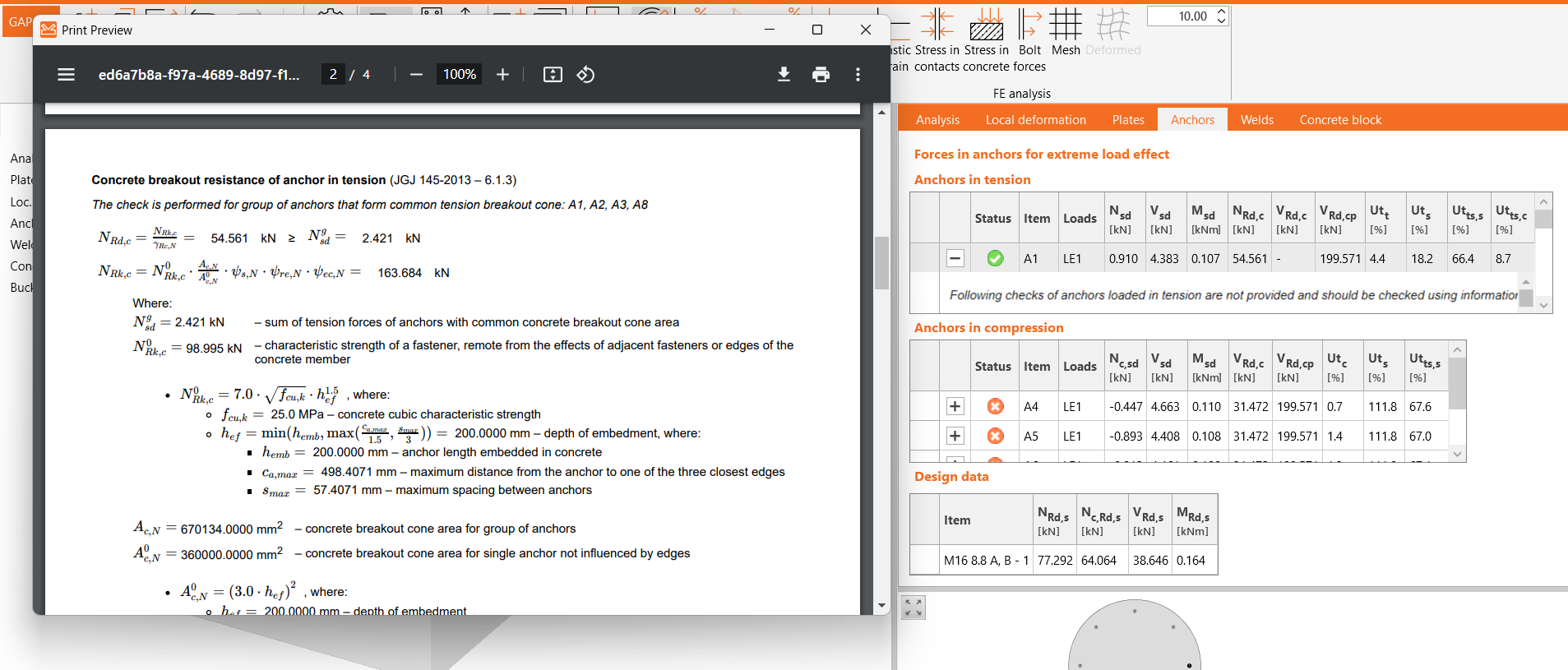
Anchoring is the second most calculated type of design in the Connection app. The Chinese national standard (GB) was implemented in IDEA StatiCa Connection so that users following the GB code can also calculate projects with all relevant code checks.
Read more about the specific code checks in Code-check of anchors according to Chinese standard article.
Available types of stand-off between the base plate and the foundation block:
- direct
- mortar
- gap
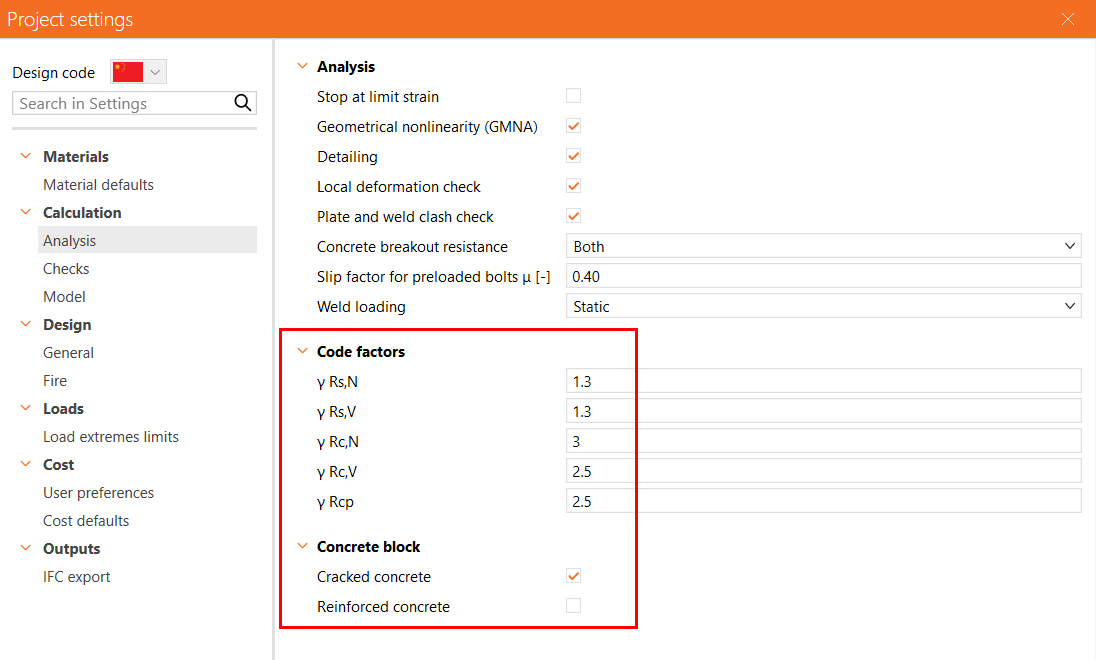
In Project settings, the code factors can be defined:
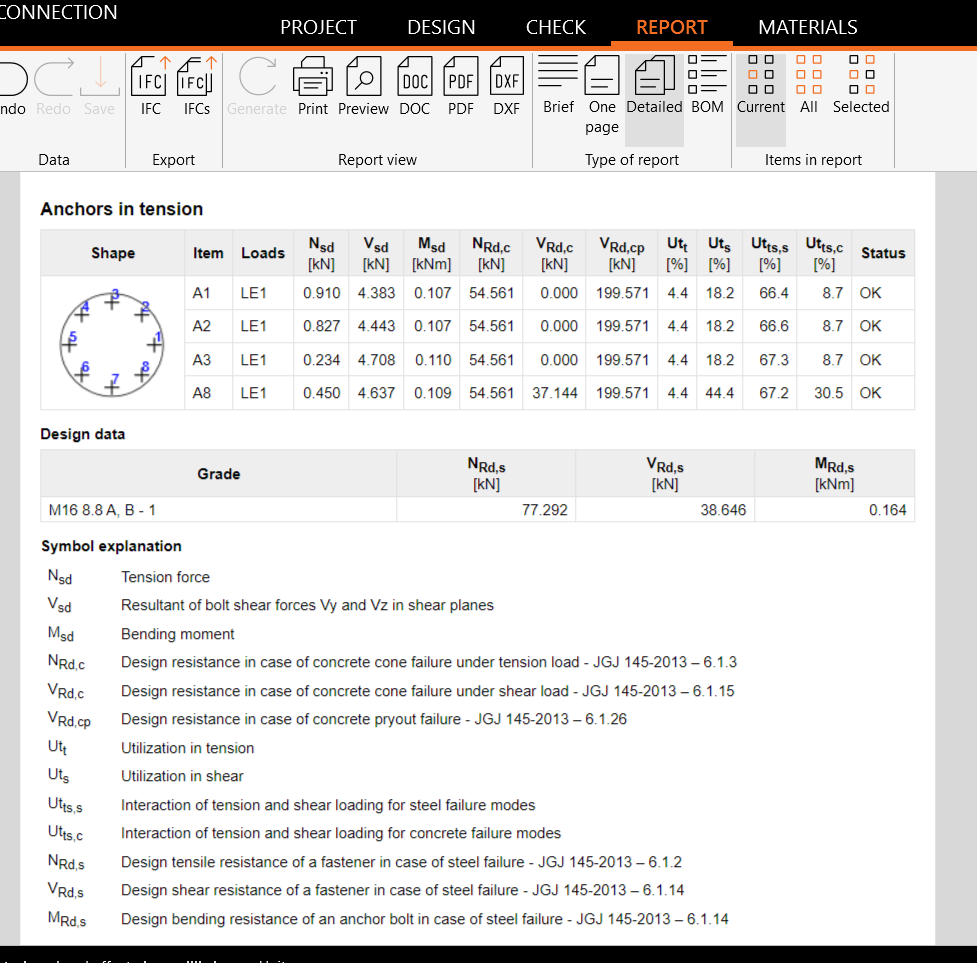
The specific checks are presented in the table under the Check tab, and in the Report.
Released in IDEA StatiCa version 25.0.
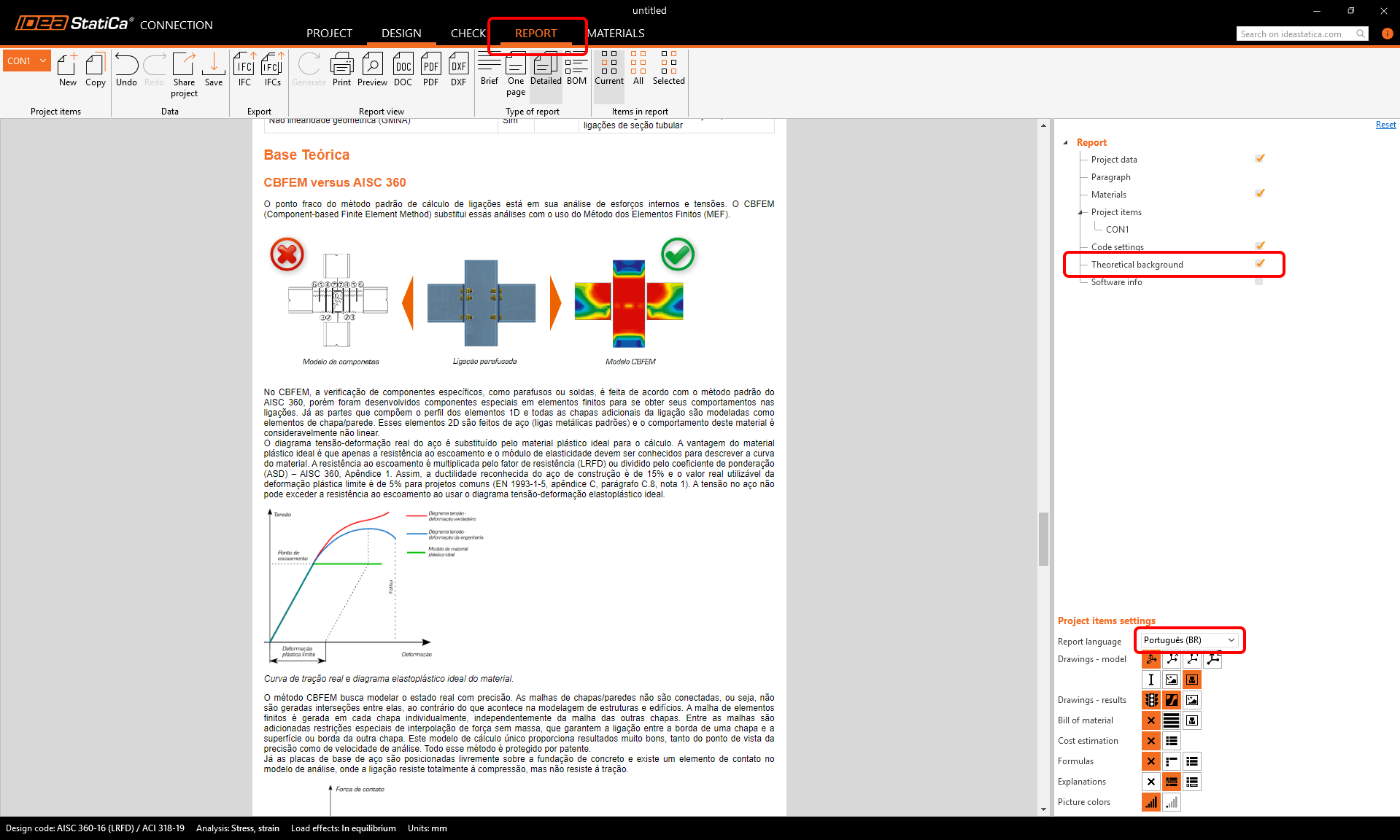
Theoretical Background for AISC in Brazilian Portuguese
Specific language translation of the Theoretical Background was added for Brazilian Portuguese (BR). This document can be included in the Report in IDEA StatiCa Connection.
It is possible to change the Report language only. Find out more in Change just the language of the report.
Released in IDEA StatiCa version 24.1.1.