

About the Nestle Storage Rack project
Nestlé's 16-story, 220,000-square-foot storage rack facility at Tejon Ranch Commercial Center in Wheeler Ridge, California, presented unique structural challenges. Located in Seismic Design Category D, the project required high seismic design and detailing in accordance with ASCE 7-16, AISC 341-16, and the 2021 RMI standards for rack-building specialty detailing.
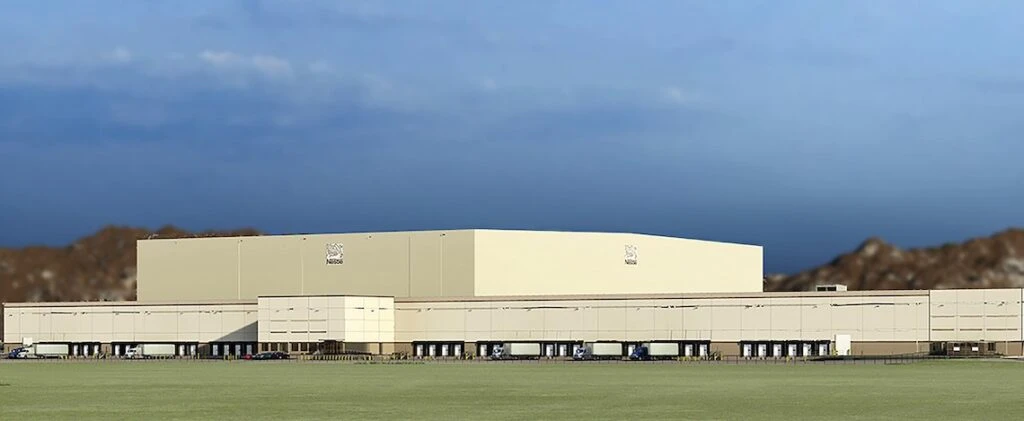
Photo: Courtesy of TRCC
Seismic base plate design
A key objective was ensuring that the base plate connections to the foundations could withstand seismic forces while maintaining structural integrity and safety. The challenge lay in designing post-installed anchor systems that could meet high seismic requirements while optimizing material usage and constructability.
Traditional hand calculations and simplified software models lacked the ability to fully capture the behavior of these connections under seismic loading, especially when considering the ductile failure mechanisms required for code compliance.
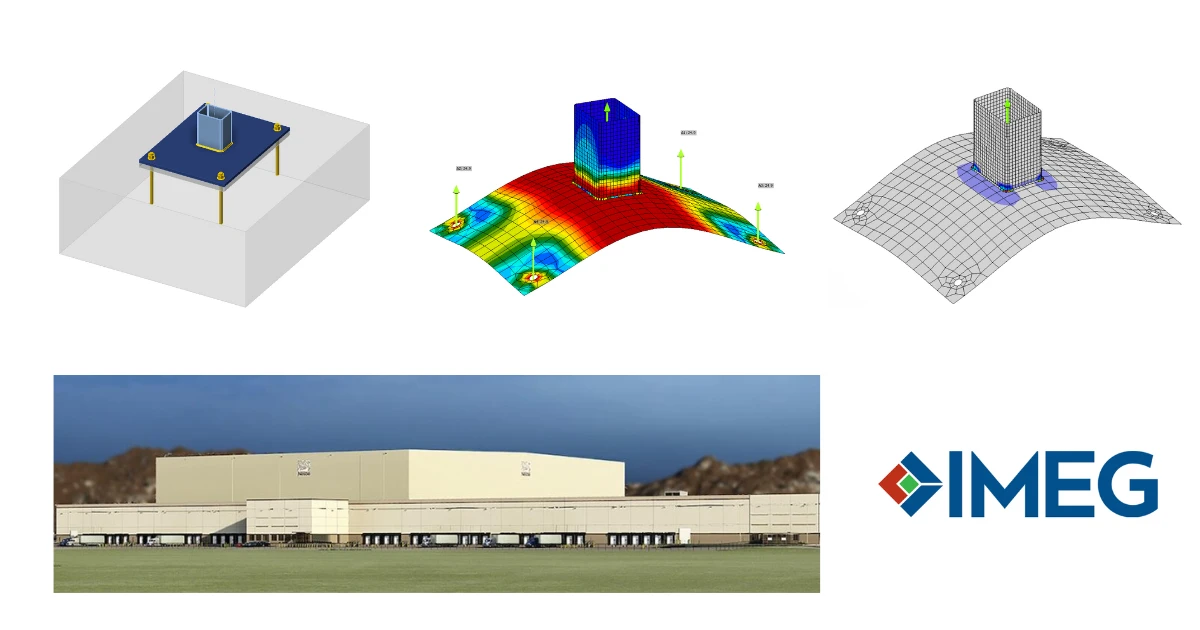
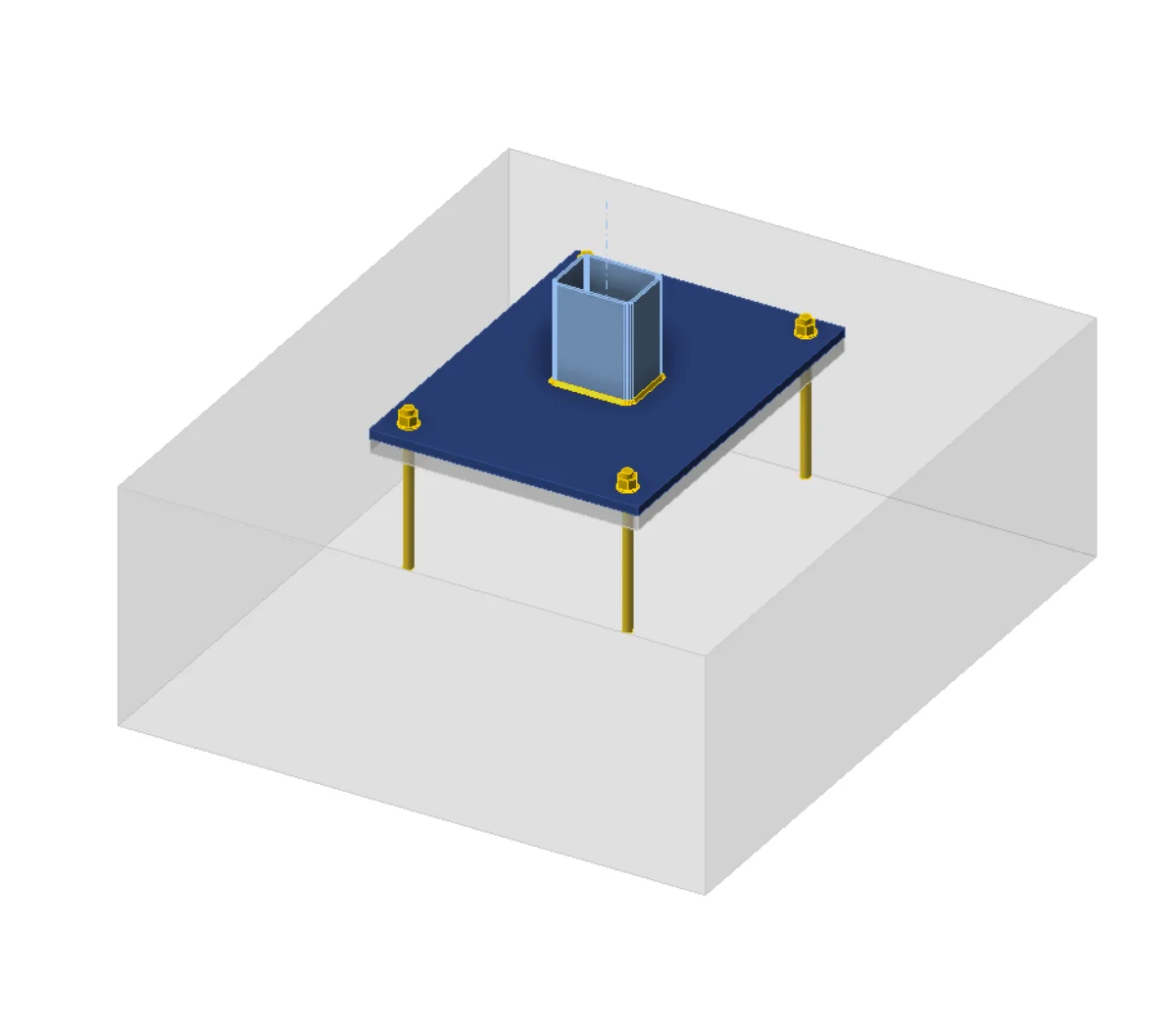
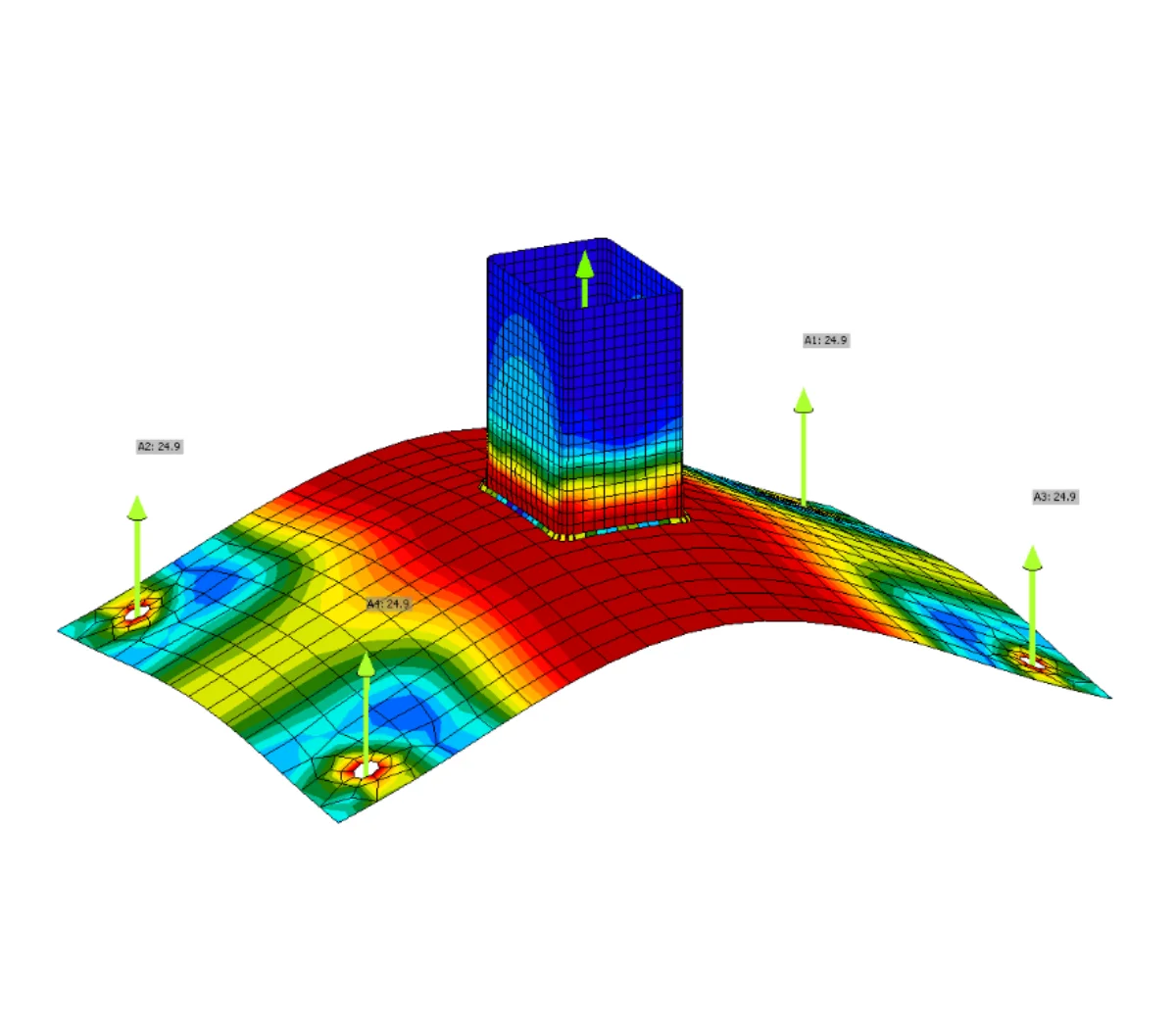
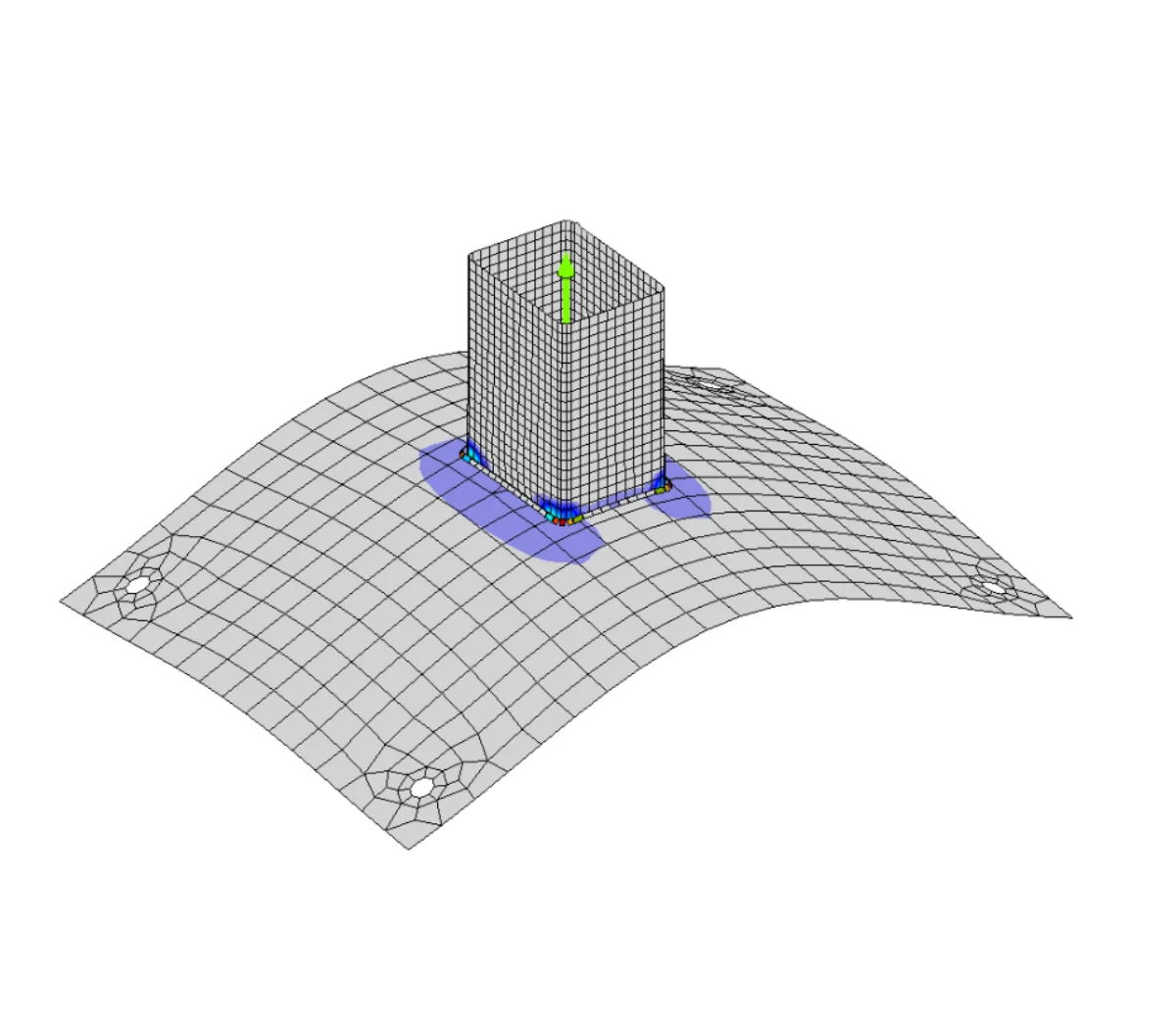
To achieve this, the engineering team at IMEG used IDEA StatiCa to perform a detailed capacity design analysis. By accurately modeling the base plate, anchors, and concrete, they were able to evaluate stress distributions, yielding mechanisms, and failure modes under seismic loads. This enabled them to optimize their design and adopt the Option B “Ductile Mechanism” from ACI 318-19 section 17.10.5.3.
Under Option B, the anchor system is designed so that yielding occurs in a ductile steel element, such as the base plate, before failure occurs in the concrete anchors. This approach ensures energy dissipation and prevents brittle failure modes like concrete breakout or pullout.
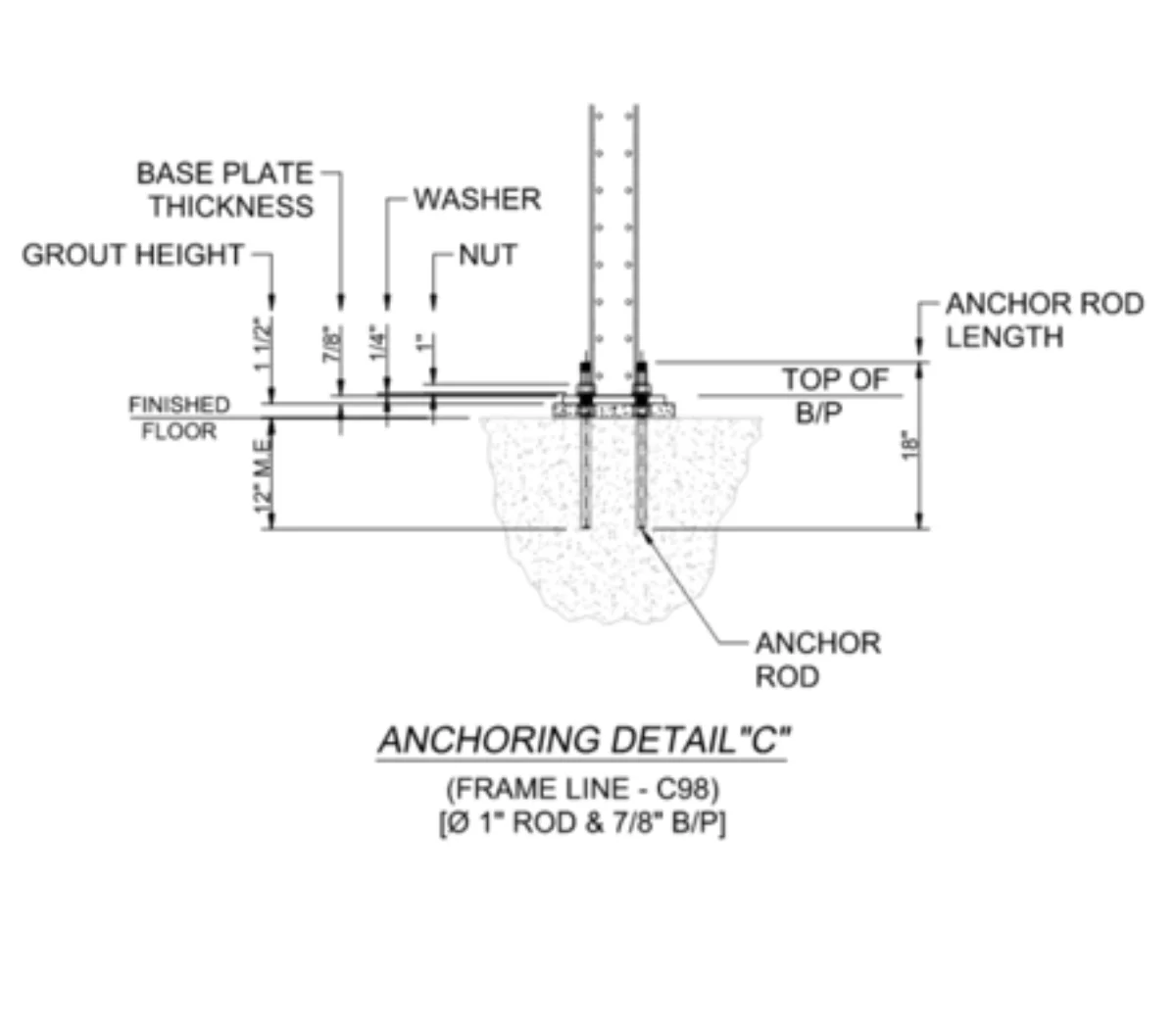
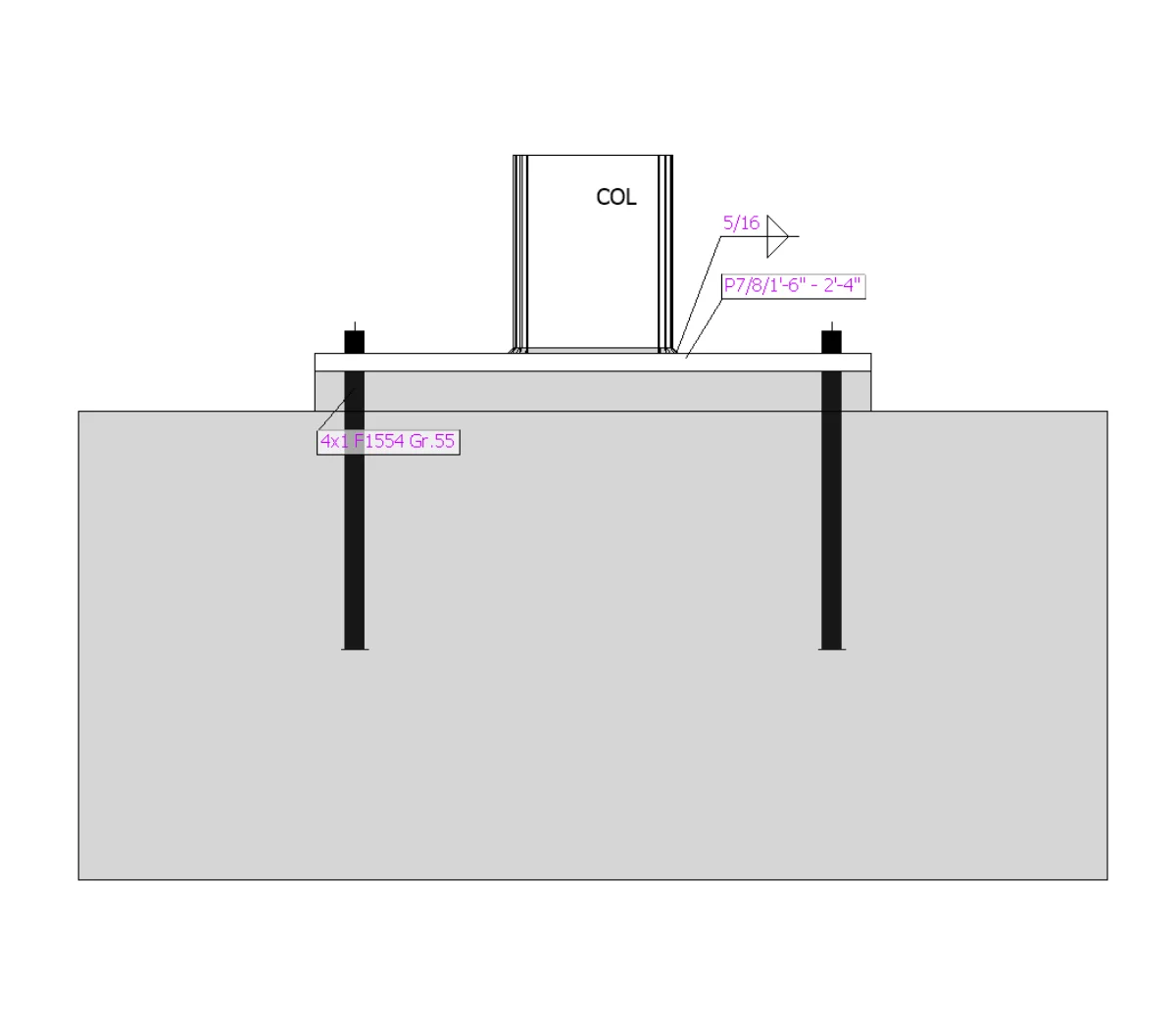
The software's advanced nonlinear analysis confirmed that yielding would occur in the steel plate before concrete failure, ensuring the desired ductile behavior. This validation allowed IMEG to justify reduced seismic force calculations without applying the overstrength factor Ω0, leading to material and cost savings while maintaining full compliance with ACI 318-19.
Why IDEA StatiCa?
Since integrating IDEA StatiCa into their workflow, the IMEG engineering team has tackled:
- Non-standard connections requiring customized detailing.
- Seismic load demands with advanced analytical tools.
- Post-installed anchor designs under ACI 318-19 guidelines.
For the Nestlé Storage Rack Building, IDEA StatiCa ensured that base plate connections were not only code-compliant but also optimized for seismic performance, demonstrating how advanced engineering tools can support high-seismic, high-complexity projects.
IDEA StatiCa transformed our connection design process. We can now confidently review complex load paths or connections for built-up members. It also handles with ease non-typical bolt spaces while eliminating tedious calculations and boosting our efficiency without sacrificing engineering precision.

Todd R. Campbell, P.E.
Associate Principal/Quality Assurance Manager – IMEG
United States
Start your trial today and enjoy 14 days of full access and services free of charge.
Start free trial