Version 25.1 Highlights
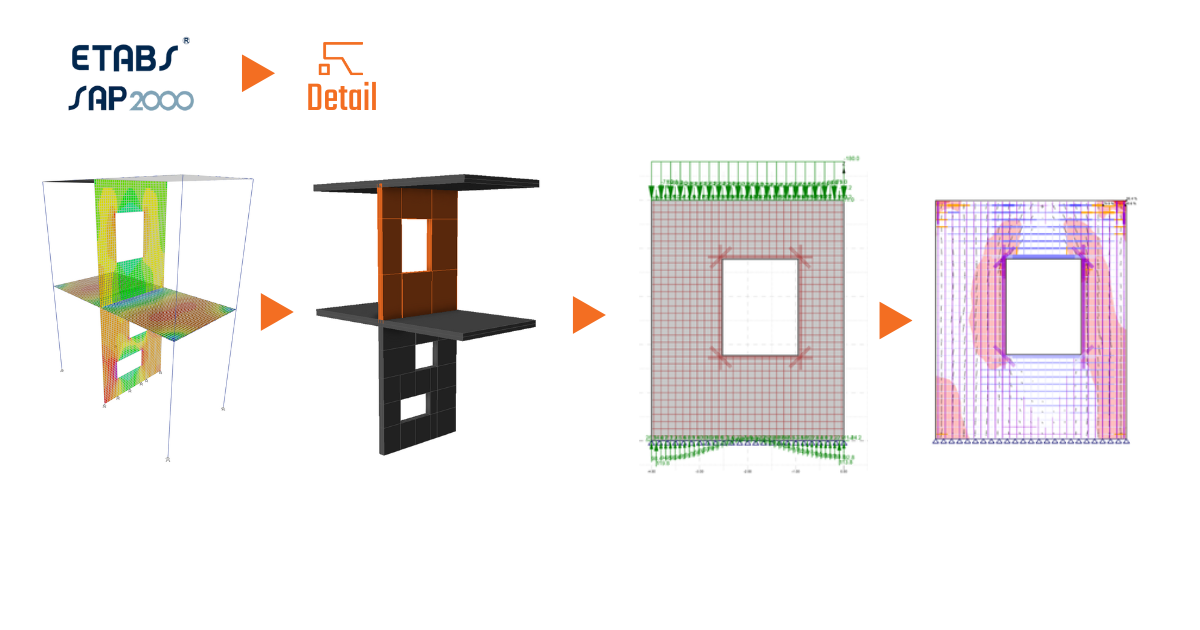
For too long, structural engineers designing critical elements have been forced to rely on manual data extraction, time-consuming modeling from scratch, or overly conservative estimations. Whether you’re copying global analysis results into Excel for concrete reinforcement calculations, trying to design D-regions using linear methods, struggling with inefficient bulk connection reports, or unable to accurately assess older structures, these manual roadblocks cost you time, reduce reliability, and slow down your projects.
Anchoring: New use-cases and unification
If you’ve ever needed to analyze multi-surface anchoring or check cast-in plates, IDEA StatiCa 25.1 has expanded the Steel-to-Concrete workflow to cover over 75% of real-world anchoring cases under Eurocode, no more risky workarounds.
New anchor types for cast-in-place design (Headed studs, L-shape reinforcement) are fully code-checked to EN 1992-4. Design anchoring, no matter whether cast-in-place or post-installed, check the steel in Connection, and export to Detail to verify sufficient reinforcement and concrete capacity.
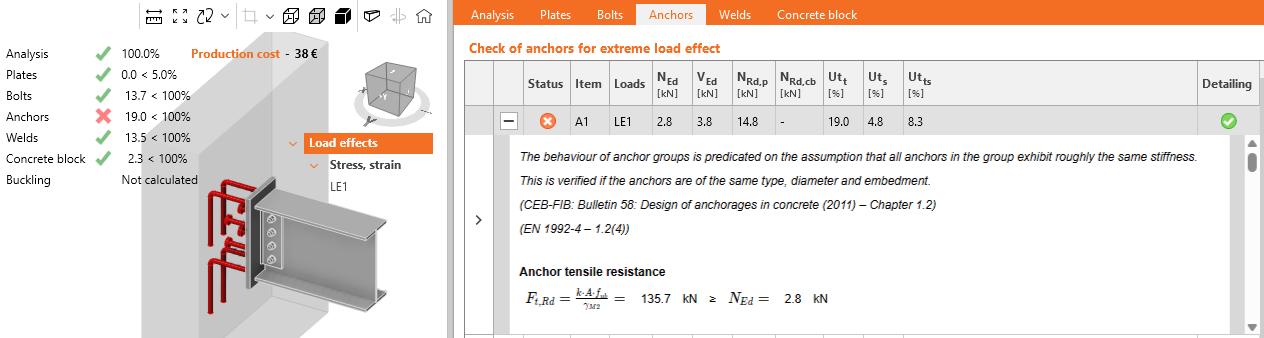
You can now model multi-surface anchoring, avoid overconservative shear checks, and reflect real base plate setups, Stand-off, Direct, Mortar joint, Gap. All structural calculation data is unified across Connection and Detail for a comprehensive anchoring analysis.
Bulk connection design workflow efficiency
Calculation reports for big groups of connections used to be a bottleneck. Now, Checkbot cuts a 30-connection report time down to 6 minutes, which is 3 times faster than before. You can also apply members' offsets and eccentricities, align steel surfaces, and apply multiple parametric templates to one joint.