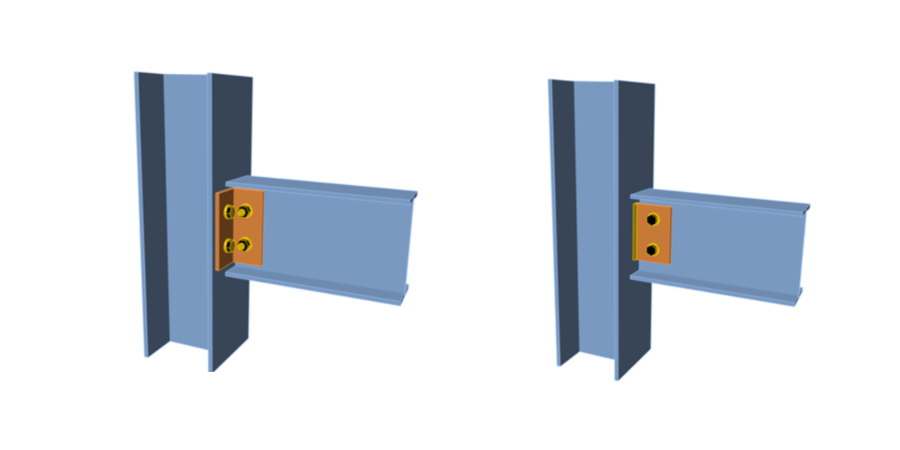
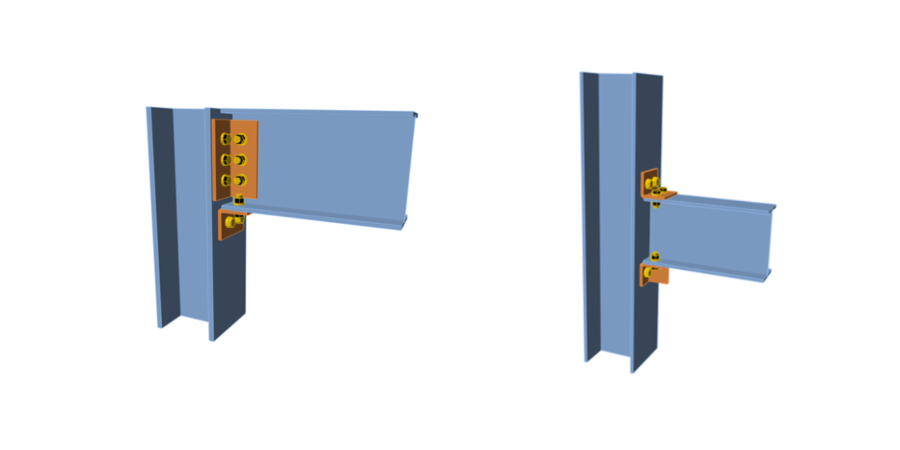
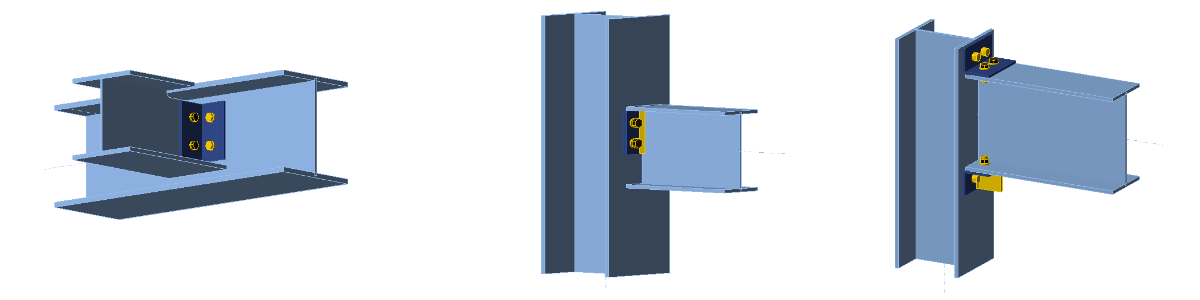
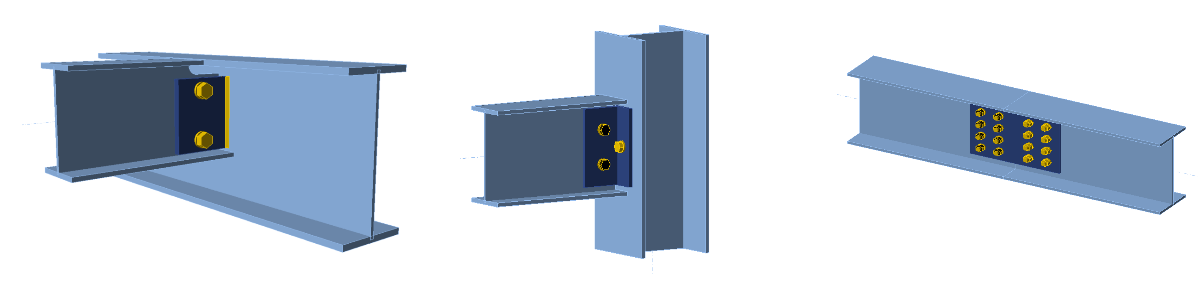
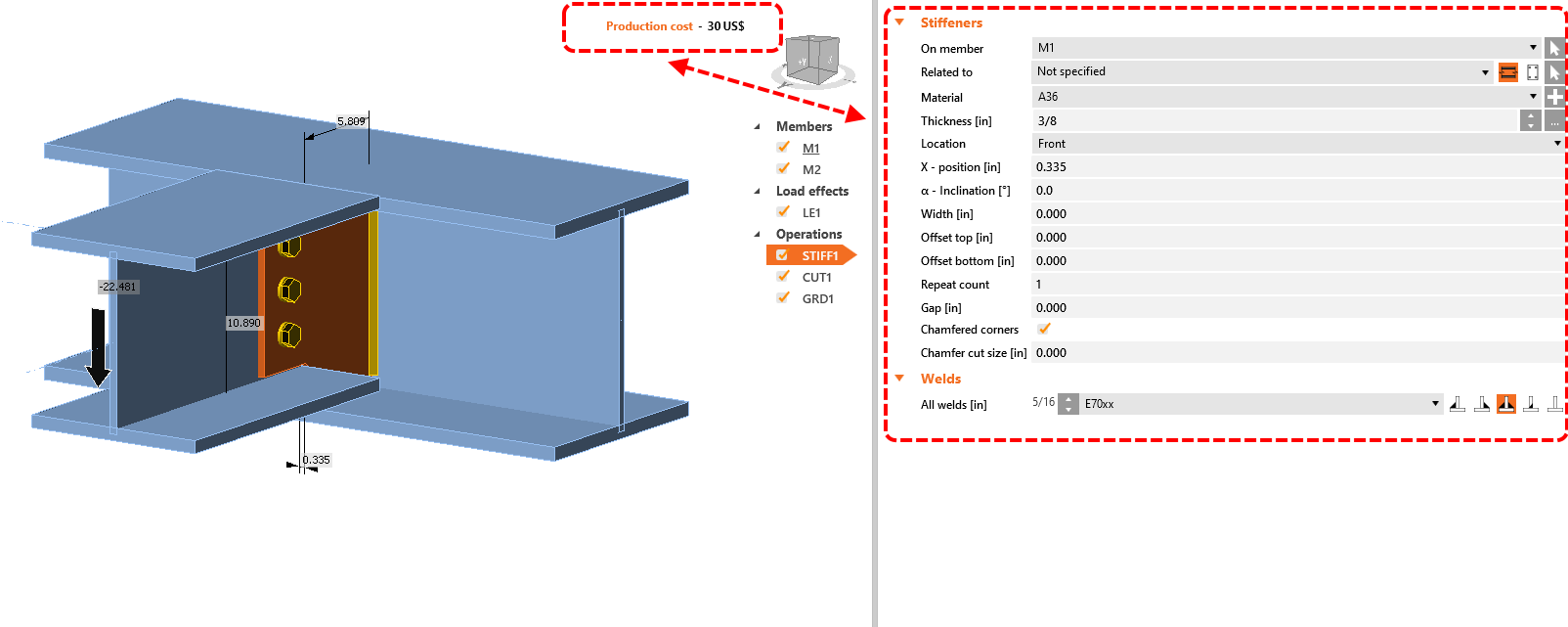
Generally speaking, the shear connection is a joint that doesn't allow the transfer of a bending moment between two structural members or from the structure to the foundation. The aim is to ensure free rotation in the node. Such connections do not provide rigidity in comparison to the moment connections. In the global analysis model, the node is declared as a pin.
Shear connections can be found in almost every structure, but their typical use is in braced frames, floor, and roof beams.
The most common shear connection (not only in North America) is a single plate connection consisting of a plate fillet welded to a supporting column or girder and bolted to the web of a simply supported beam.
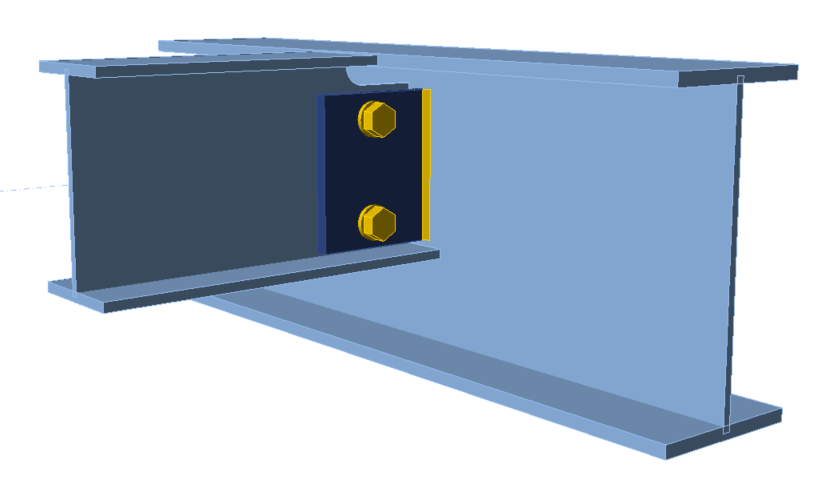
When comparing to the moment connections, shear connections are simple to fabricate, simple to erect, and are significantly cheaper.
Shear connection types and classifications
Acc. to the usage:
- Framed – connecting beams, web-to-web, directly