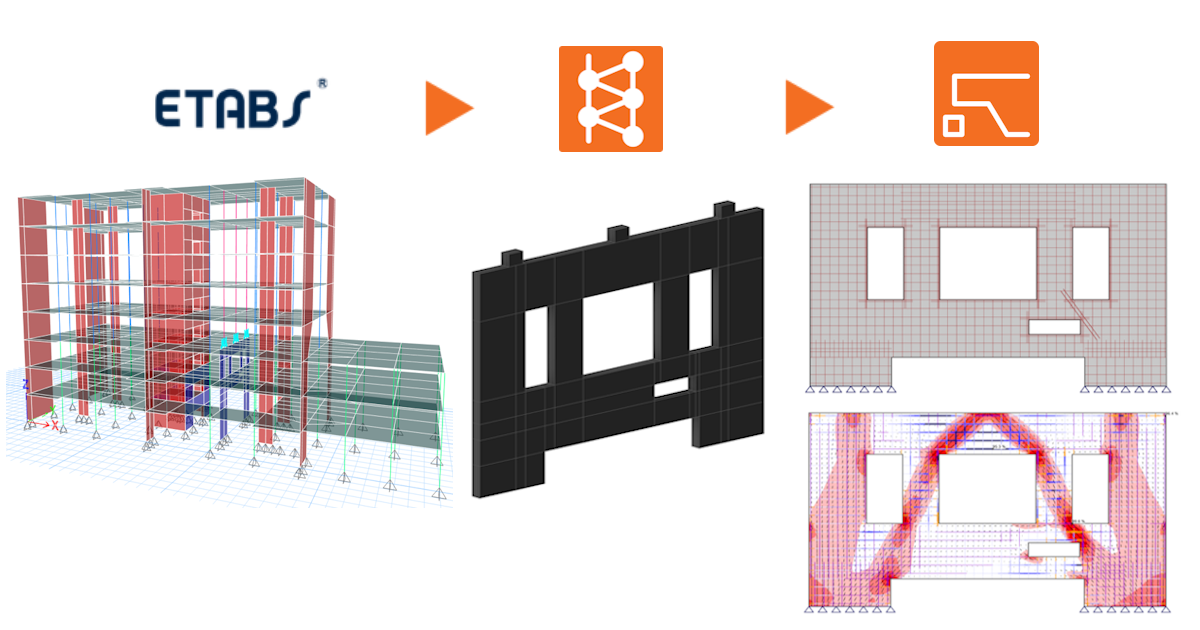
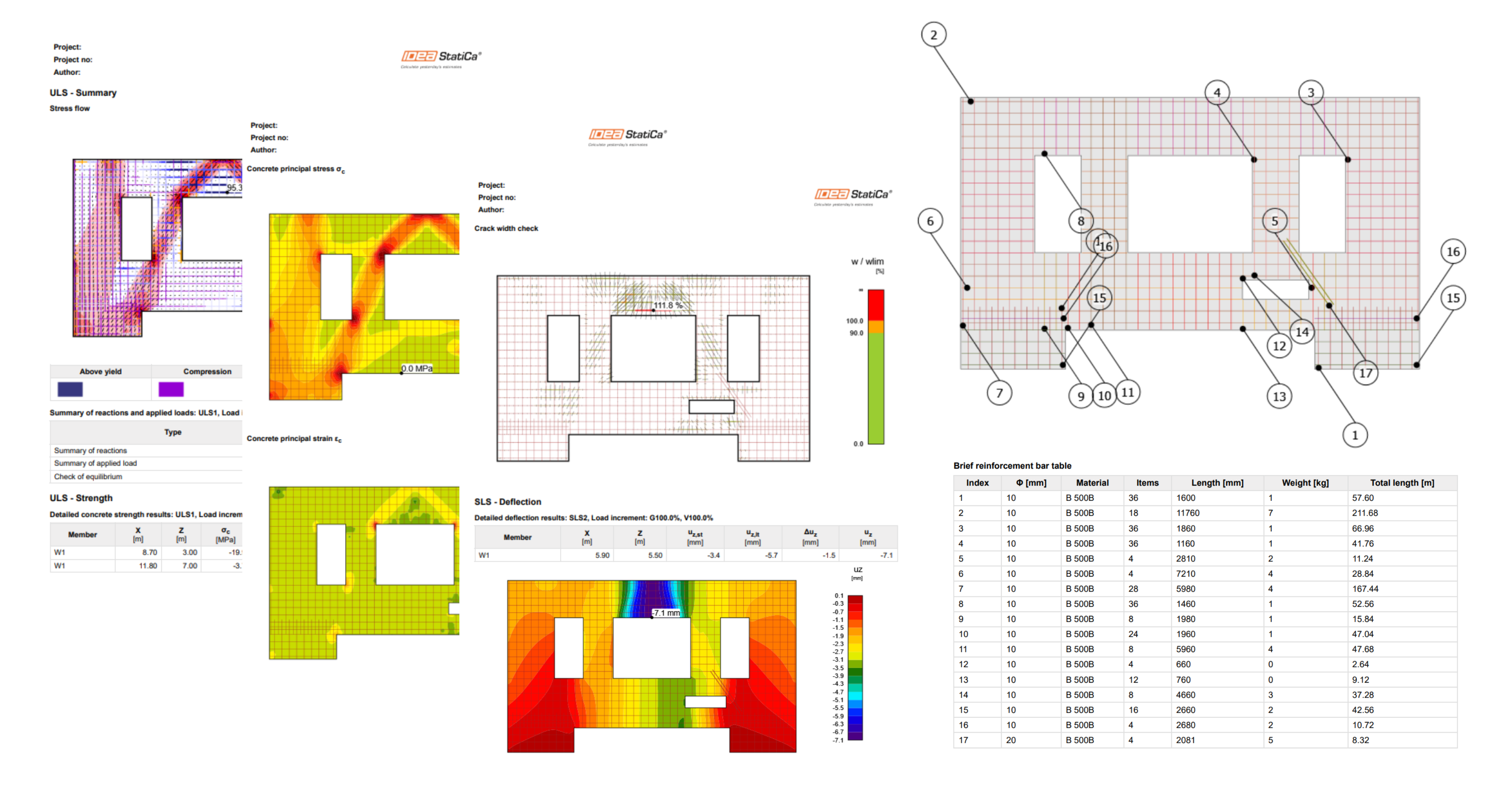
Transfer Wall
Transfer wall design is a complex subject because it often behaves like D-regions, where the assumption of plane section is not valid, hence normal empirical formulas found in design code cannot be used. This means that the design feature inside global FEA software, which often uses a beam or column design assumption, is not suitable for this problem.
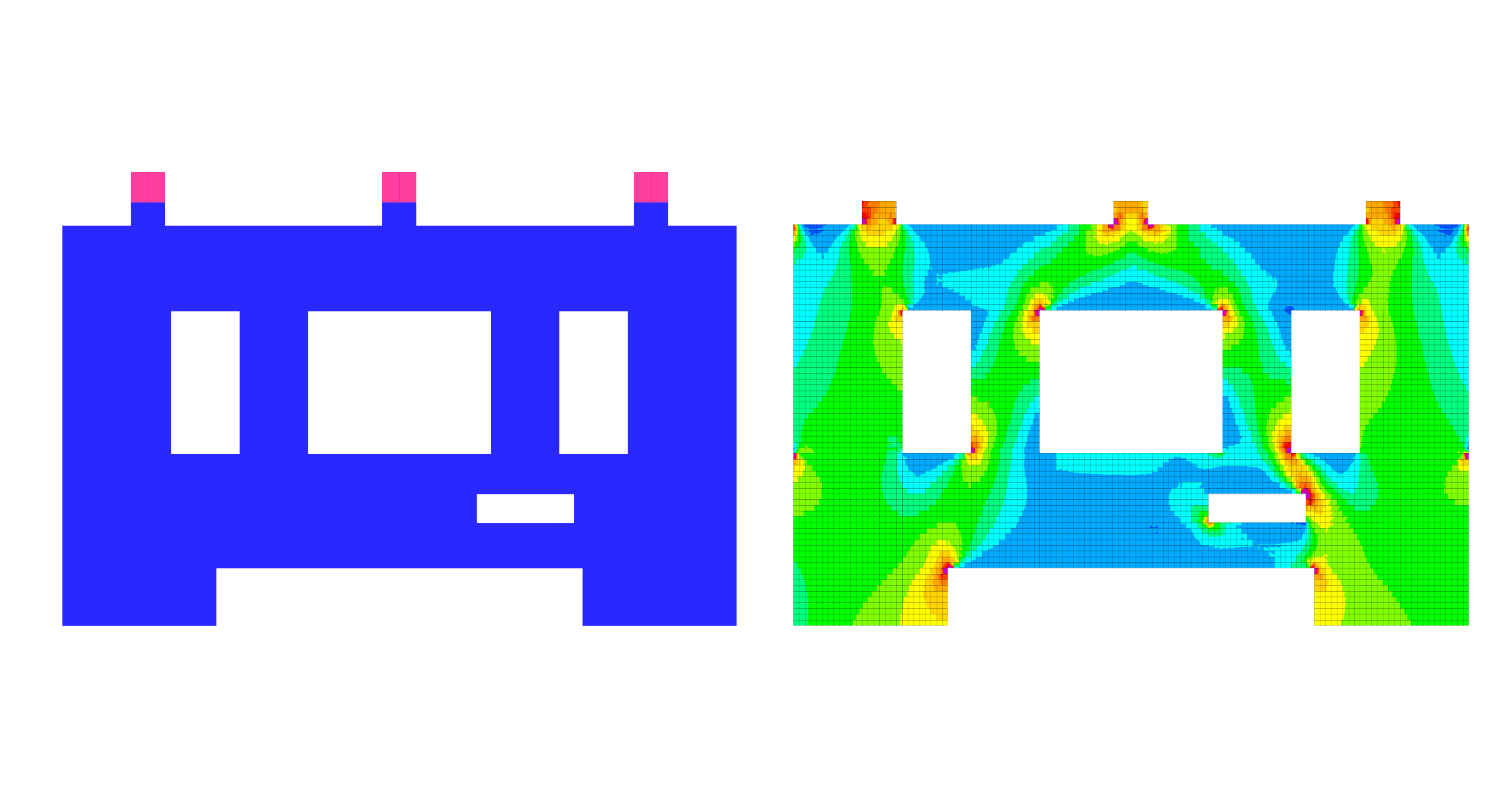
In the wall shown above, engineers have two options for designing the wall. One is to use strut-and-tie, although this a good and suitable method, there is a lot of manual work and trial-error involved, which might be time consuming. Second is to use approximation in global FEA software by evaluating principal tensile stresses to determine reinforcement requirements and verifying that principal compressive stresses remain below the concrete’s design strength.
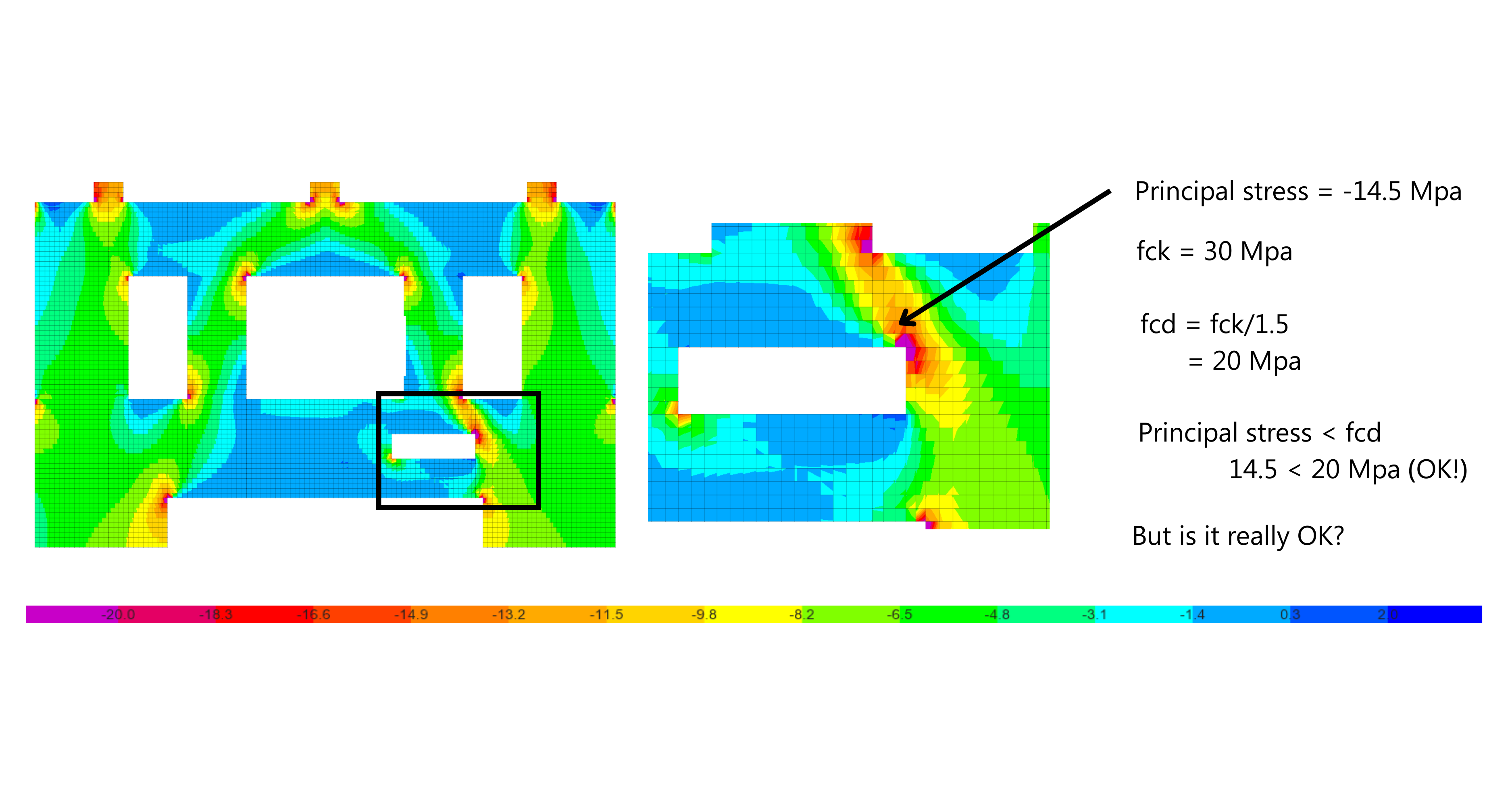
Option two seems like a more practical and time efficient choice, but there is a hidden danger lying in it.
Transverse tension
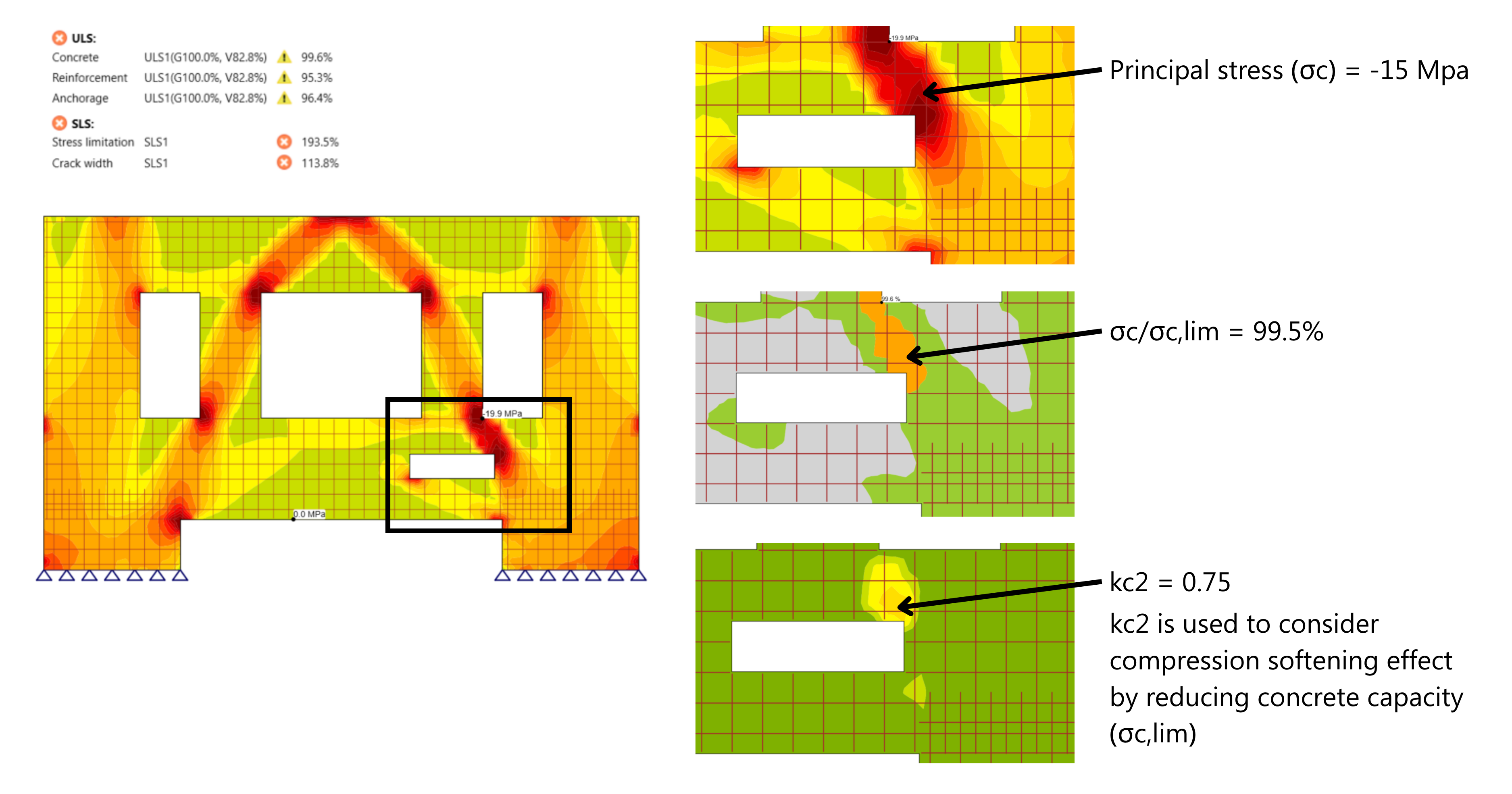
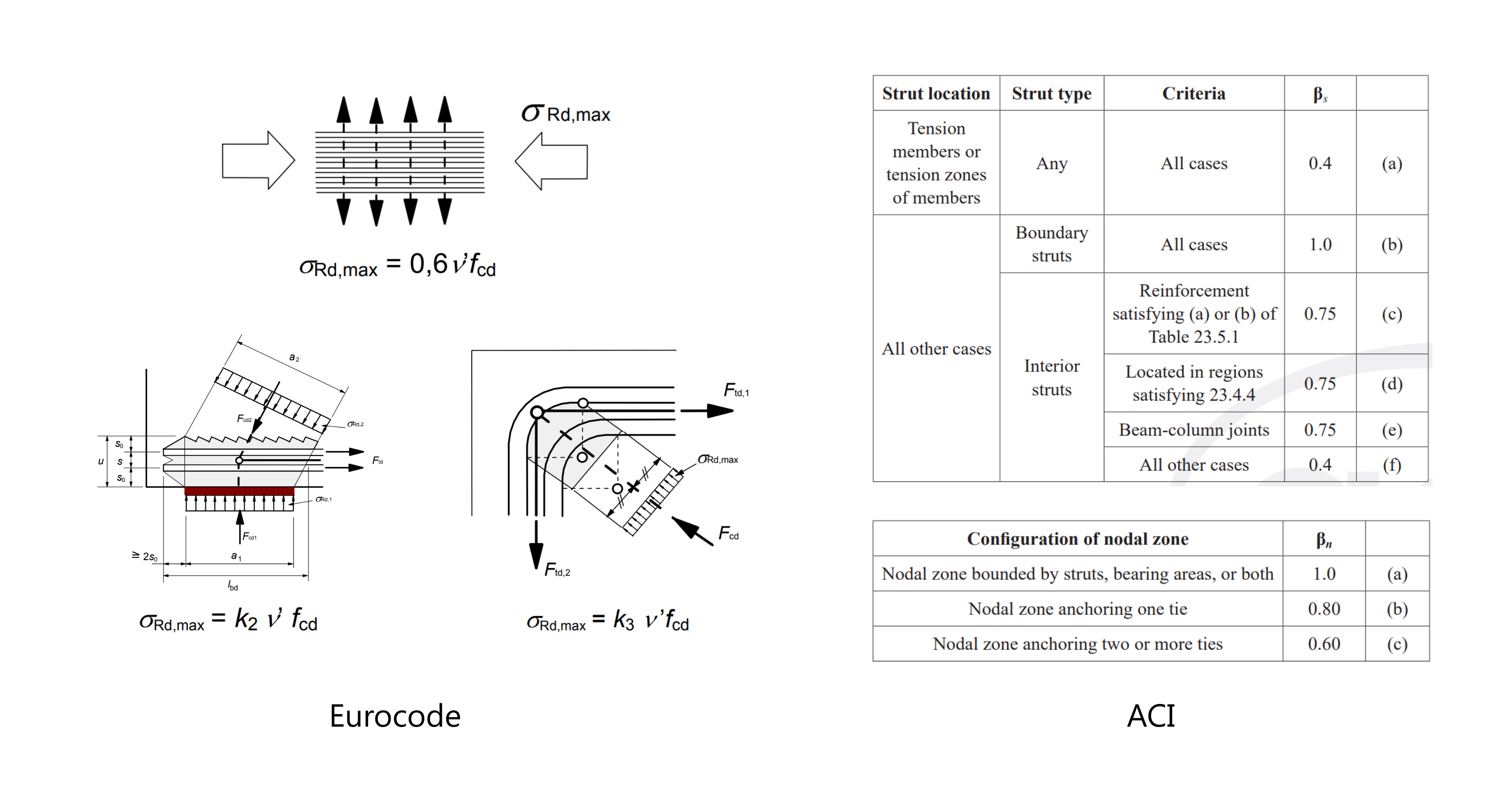
When concrete is placed under heavy compression, it often experiences tensile strains in the perpendicular direction, which is called transverse tension. Once that happens, tiny cracks start to form, and concrete becomes less confined and weaker in compression. This effect, known as compression softening, means that cracked concrete cannot carry as much compressive force as uncracked concrete. In the design code, this effect is considered when designing, for example, a deep beam. In deep beam struts and nodes, a factor of k in Eurocode (or β in ACI) with different values, depending on the situation, is used to reduce the concrete maximum compression capacity due to the compression softening effect.
IDEA StatiCa Detail
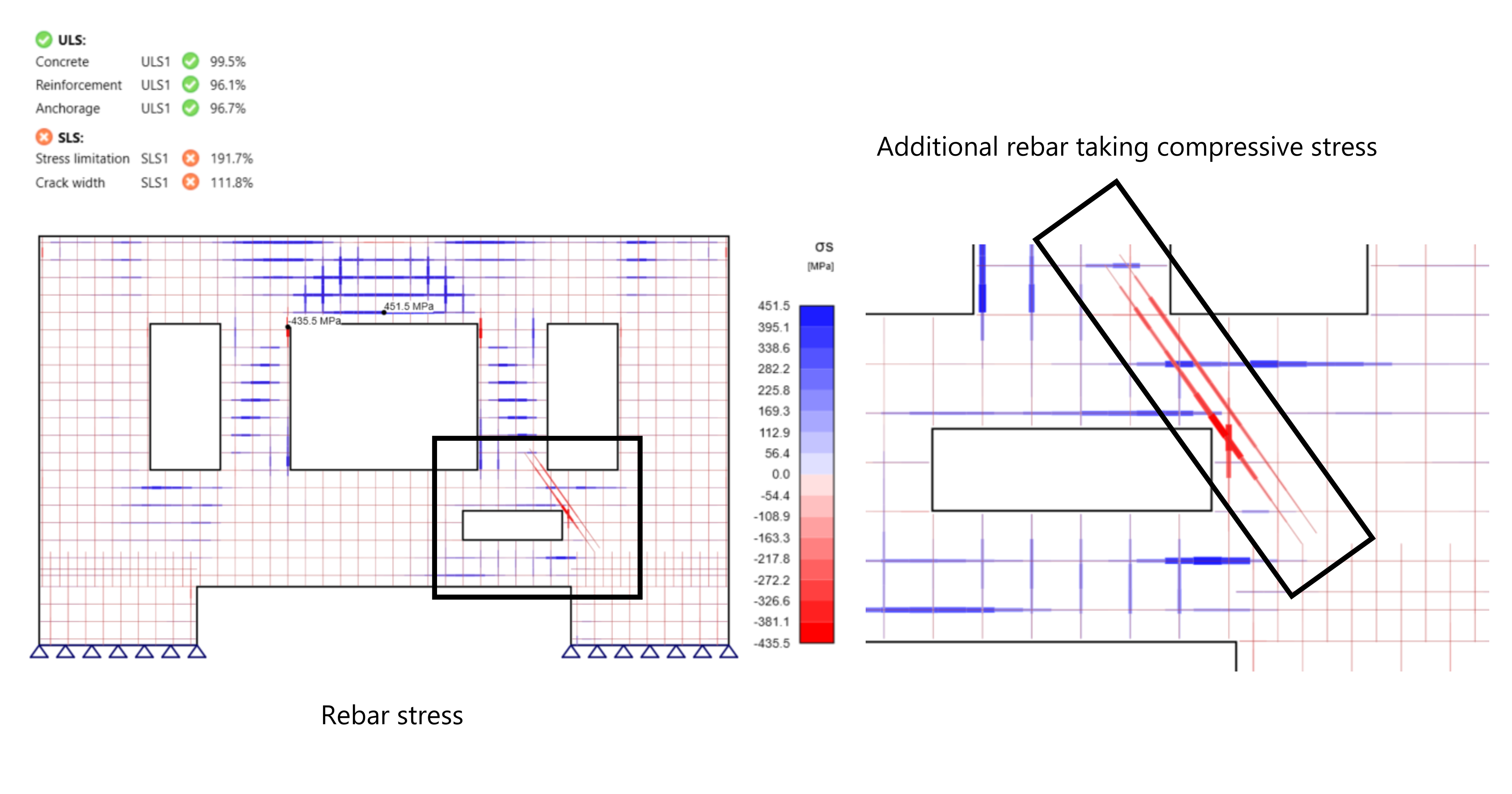
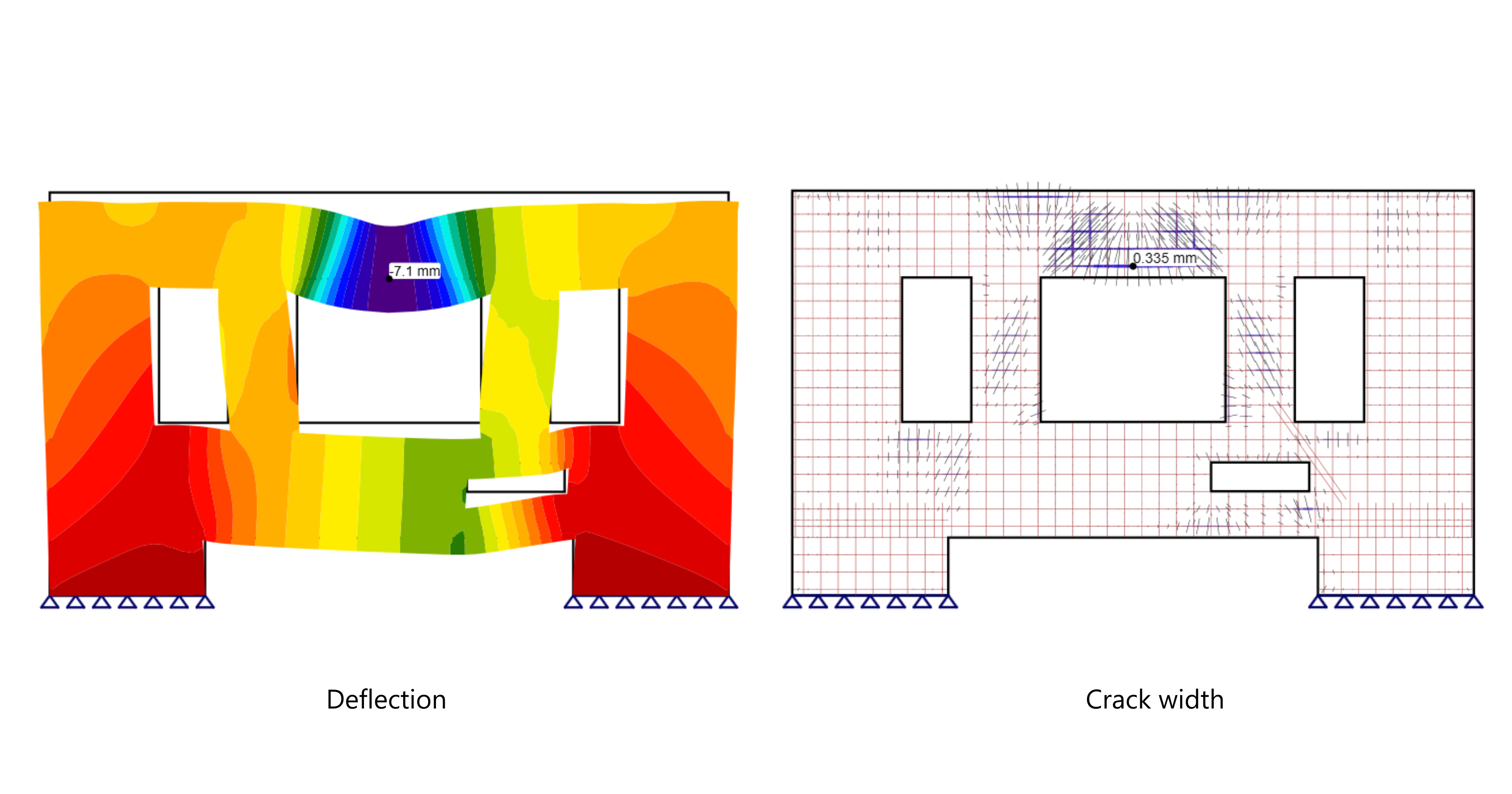
IDEA StatiCa Detail uses , which can accurately handle both B-regions and D-regions. Detail also incorporates compression softening effects into its analysis by using a kc2 factor, hence, it provides a more realistic and safer assessment of concrete strut capacity.