
Idea Statica
Staal
Verbinding ontwerp
Verbindingsbibliotheek
Staafontwerp
Staal workflows
Beton
Wand & detailontwerp
Doorsnede-ontwerp
Staafontwerp
Beton workflows
BIM
Ondersteunde integraties
Checkbot
Viewer
Ondersteuning & Leren
Ondersteuningscentrum
Persoonlijke opleiding
Consultancy sessies
Downloads & Licenties
Prijzen
Standaard gebruikers
Licentie voor ondernemingen
Studenten en Universiteiten
Onze klanten
Bedrijf
Contact
Vacatures
Blog
Evenementen
14-daagse proefperiode
Member analysis - Interpretation of MNA and GMNIA results
SteelMember designKnowledge baseMemberBuckling

Member analysis - Interpretation of MNA and GMNIA results

Dit artikel is ook beschikbaar in
ENCSDENL

IDEA StatiCa Member offers MNA (materially non-linear analysis) and GMNIA (geometrically and materially nonlinear analysis with imperfections) analyses of members subjected to buckling issues. To check these results, most design codes recognize two limit states – serviceability and ultimate.

Ultimate limit state

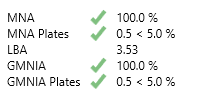
The ultimate limit state is reached when the strain for buckling susceptible members has reached 5% or when the solver stops converging because the maximum load has been reached. 

Using the LBA analysis,  factor αcr (smaller or greater than 15) tells you whether to use only the MNA or GMNIA analyses.

LBA >15: only MNA (materially non-linear analysis) is needed (100% applied) and the results for the MNA Plates have to be less than 5 %

LBA <15: MNA is a must, the  GMNIA (Geometrically and materially nonlinear analysis with imperfections)  is needed, and the GMNIA Plates' results (including the imperfections) must be less than 5 %.
Serviceability limit state

Design codes provide limits for deflection in the serviceability limit state. These can be checked by comparing the deflection of the analyzed members to the limits. 
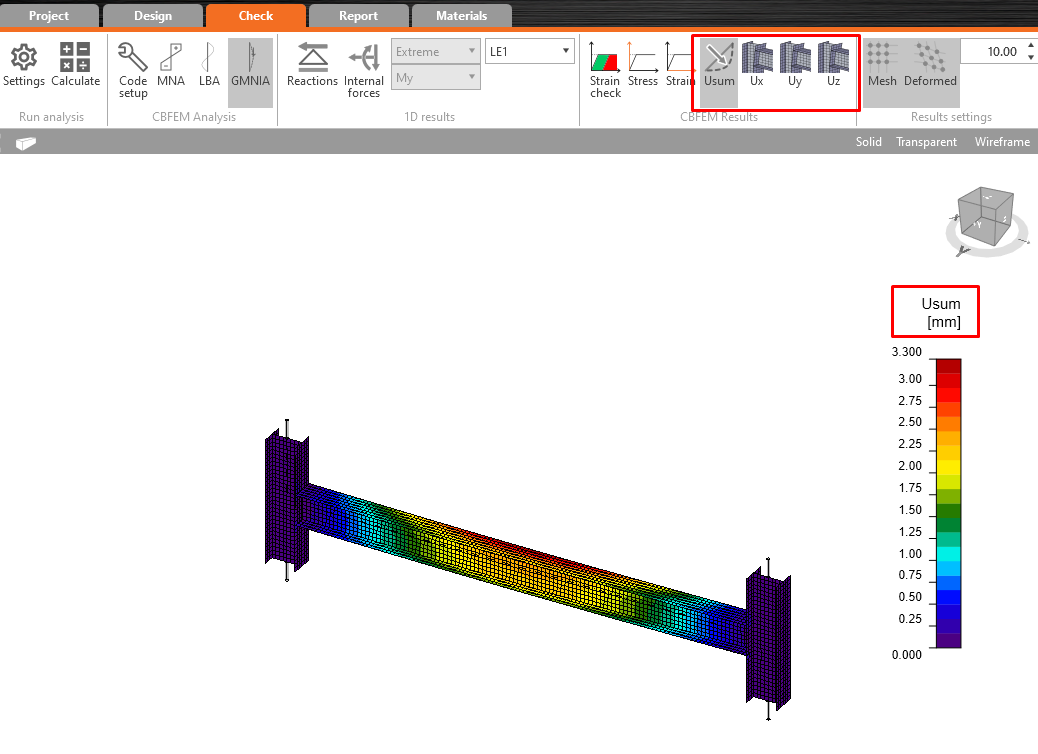
usum - vector sum of deflection (ux, uy, uz) at the given point


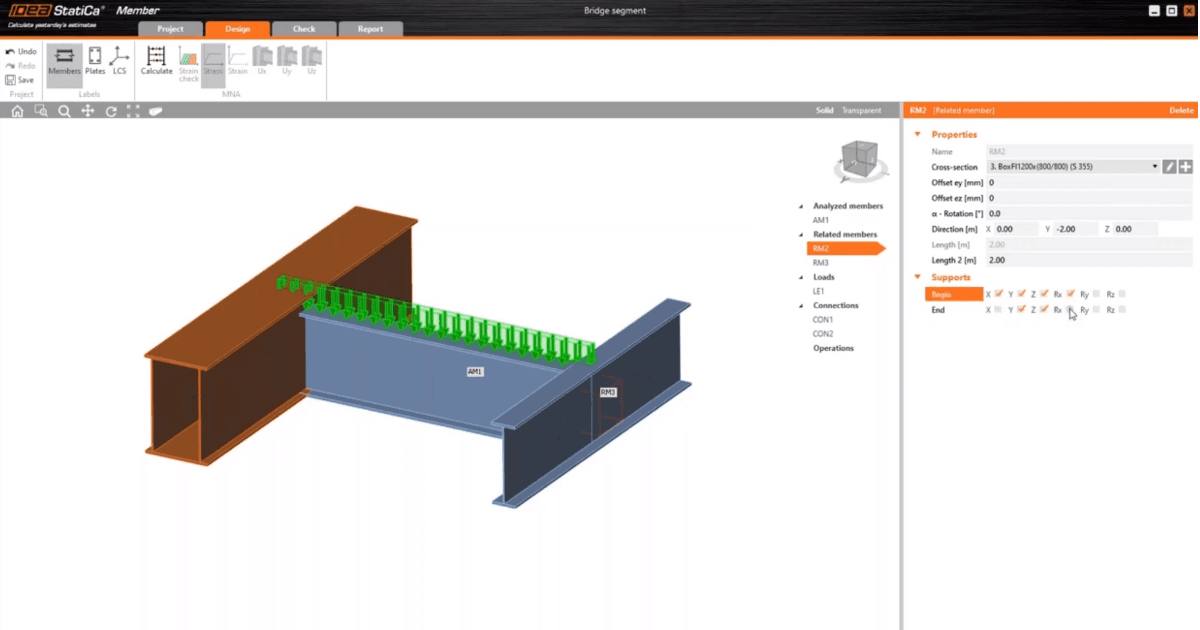
Watch our product engineer Vit modeling a transverse beam of a railway bridge and analyzing it in Member.