


Tűzállósági határállapotok
A tűzállóság határállapota elsősorban az építési típustól függ. Attól, hogy teherhordó vagy nem teherhordó elemről van-e szó, illetve hogy falról, oszlopról vagy ajtóról van-e szó. A szabályozások számos határállapotot határoznak meg. A négy leggyakrabban használt típus: R, E, I, W.
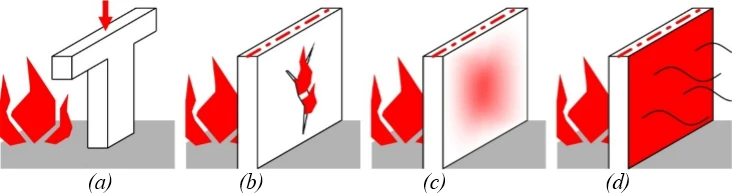
(a) R = Teherbírás és stabilitás, (b) E = Integritás, (c) I = Szigetelési funkció, (d) W = Tűzfalak
„R" határállapot (teherbírás és stabilitás)
Az „R" határállapot minden teherhordó szerkezetre vonatkozik (beleértve a tűzszakaszon belülieket is). Különösen azokra, amelyek az épület stabilitását biztosítják. Ezeknek tűz esetén is meg kell tartaniuk teherhordó funkciójukat. Az „R" határállapot esetén nem számít, hogy a szerkezet gerenda vagy lemez típusú. Az R határállapotot falaknak, oszlopoknak, gerendáknak, tetőszerkezeteknek, szelemenekneknek, de merevítőknek stb. is teljesíteniük kell.
„E" határállapot (integritás)
Az „E" határállapot minden tűzelválasztó szerkezet felületére vonatkozik. Tűz esetén nem keletkezhet repedés a tűzszakasz-határoló szerkezetben, amelyen keresztül lángok átjuthatnának, vagy amelyen keresztül forró gázok behatolhatnának egy másik szakaszba. A tűzállósági integritást a tűzszakaszokat elválasztó tűzfalaknak és mennyezeteknek, egyéb tűzválasztó falaknak vagy aljzatoknak (amelyek mögött technológiai csatornák stb. lehetnek), valamint adott esetben a tűzzáróknak (pl. ajtóknak) kell teljesíteniük.
„I" határállapot (szigetelési funkció)
Az „I" határállapot a felületi tűzelválasztó szerkezetekre érvényes, amelyek célja a tűztől elfordított oldali tér túlzott felmelegedésének megakadályozása. A nem fűtött oldalon lévő vagy ahhoz közeli anyag nem gyulladhat meg. A szigetelési kapacitást különösen a szilárd beépítésű síkszerkezeteknek, például a tűzszakaszok közötti tűzfalaknak és mennyezeteknek kell teljesíteniük. Ez azt jelenti, hogy ezek túlnyomórészt belső elemek, ahol tűz a szerkezet mindkét oldalán előfordulhat, és ahol a nem fűtött oldalon tartózkodó személyek valószínűleg veszélynek vannak kitéve. A védett menekülési útra nyíló tűzzáróknak szintén meg kell felelniük az „I" határállapotnak.
„W" határállapot (hősugárzás korlátozása)
A hősugárzás korlátozása a felületi tűzelválasztó szerkezetekre vonatkozik, hasonló az „I"-hez, de kevésbé szigorú követelményekkel. A „W" határállapot nem képes megakadályozni a hőmérséklet-emelkedést, csupán bizonyos mértékig korlátozza a szerkezet tűztől elfordított oldaláról kisugárzó hőáramot. Ez a sugárzó hőáram azonban nem okozhatja a tűz terjedését, és nem veszélyeztetheti az ilyen szerkezet közelében menekülő személyeket. Ezért 15 kW/m2-re van korlátozva.
Tűzállósági idő
A tűzállósági időszak az az időtartam, amely alatt a szerkezetnek ellen kell állnia a tűz hatásainak, vagy teljesítenie kell a megkövetelt határállapotot (vagy több határállapotot). A tűzállósági időszakot percekben határozzák meg. Az alapvető osztályozási időszakok 15, 30, 45, 60, 90, 120 és 180 percre vannak meghatározva.
Terhelés tűzállóság esetén
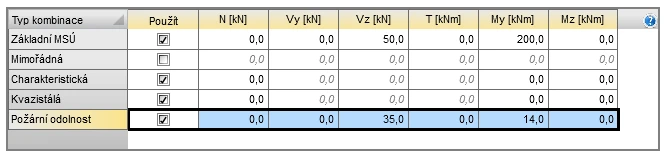
Az Eurocode szerint tűz esetén az extrém terhelést egyszerűsítve az ULS teherkombináció 70%-aként lehet figyelembe venni.
Tűzállósági módszerek
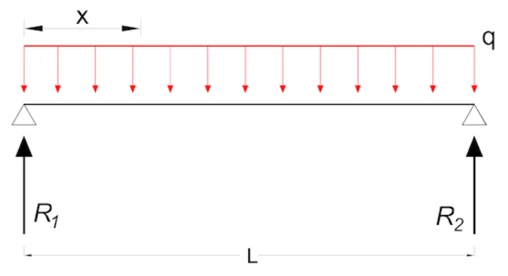
A tervezési módszerek a megközelítés, a pontosság és a számítás összetettsége szerint változnak. Egy kritikus elem vizsgálatakor alkalmazható a Táblázatos módszer, amely a legkonzervatívabb.
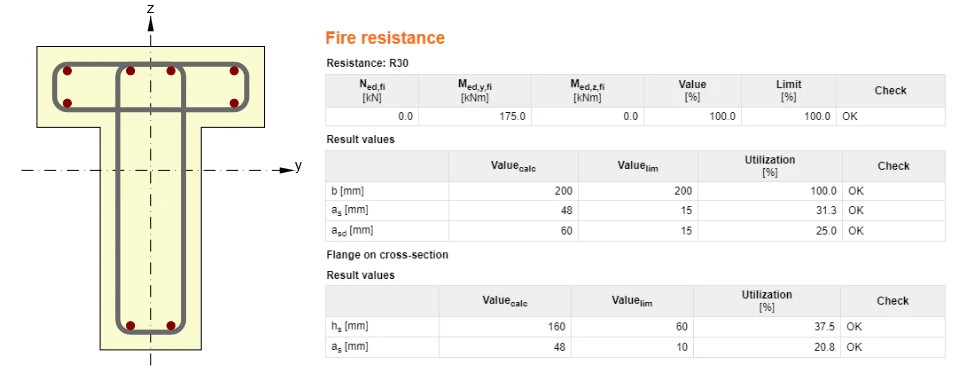
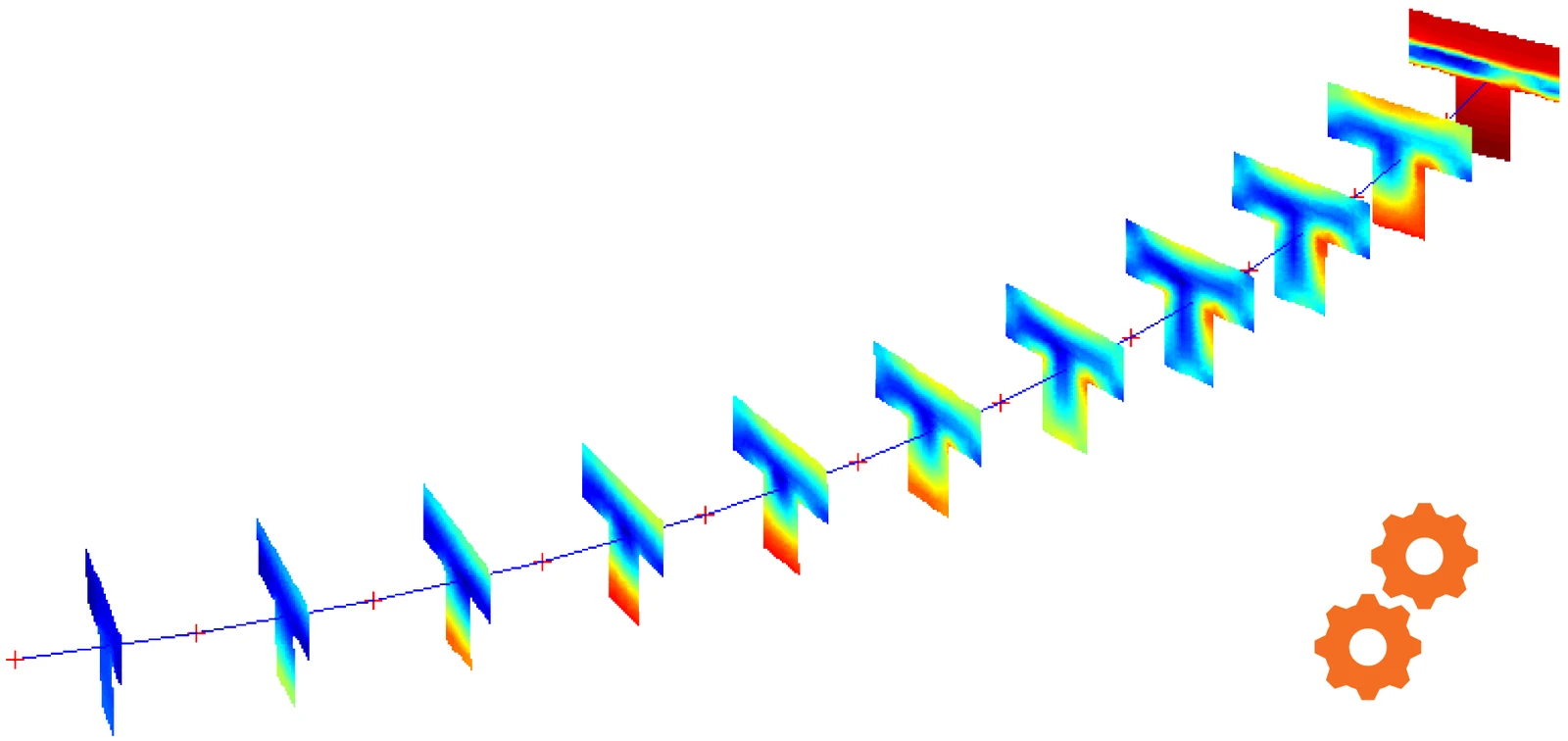
Ha a szabványellenőrzés nem kielégítő, lehetőség van pontosabb módszerekre áttérni, mint például az Izoterma 500 vagy az úgynevezett Zóna módszer. A szerkezet egy részének vagy akár az egész szerkezet vizsgálata esetén numerikus szimulációk, például hővezetés, konvekció vagy sugárzás alkalmazhatók.
A táblázatos módszer alapfeltételezései
- Elsősorban minden érték szilíciumdioxid-tartalmú adalékanyagokra vonatkozik (ezek a legérzékenyebbek a tűz hatásaira)
- Mészkő adalékanyag esetén a legkisebb szükséges kőméret 10%-kal csökkenthető
- A beton nedvességtartalma 3%-nál kisebb kell legyen, különben robbanásszerű lepattogzás veszélye áll fenn
- A betonvasalás kritikus hőmérséklete 500 °C
- A feszítővasalás kritikus hőmérséklete 400 °C (rudak) vagy 350 °C (feszítőkábelek és huzalok)
- A vasalás tengelytávolságának a felülettől 70 mm-nél kisebbnek kell lennie, különben felületi vasalást kell figyelembe venni
- Több vasalási réteg esetén az éltől mért átlagos tengelytávolságot kell kiszámítani, és bármely réteg legkisebb tengelytávolságának legalább az R30 kritériumot kell teljesítenie
- A táblázatokban szereplő értékek között lineárisan lehet interpolálni
- A táblázatokban megadott értékek minimális értékek, és az Eurocode szerinti tervezési elveket is be kell tartani
Oszlopok
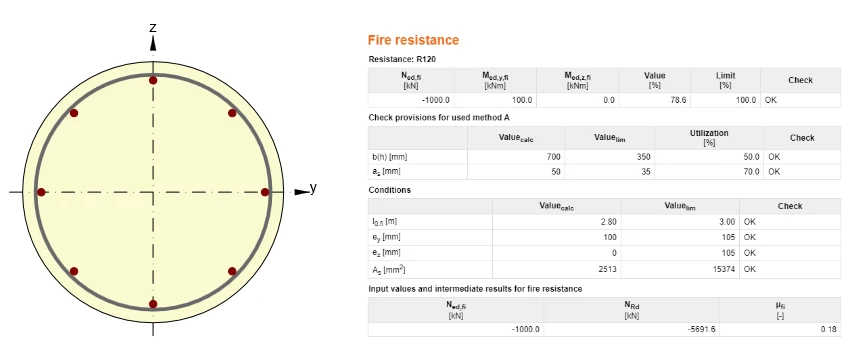
Az oszlopok szabványellenőrzése általában A vagy B módszerrel történik. A módszer megválasztása kizárólag mérnöki döntéstől függ. A szabványellenőrzés olyan oszlopokra érvényes, amelyek főként normál nyomásnak vannak kitéve, és merevített szerkezetek esetén.
A módszer
- A maximális hatékony hossz eléri a 3 m-t.
- A hatékony hossz a felső szinten 0,7*L, minden további szinten 0,5*L.
- A kezdeti tökéletlenségek a keresztmetszet magasságának 15%-ánál kisebbek.
- A vasalás maximális területe a beton keresztmetszeti területének 4%-ánál kisebb.
B módszer
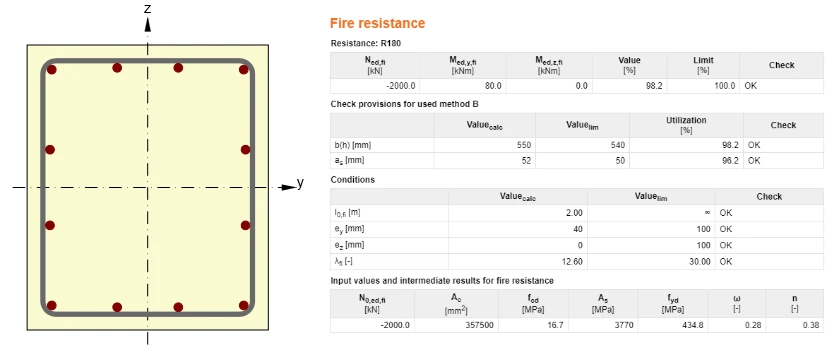
- A módszer csak merevített szerkezetekre érvényes.
- Az oszlop hatékony hossza több mint 3 méter lehet.
Gerendák
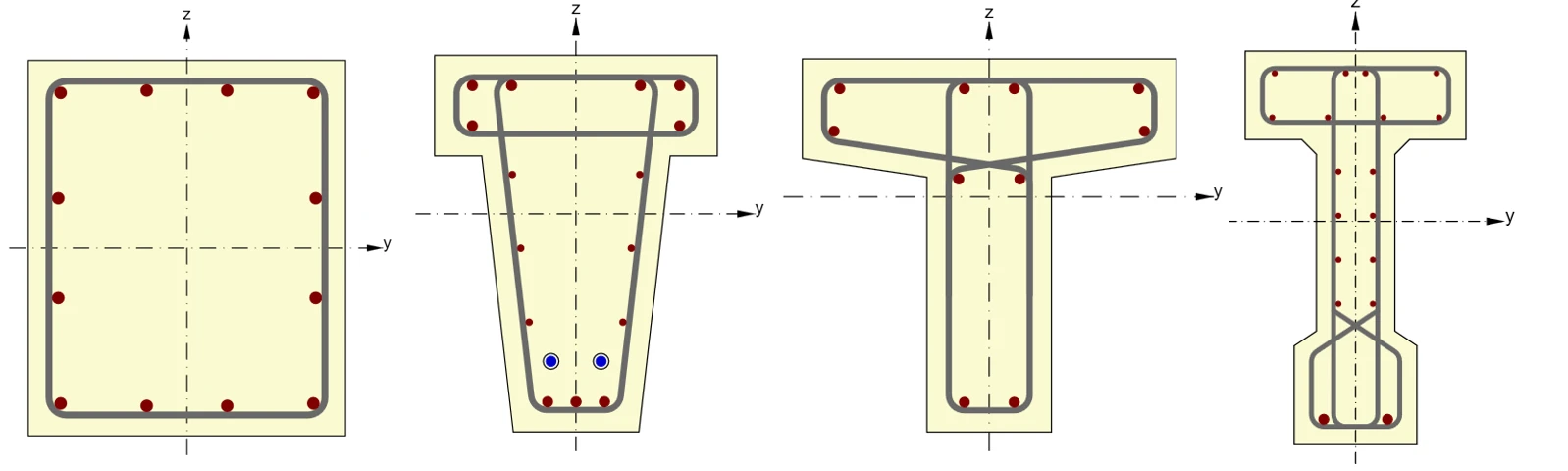
A gerendaelemek szabványellenőrzése csak téglalap, T-szelvény vagy I-szelvény keresztmetszetekre lehetséges. A következő lépésben különbséget kell tenni az egyszerűen alátámasztott vagy folytonos gerendák között.
Lemezek
A gerendaelemekhez hasonlóan választani kell az egyszerűen alátámasztott vagy a folytonos lemez között. Egy másik szempont különbséget tesz a falak vagy oszlopok által kialakított alátámasztások között.
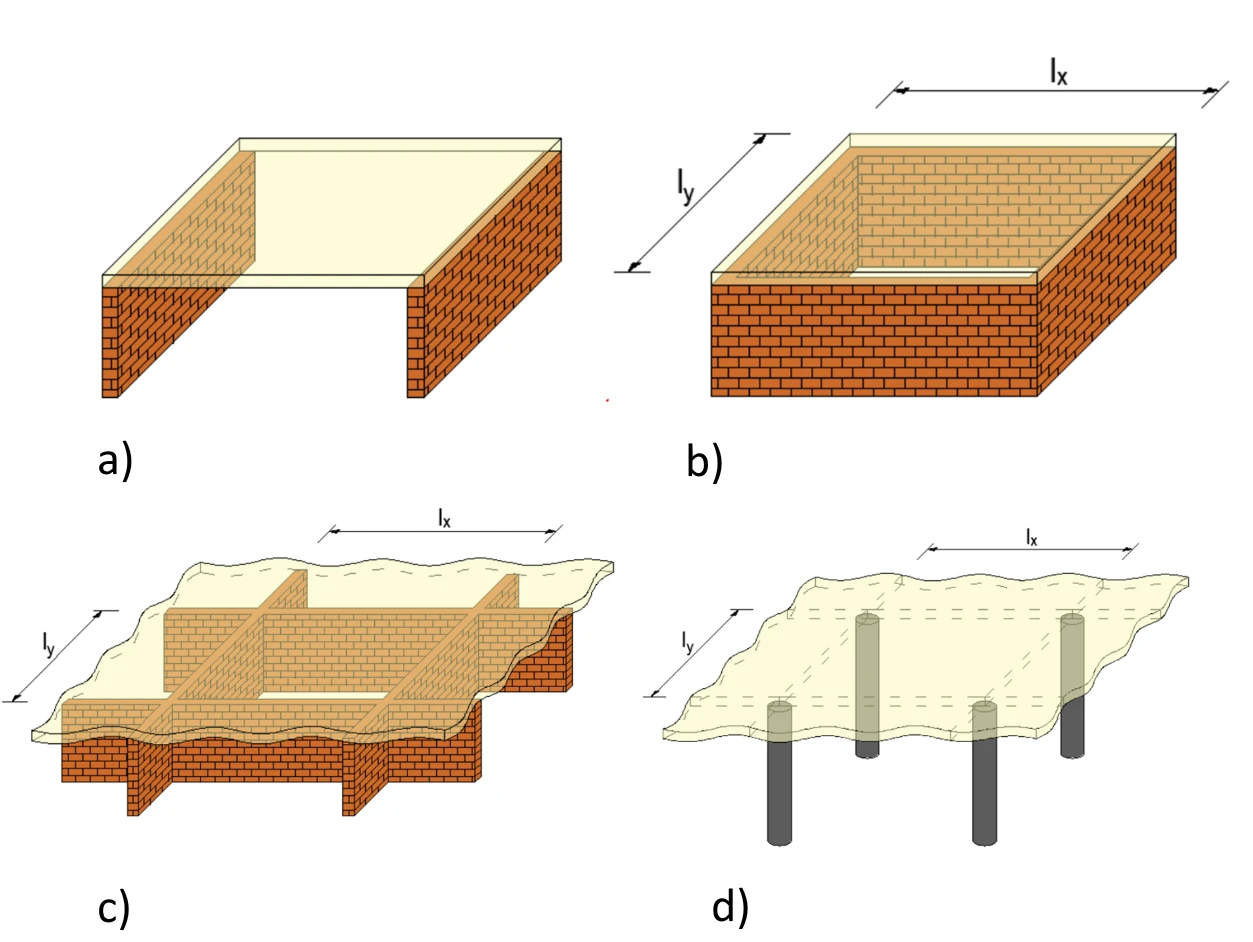
a) Egyirányú lemez, b) Kétirányú lemez, c) Folytonos lemez - falak, d) Folytonos lemez - oszlopok
Falak
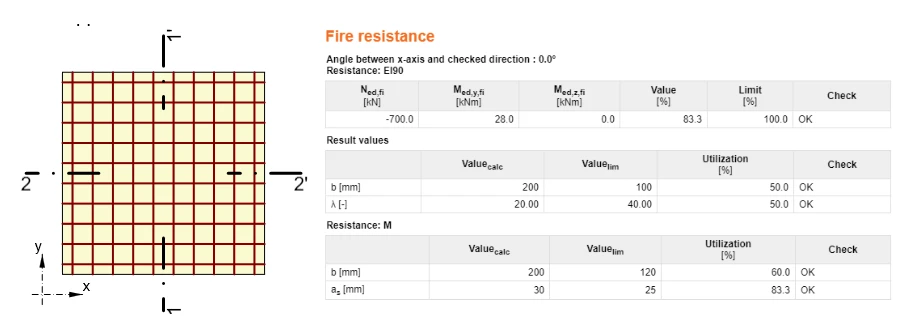
- A magasság és vastagság arányának 40-nél kisebbnek kell lennie
- EI tűzállóság – integritás és szigetelési funkció, teherhordás nélkül
- REI tűzállóság – integritás és szigetelési funkció, teherhordó funkcióval
Összefoglalás
A szerkezetek tűzállóságának szabványellenőrzéséhez a Táblázatos módszer a leginkább előnyben részesített, amelynek segítségével a mérnök nagyon gyorsan megkapja az átment/nem ment eredményt. A fejlettebb módszerek, mint az Izoterma 500 vagy a Zóna módszer szintén gyakran alkalmazott módszerek. A fejlett módszereket akkor alkalmazzák, amikor kritikus elemek, például oszlop, gerenda, fal vagy lemez nem felel meg a táblázatos módszerben. A numerikus szimulációs módszerek, mint a hővezetés, konvekció vagy sugárzás főként akadémiai környezetben kerülnek alkalmazásra. Az IDEA StatiCa RCS tartalmazza az említett Táblázatos módszereket. Az IDEA StatiCa fejlesztése a Táblázatos módszerek szintjéről a numerikus módszerek szintjére viszi az elemzést. Így a közeljövőben nem-stacionárius hővezetési elemzésre számíthat az IDEA StatiCa Member-ben.
