Introduction
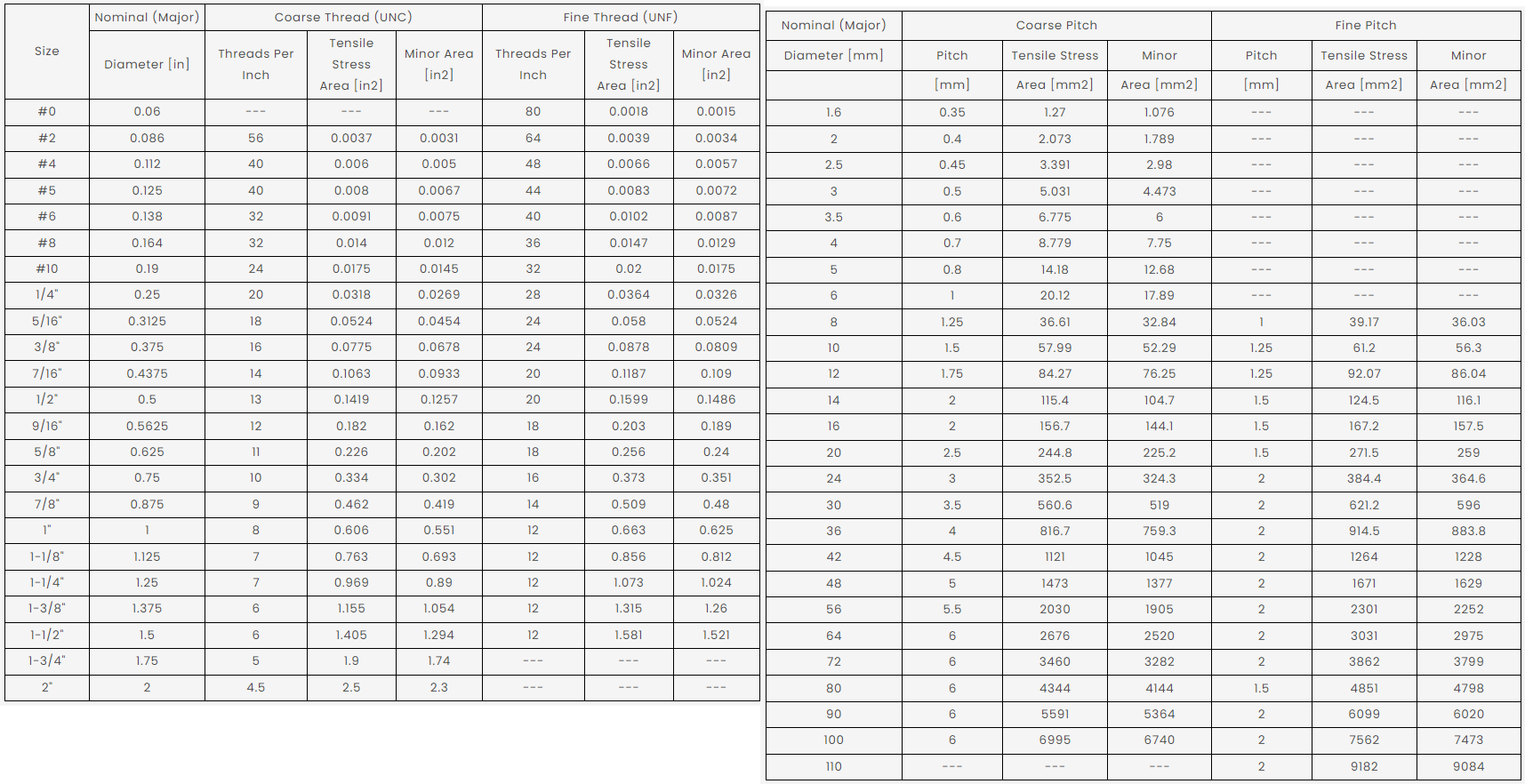
In essence, bolted connections transfer forces from one or more members into other members and on into the foundations. They do this by bearing, tension, and occasionally friction. They are suitable for almost any type of joint. More often than not, however, the resultant stiffness of the joint is not re-considered in the overall design, which sometimes should not be overlooked. Bolts come in a variety of different sizes (see below) and grades (bolt material), depending on the standard and region. In some countries (not a million miles away), they have access to both metric and imperial sizes – which can be a double-edged sword at times! As I have also discovered, there are apps for smart phones and YouTube videos that help specifiers and engineers...
Going back to my structures classes, one of the first connections we undertook was a 'simple' bolted connection taken from an example steel portal frame. To show how long ago this was, we used a pencil and graph paper! The calculations that ensued could not have been more than one side of A4 paper.
How things have changed!
In those early days, I could never have imagined the changes in methods and reasoning – but that is another topic, for another day and another article.
Bolted Joint Connections
The burning question is: can a bolted connection ever be considered 'simple' even though they are often described as such? Connections are complicated (whether we like it or not) and it takes an engineer to understand and design them. There are 'simple' forms for sure and yes - connections can still be designed and checked using traditional methods, most definitely and this is where every connection engineer should begin their journey, but is there a better way?
There are several ways to undertake designs but many options oversimplify the process by allowing a narrow window of applicability or ignoring key effects - one of the biggest problems still is the reliance on envelope forces and non-coincident load effects. Is this an over-simplification we should really be avoiding? Probably! Many firms have adopted a series of spreadsheets, but this also raises concerns about verification and keeping them current.
I also remember writing end reactions on a drawing based on shear alone and one load combination – always for the steel fabricator to design the connection :-). Those days are definitely gone. But far too many engineers are trying to stay with the old ways and mix the old approach with modern codes and methods – which results in poor, inefficient, over-designed connections.