B-regions, D-regions, limits of S&T
The design and assessment of concrete elements are normally performed at the sectional (1D-element) or point (2D-element) level. This procedure is described in all standards for structural design, e.g., in (EN 1992-1-1), and it is used in everyday structural engineering practice.
However, it is not always known or respected that the procedure is only acceptable in areas where Bernoulli-Navier hypothesis of plane strain distribution applies (so-called B-regions). The places where this hypothesis does not apply are called discontinuity or disturbed regions (D-regions). These are, e.g., bearing areas, parts where concentrated loads are applied, locations where an abrupt change in the cross-section occurs, openings, etc. When designing concrete structures, we meet a lot of other D-Regions such as walls, bridge diaphragms, corbels, etc.
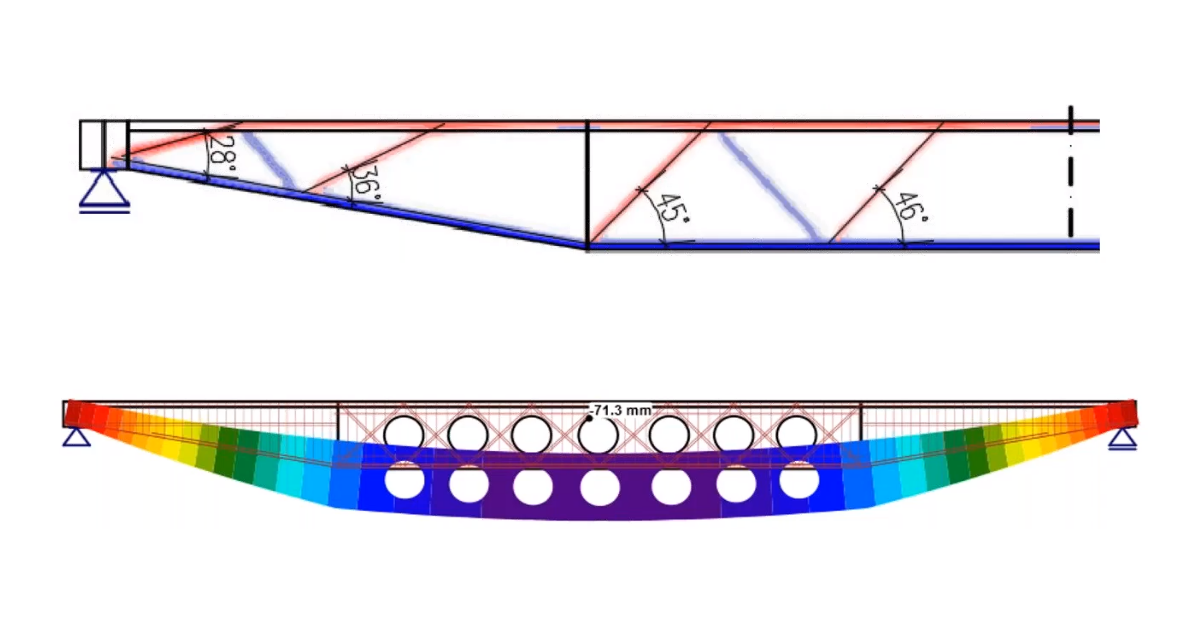
Despite the evolution of computational tools over the past decades, the Strut-and-Tie method is still used quite a lot in hand calculations. Its application for real-world structures is time-consuming since several iterations are required, and several load cases need to be considered. Furthermore, this method is not suitable for verifying serviceability criteria (deformations, crack widths, etc.).
The interest of structural engineers in a reliable and fast tool to design D-regions led to the decision to develop a brand-new method that allows the automatic design and assessment of structural concrete members subjected to in-plane loading. All packed in a user-friendly application.
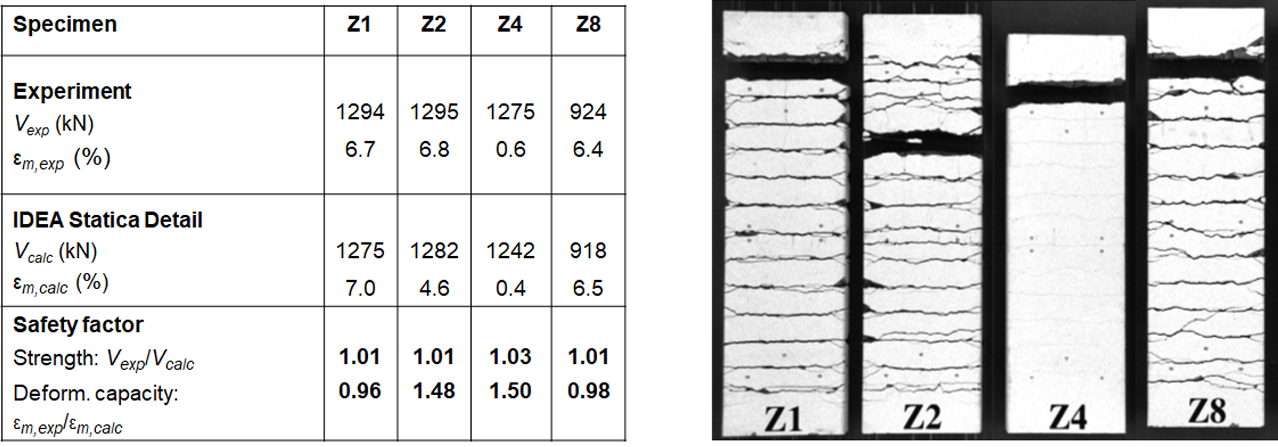
Working closely with the university ETH Zurich, we have created and thoroughly tested a method called Compatible Stress Field Method (CSFM) for the design of discontinuity regions and implemented it into the IDEA StatiCa Concrete application. The method is based on Finite Element Analysis and uses only basic material parameters employed in standard structural concrete design. CSFM overcomes the limitations of classic design tools while keeping the advantages of stress fields and strut-and-tie models.
.