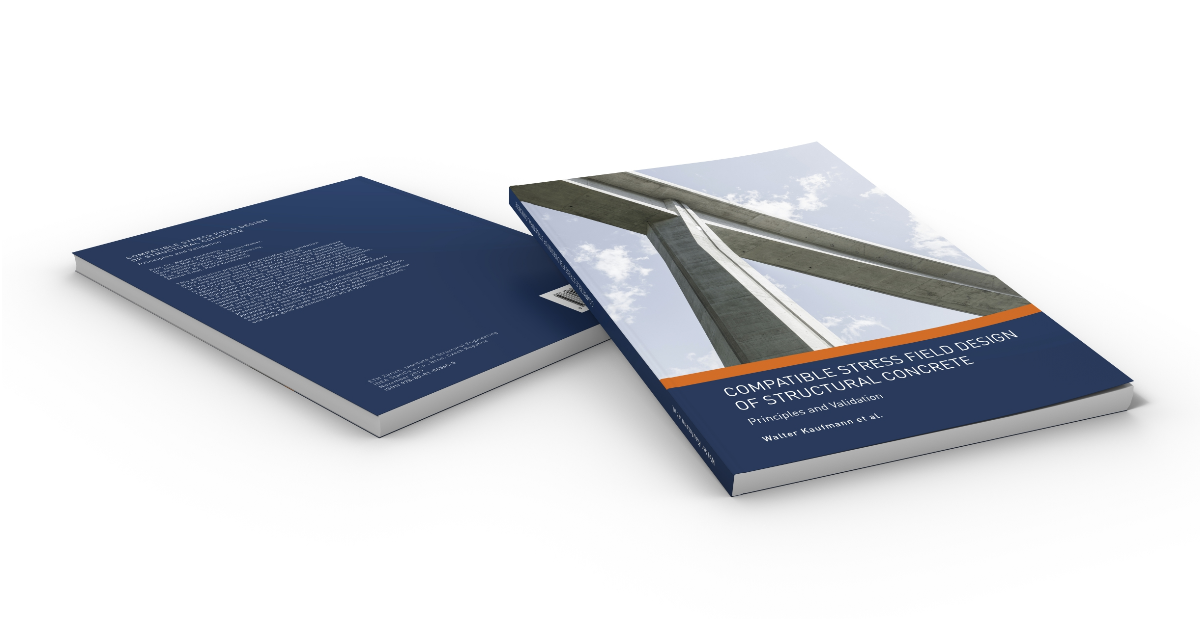
The answer to the question posed by the title of this blog entry is obvious: generations of structural engineers acquired knowledge about truss models and stress fields for a good reason, and they still have a key role in university lectures as valuable tools for the design of concrete structures. But you still might be interested to learn why I am very concerned that truss models may no longer be used in the future – and what we have done to counteract the extinction of these methods?
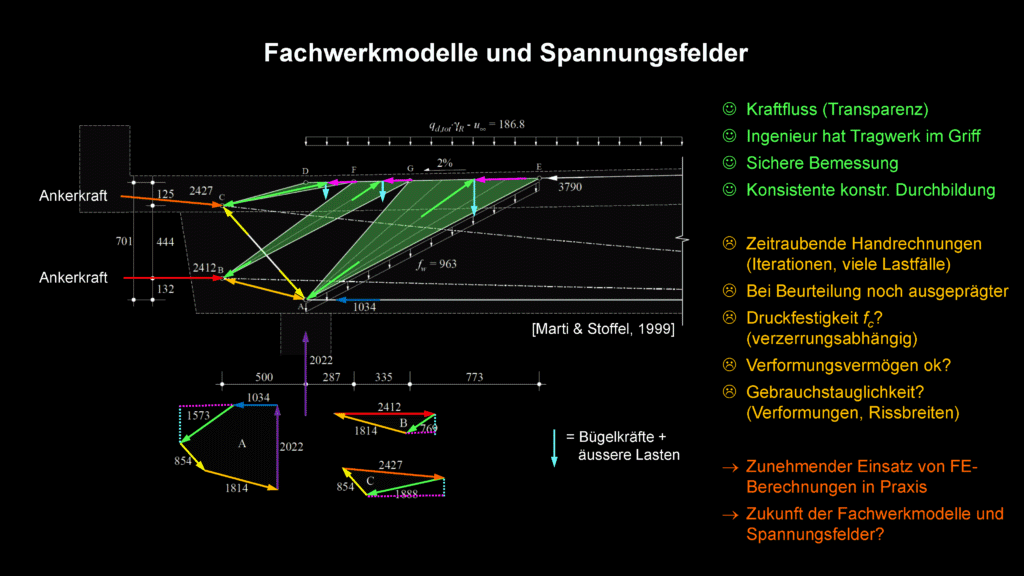
The origins of truss models date back to the early days of reinforced concrete design. However, they were only put on a consistent mechanical basis and used for design decades later: In the second half of the 20th century, a handful of pioneers, including Professor Thürlimann and his assistants at ETH Zurich, dared to apply ultimate limit state design methods to reinforced concrete. To do so, they interpreted truss models as discontinuous stress fields, and these in turn as solutions according to the lower limit theorem of plasticity theory. Truss models thus provide conservative results and make it possible to neglect restraint stresses – which makes them a perfect instrument for design in the ultimate limit state of structural safety.
The full article you can read on the ETH Zurich blog.