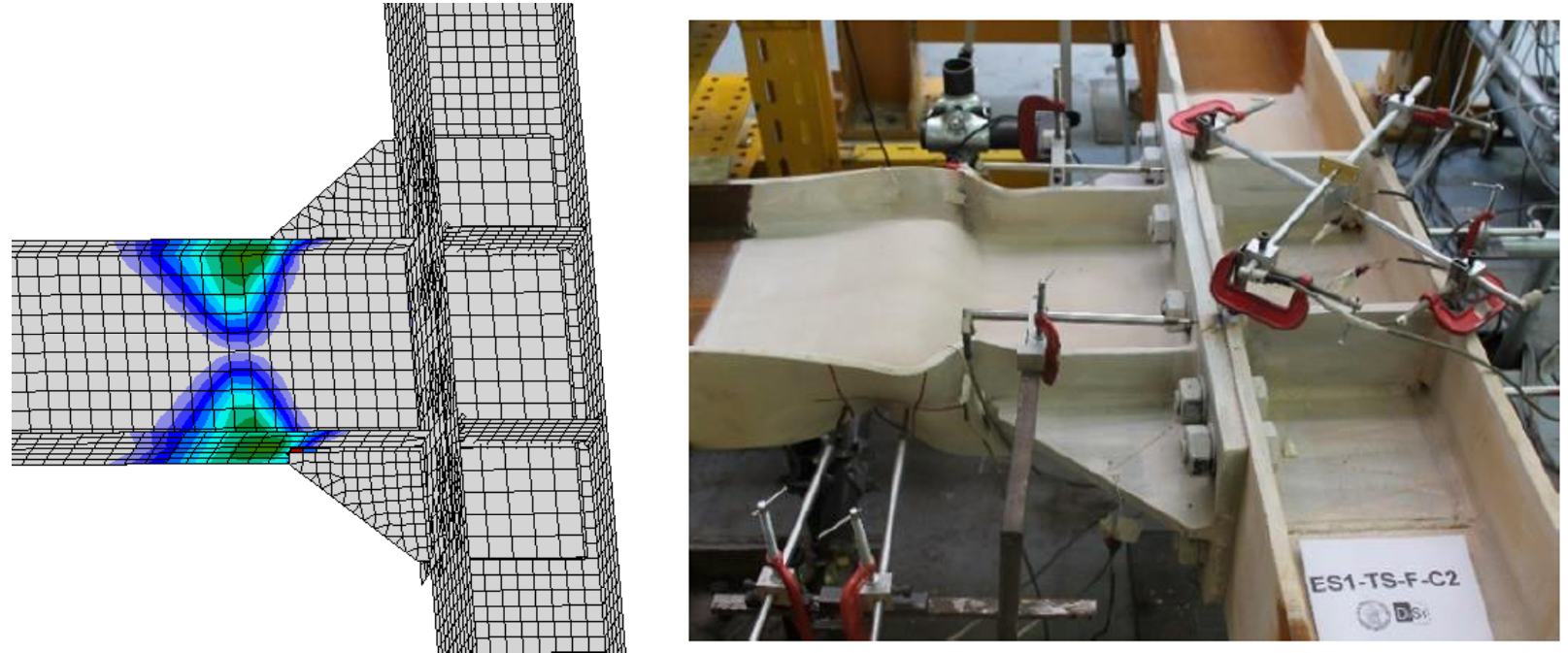
Capacity design
The objective of capacity design is to confirm that a building is capable of a controlled ductile behavior in order to avoid a collapse in a design-level earthquake. This involves designing the structure to allow a ductile failure at key predictable locations within the structure and to prevent other failure types occurring near these locations or elsewhere in the structure.
In other words, in a structure that contains both brittle and ductile elements, the capacity design is a method to provide the structure with an overall ductile characteristic.
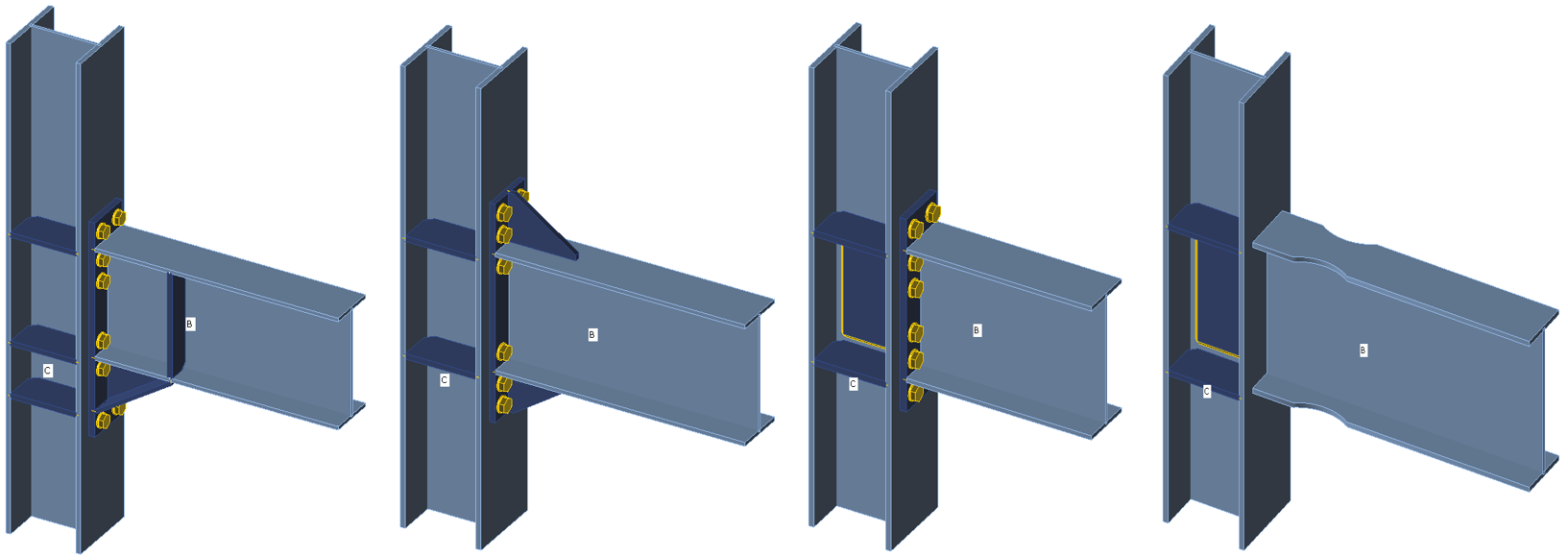
Some members are considered as dissipative and others non-dissipative. Dissipative elements are expected to undergo significant plastic deformations during seismic load case, the seismic energy may be depleted at these deformations, and the seismic load is therefore significantly lower. On the other hand, dissipative elements must be able to withstand the cyclic strains without any cracks, and all non-dissipative elements must be able to transfer the load induced by dissipative elements.
All this can be modeled and analyzed by an innovative Component-based Finite Element Method (CBFEM) which has been implemented into the application IDEA StatiCa Connection. Structural engineers and fabricators can even leverage models from various software to export and synchronize necessary data with IDEA StatiCa. All connections can then be code-checked according to seismic clauses from a number of national codes (like the American Institute of Steel Construction (AISC), Eurocode (EC), and other standards (CSA/EC/AUS/SNIP).
Dissipative item
A dissipative item is modeled with increased strength and modified material diagram. An overstrength factor \(\gamma_{ov}\) is defined in Materials and a strain-hardening factor \(\gamma_{sh}\) at the dissipative item operation. Note that the nomenclature differs between the codes. A dissipative item is excluded from the strain check of plates.
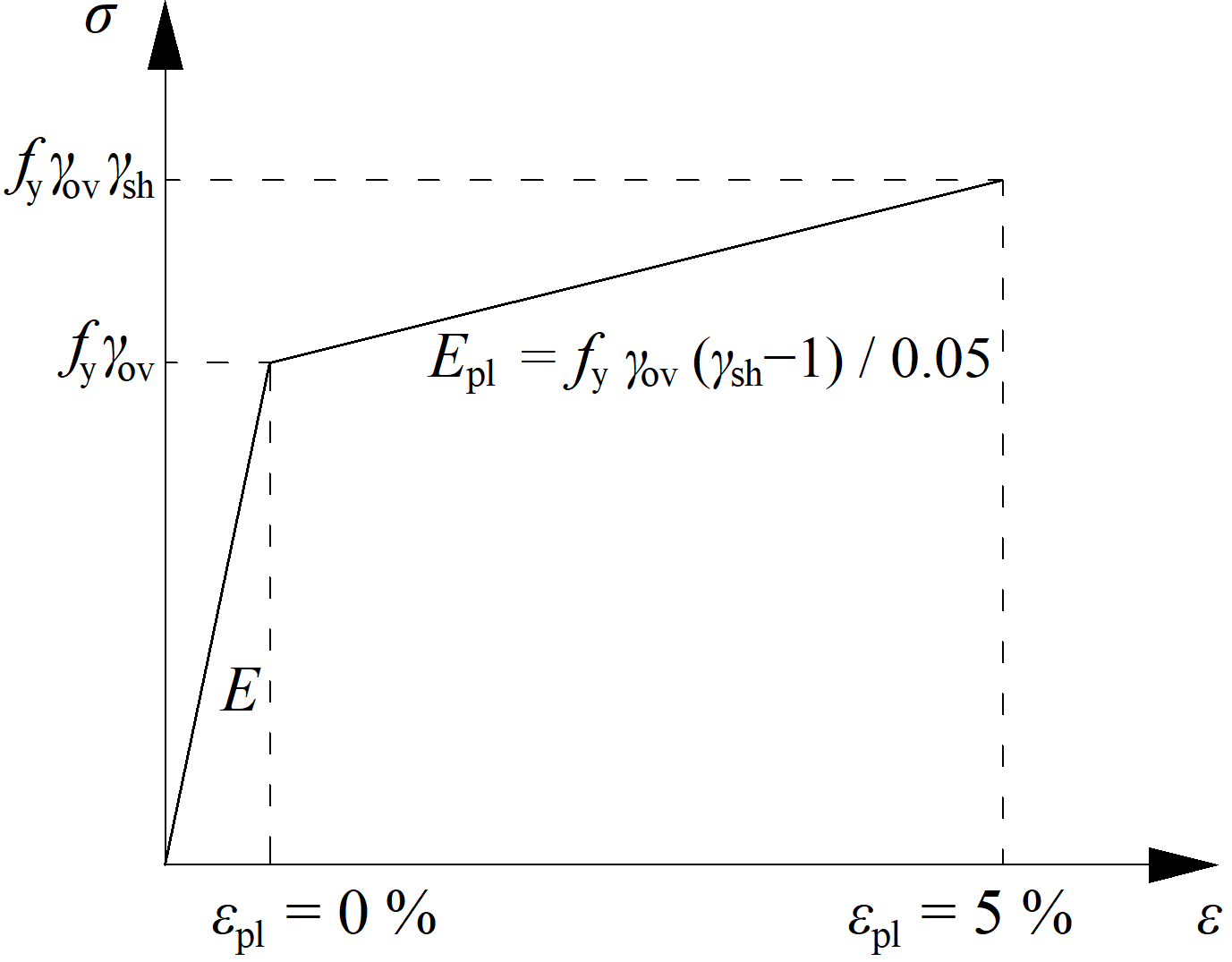
IDEA StatiCa Connection checks the connection on applied design load, which should create a plastic hinge in the selected dissipative item, usually the beam. The plastic strain in the dissipative item should be around 5%. This can serve as a confirmation that the magnitude and position of loads were determined properly.