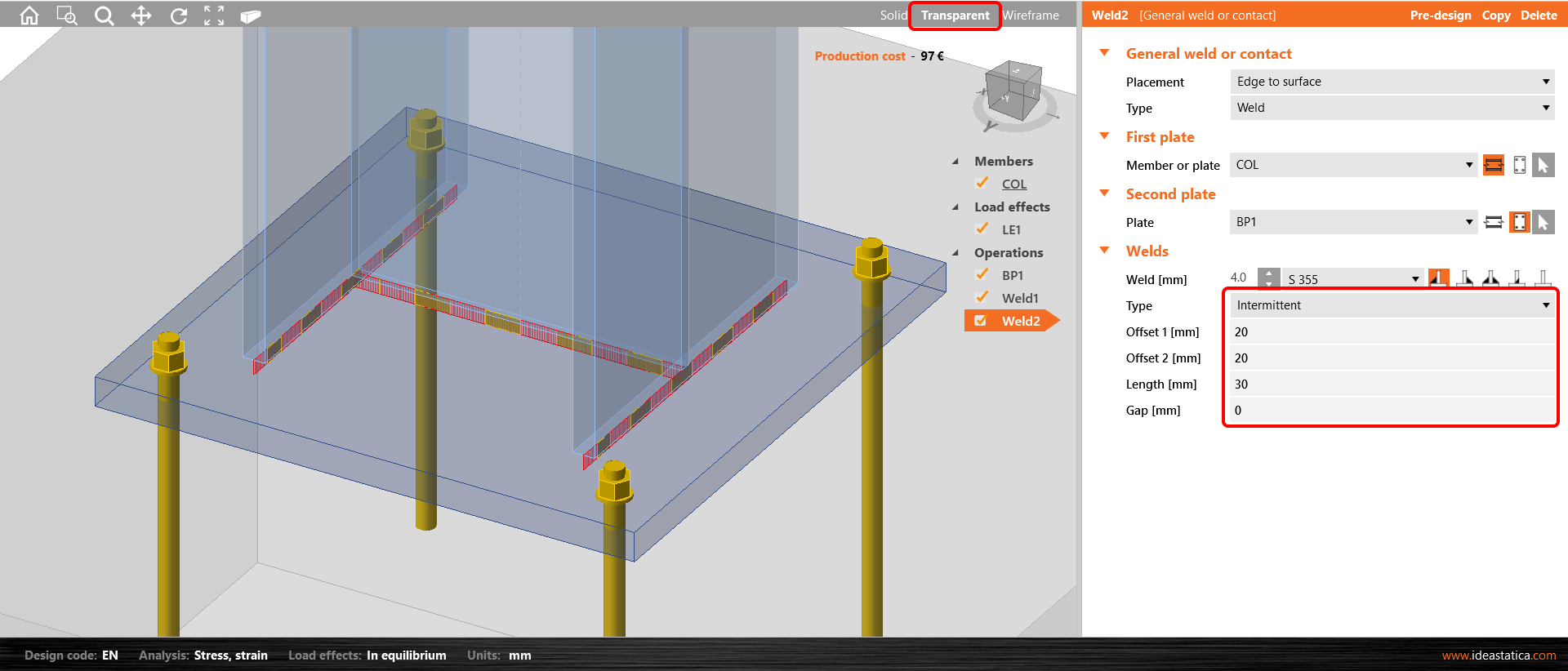
It's interesting how different approaches to the same structure we could find throughout the regions, companies, or even between different designers. While some would weld everything together without thinking about a single bolt, others would cut the structure into several parts and connect everything together with dozens of bolts. Both approaches to connecting the structural members have their pros and cons.
Purely welded connections are stiffer than bolted connections and are thus considered to be safer or can reduce deflections. But then some experienced (meaning expensive) welder has to be somewhere on site, safely hanged in the space, often in inhospitable weather. The weld quality checks are sometimes not even possible, and the less precise work brings obviously higher material costs.
The workshop welding on the other hand may be more precise, it also requires transporting to the site. And onsite welding is often expensive in implementation and over-usage of welding materials. Read on to learn which approach best suits your projects.
You already know that IDEA StatiCa can help you calculate not only the stiffness of the weld connections but also estimate the costs of the connection depending on the weld type, etc. That is not something new under the sun. You can read one of our articles about the connection cost calculation.
But we also believe that connection designs should be as precise as possible while securing sufficient connection resistance. And one of our features can help you exactly with this.
Designing contact between column and base plate
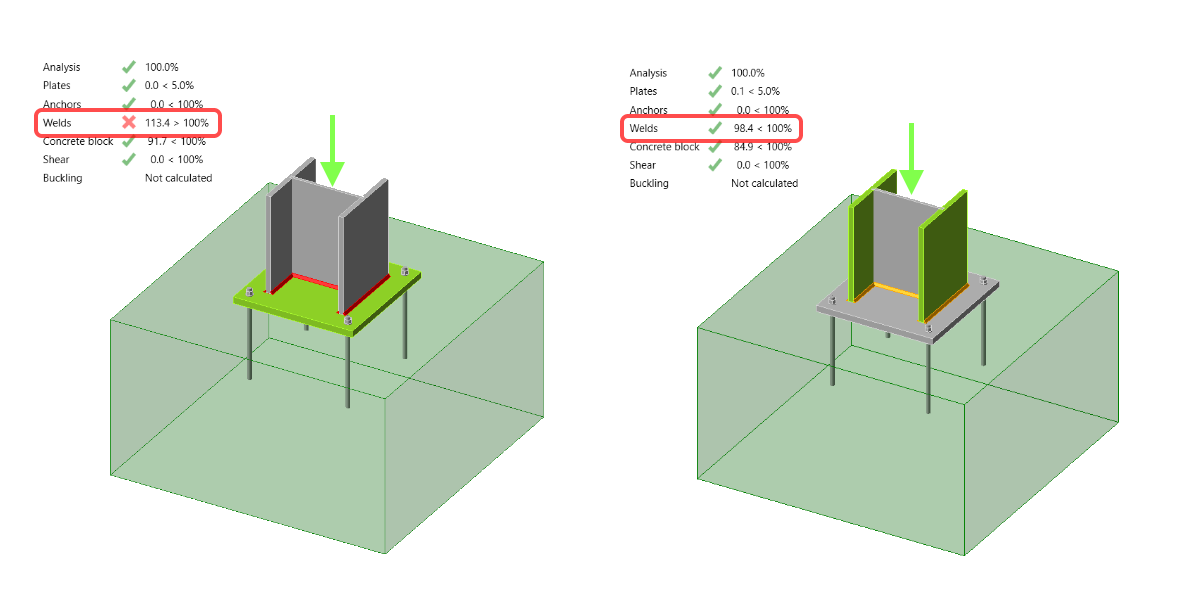
Imagine you need to design a steel column welded to its base plate. The load must be transferred from the upper structure to the foundations. In certain countries, it is possible to include the contact between the column and its base plate when evaluating the compressive strength of the connection.
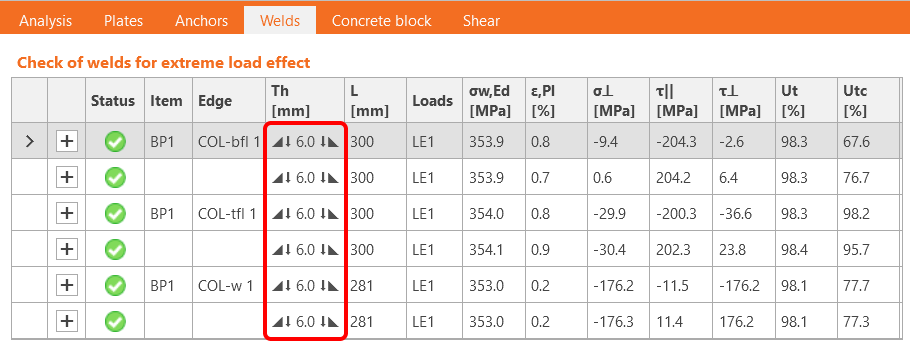
In most standards, such as Eurocode, the load is assumed to flow through the welds only. Therefore, the welds must be designed so that they resist the full compressive force from the structure above. Nevertheless, you can imagine that there exists a certain contact between the base of the column and its baseplate even before these two are welded together.
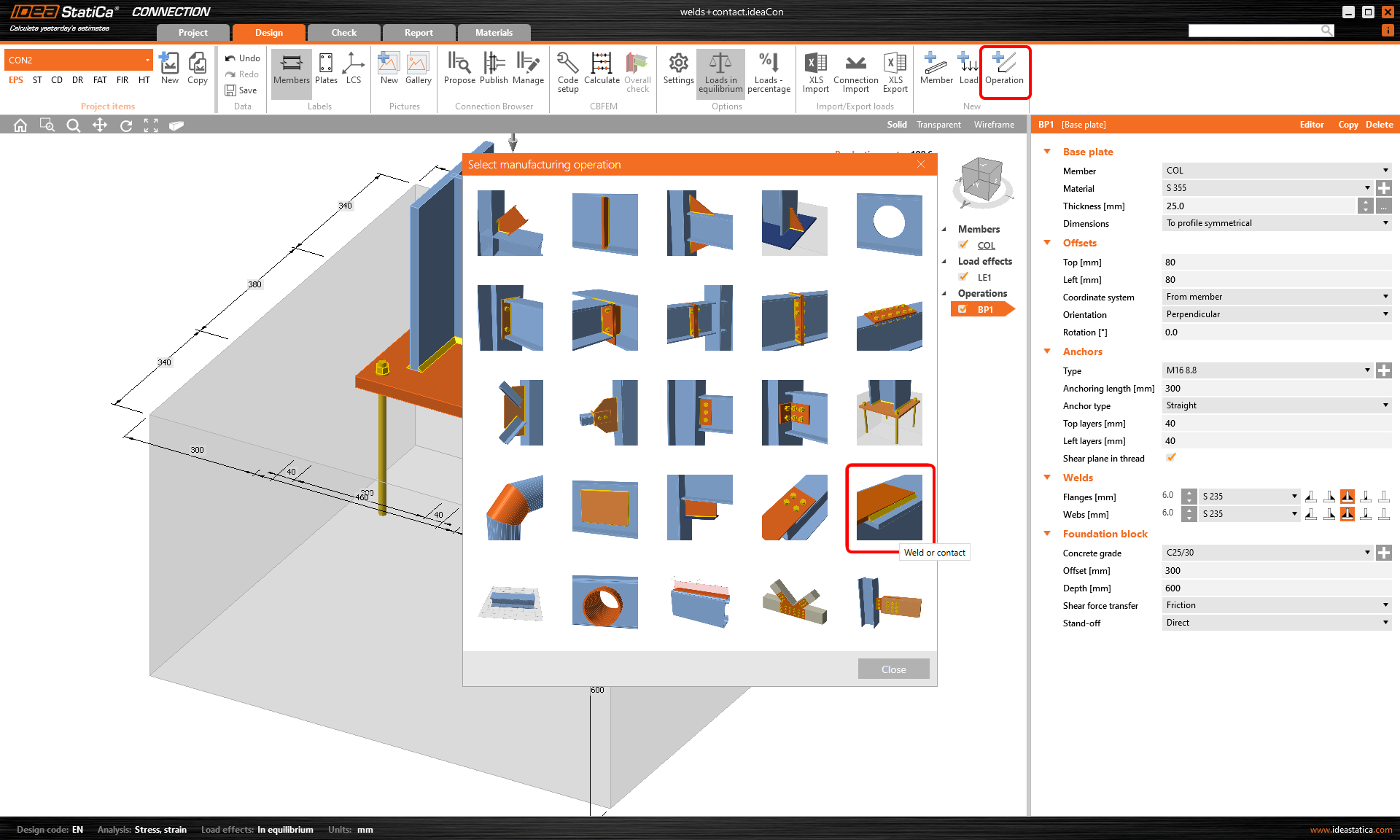
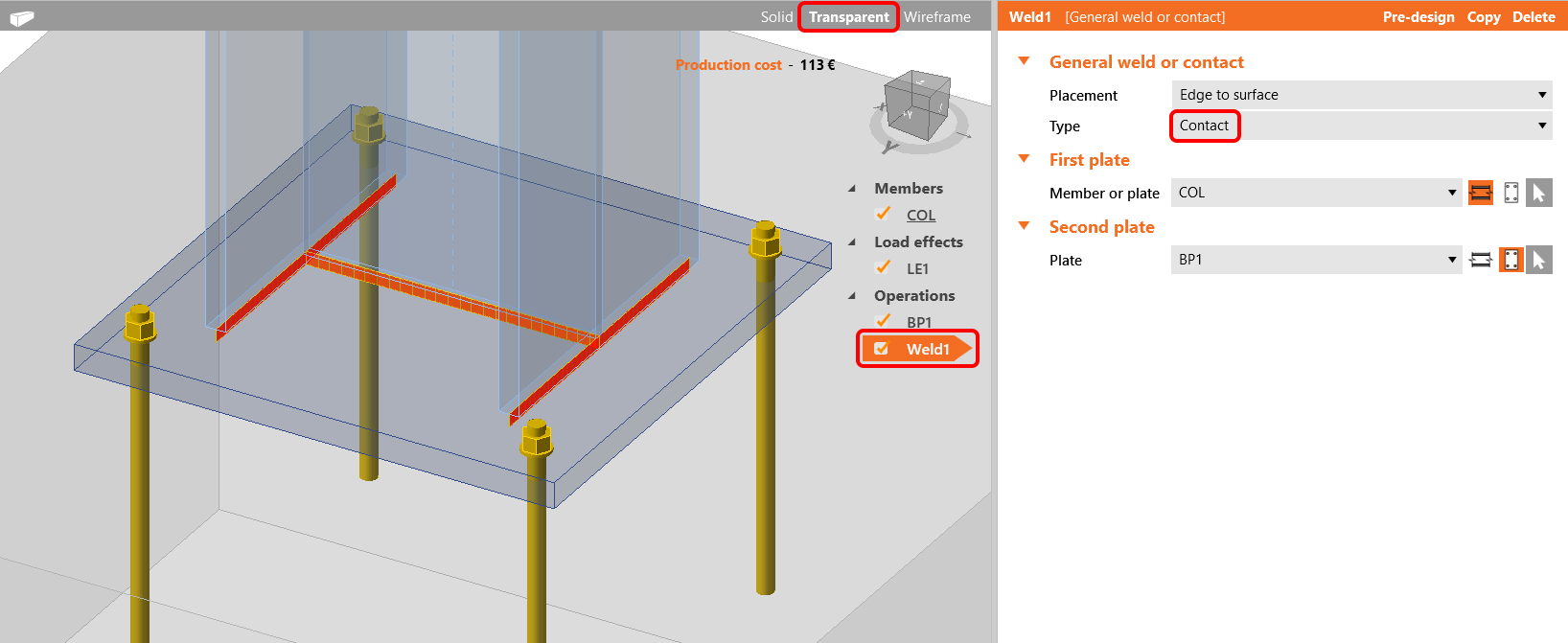
In some regions, the technical guides allow taking this contact into account when evaluating the compressive resistance. Of course, there are certain criteria to be fulfilled so that it is permitted to use this approach. Then, the contact brings an additional resistance to the compressive strength of the base weld which leads to a more economical design of the welds.