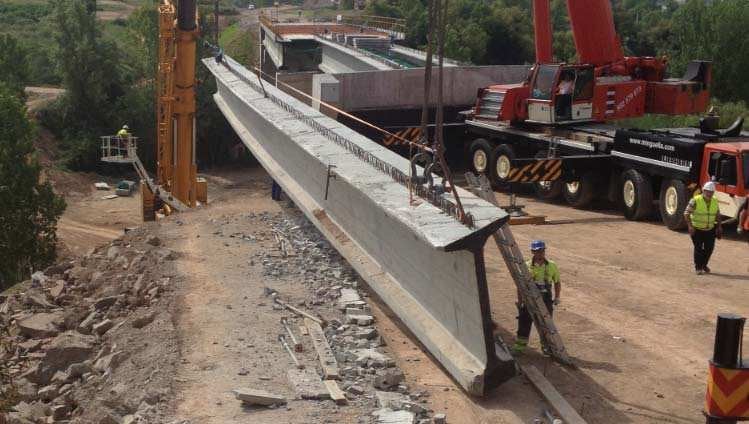
A bending or an excessive deflection around the weak-axis occurrence of a slender precast prestressed beam or even the collapse of a prestressed precast concrete girder bridge on a construction site during the lifting stage is not a rare misfortune. But is it really still happening nowadays with all the safety codes, guidelines, and previous engineering experience? Yes, it is. How come? What is the problem?
Lateral instability of long prestressed beams
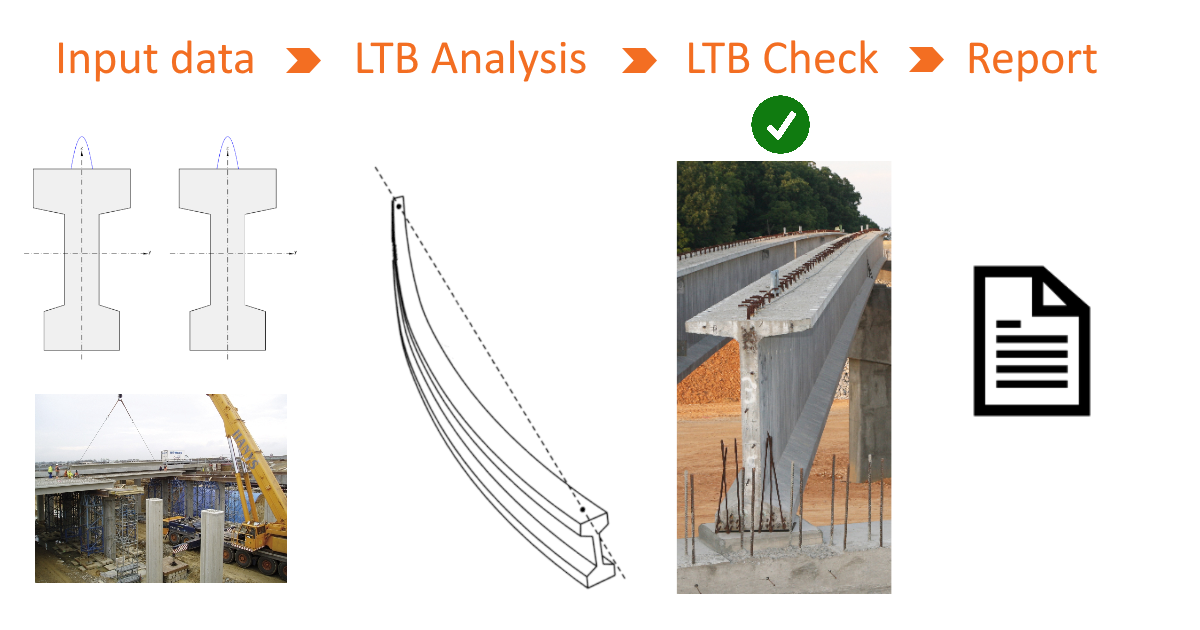
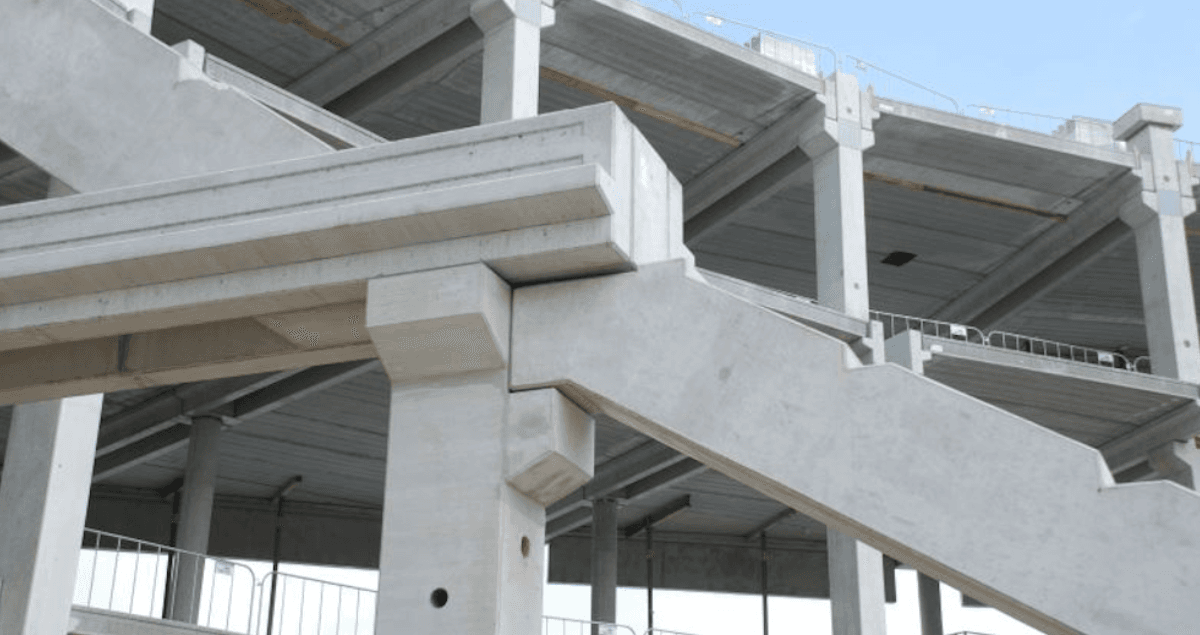
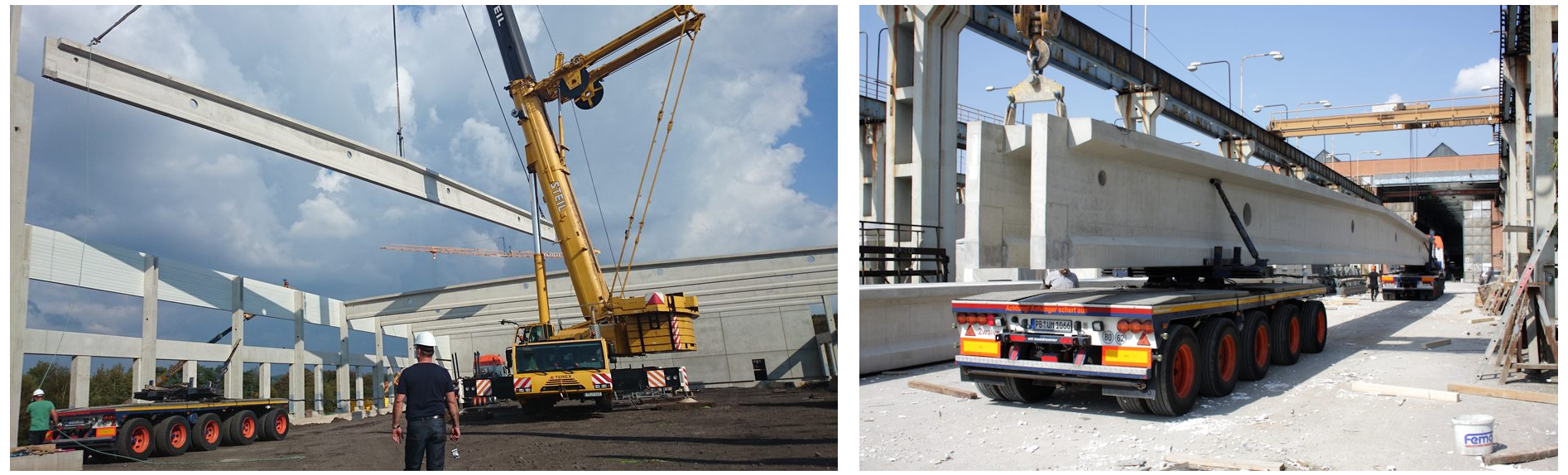
Precast concrete beams, or girders are used in a wide variety of projects, typically industrial halls, hypermarket stores, warehouses, or girder bridges made of precast prestressed concrete. Several technological advances, like materials used, more efficient cross-section shapes, and larger prestressing strands enable reaching larger spans. Because of the increase in span, the total weight of such beams also increases, sometimes making the transport and handling stages the critical load cases in the structural design, as depicted in figure [3].
The common strategy to overcome this issue is to minimize the self-weight of the beams by reducing the width of the flanges. Nevertheless, this also reduces the weak-axis stiffness and torsional stiffness of the element, amplifying the risk of lateral instability. [1]
The reported accidents and damages due to lateral instability are usually associated with eccentricities that activate second-order effects during transient loading situations (lifting, transport, and support on bearings). Typical sources of these eccentricities are fabrication tolerances, variations in the lateral positioning of strands, local cracking, creep and shrinkage sweep, and sun heating on one side, causing the girder to bow. Since prestressed concrete beams were assumed to have enough margin of weak-axis stiffness, limited attention has been traditionally paid to the phenomenon. [1]
Accidents of long prestressed precast concrete beams
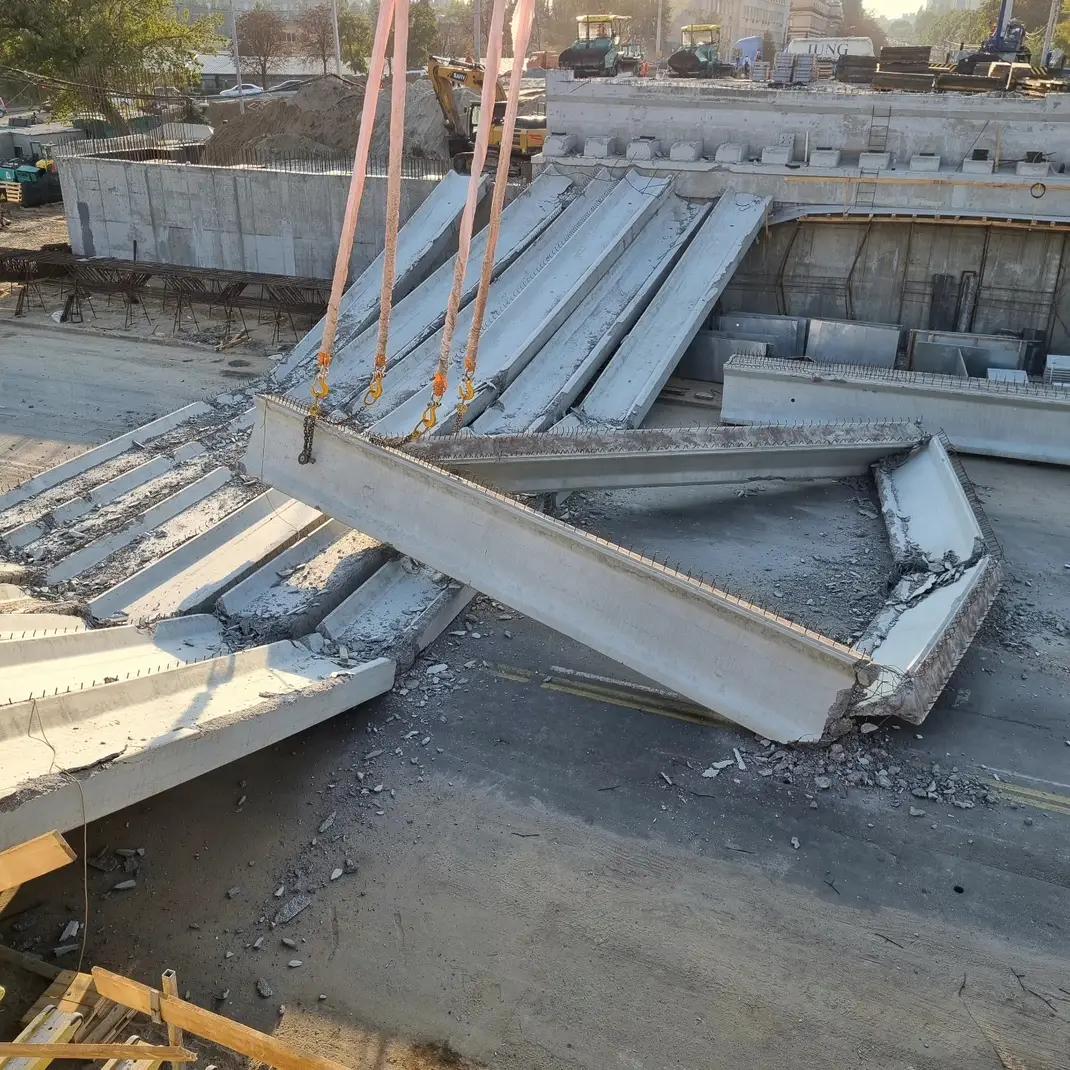
Kyiv’s 1965-built Dehtiarivskyi Bridge, which closed for renovation on June 13, 2023, collapsed [2]. Apparently, after six beams had already been mounted, workers started installing the seventh one, and the beam lost its stability, pushing the rest of the beams, and everything collapsed. Fortunately, there were no casualties, but of course, there were huge financial damages.