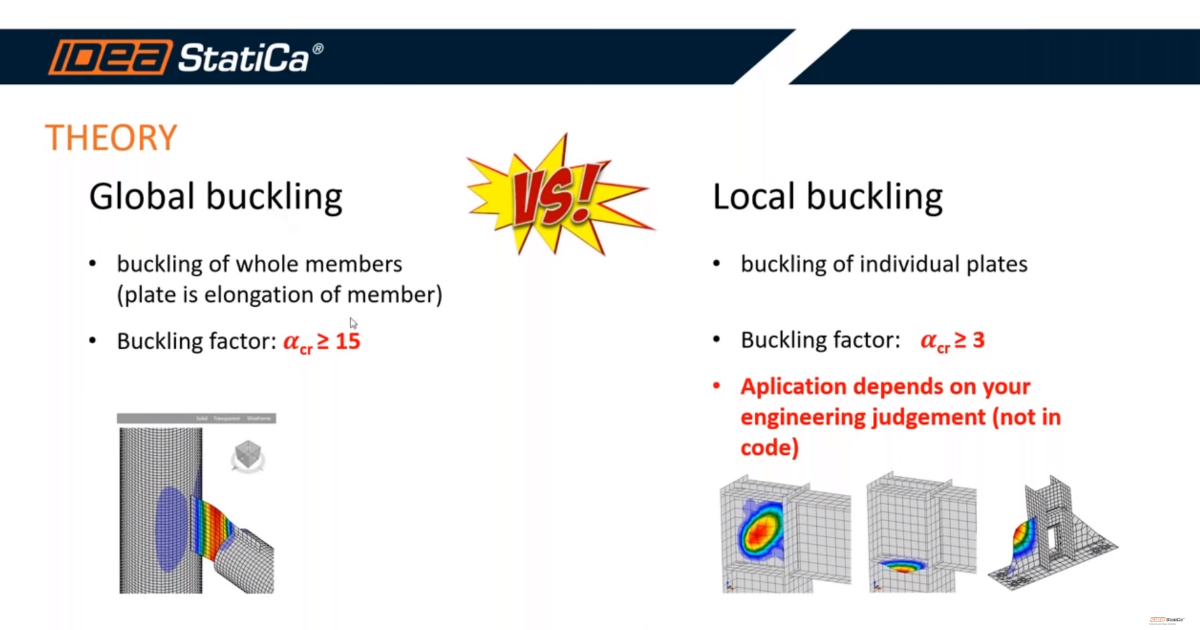
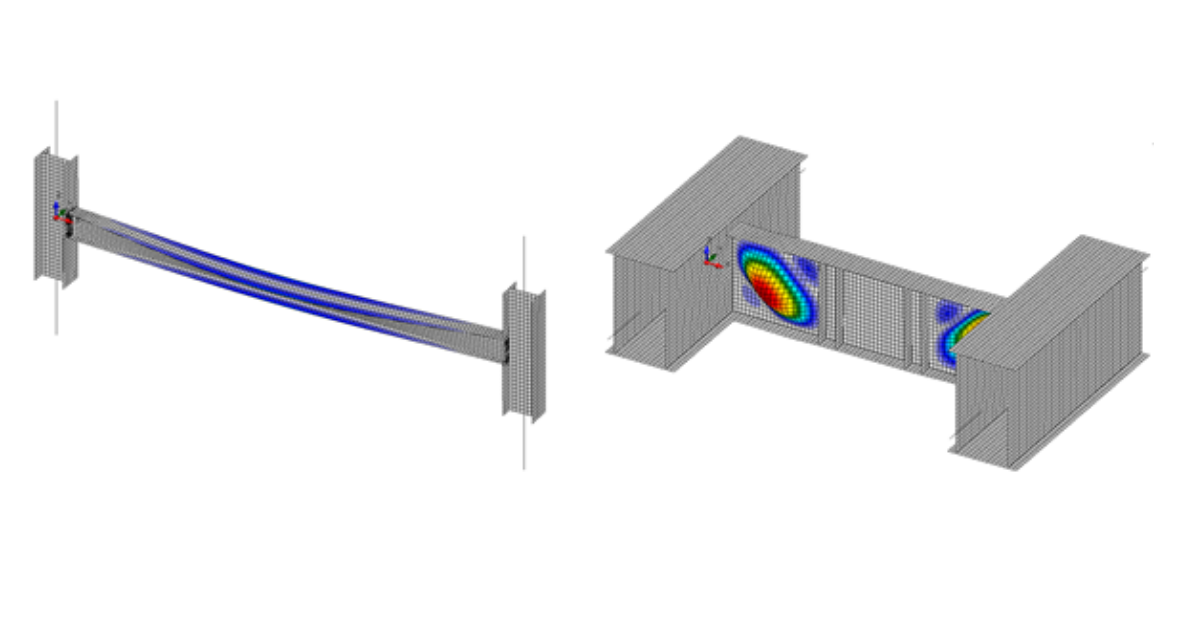
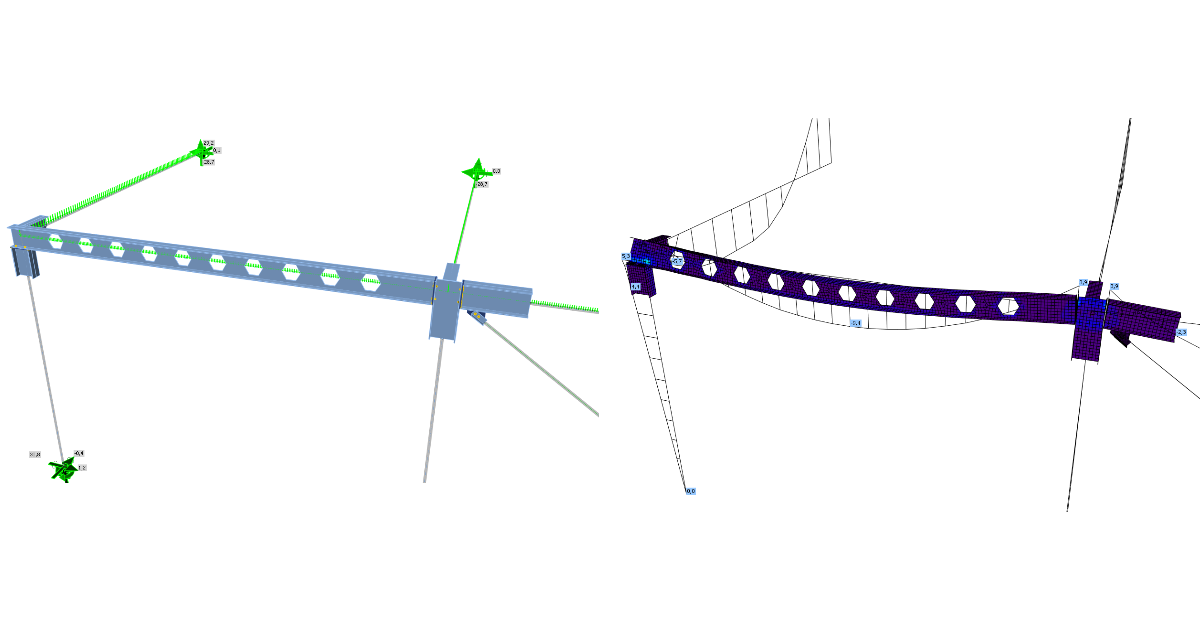
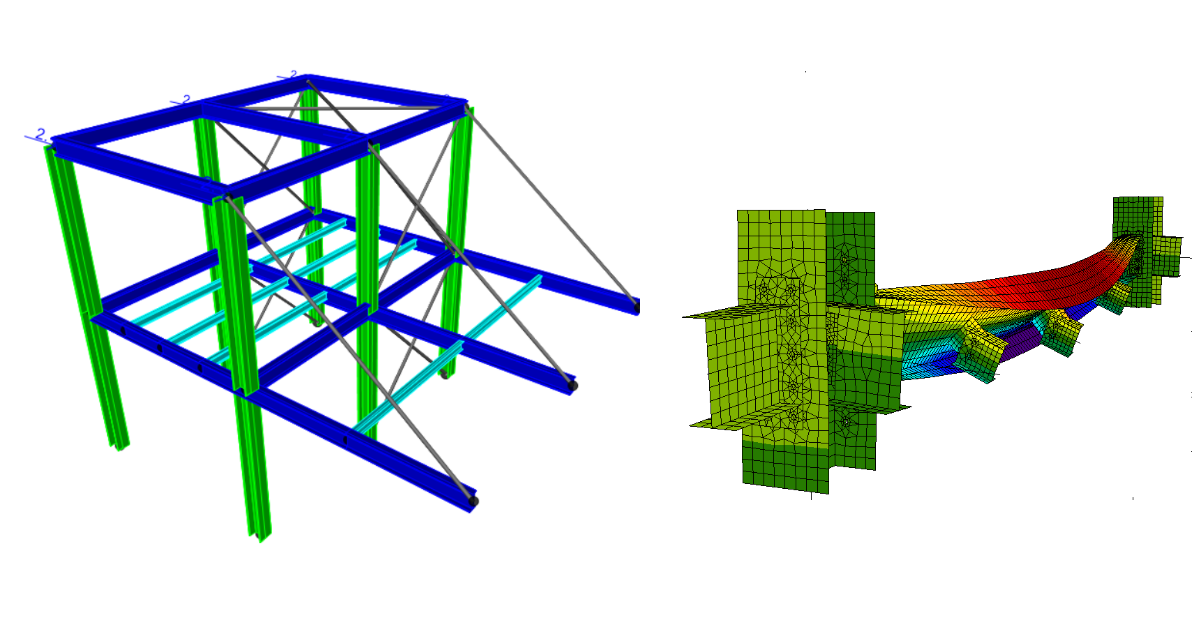
There are different forms of this complex phenomenon. Generally, we can distinguish between the global buckling of structural members (slender columns in compression, lateral-torsional buckling of bent beams) and local buckling of plates (in compression or shear). When reaching the critical load, the component changes its shape to a new, energetically more convenient one: it buckles. And it may happen even if the stress in the component is far below the strength of the material of which it is composed. Further loading may cause significant and somewhat unpredictable deformations, possibly leading to complete loss of the member's load-carrying capacity.
IDEA StatiCa is here to help engineers with the global and local buckling of steel members.
Buckling of connection
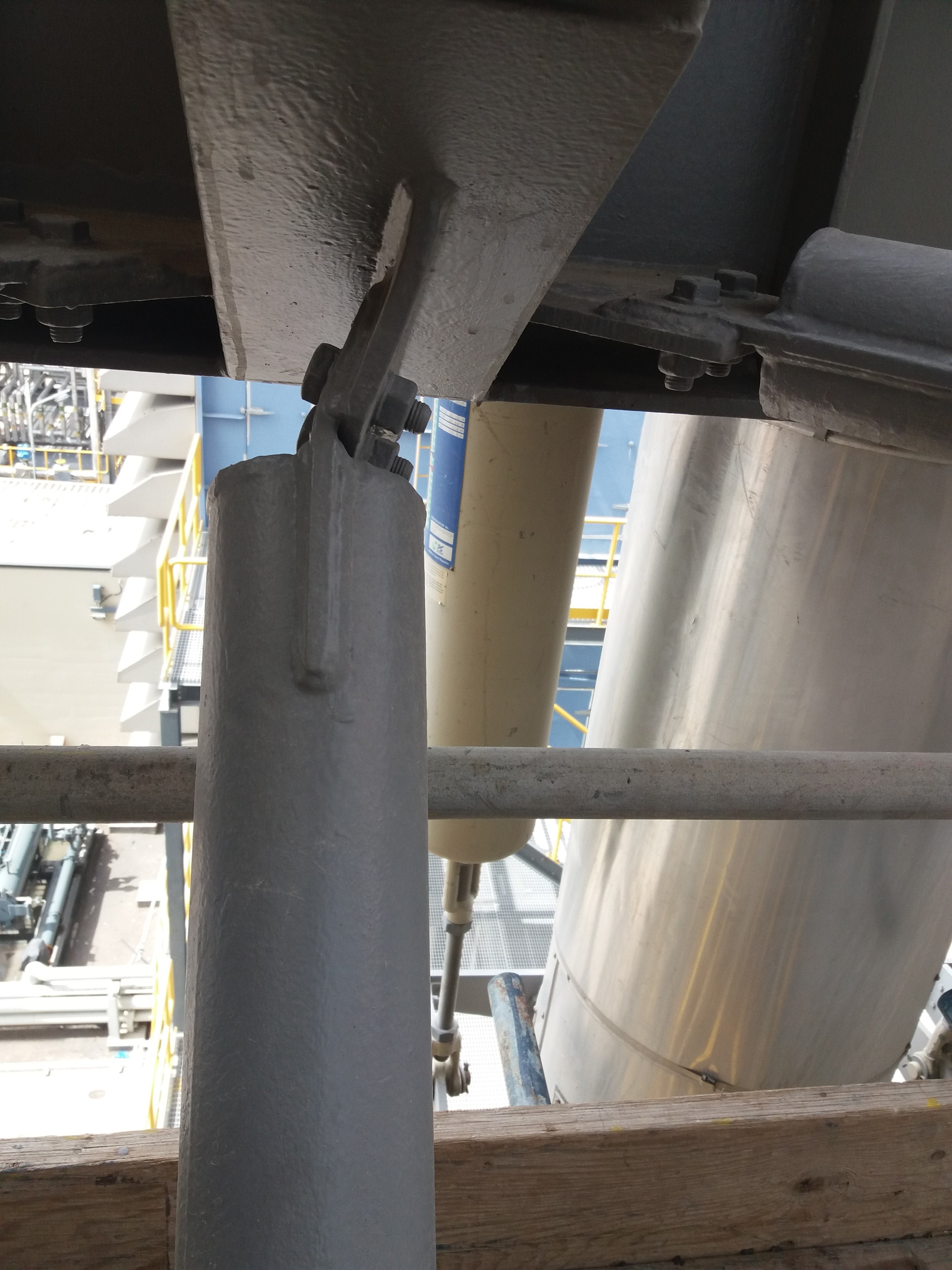
Buckling is usually not an important issue in joints however, it should be checked that there are no buckling issues and the results of strength analysis, which uses only geometrically linear analysis, are correct. Of course, when an improper detail is used, buckling may easily happen...
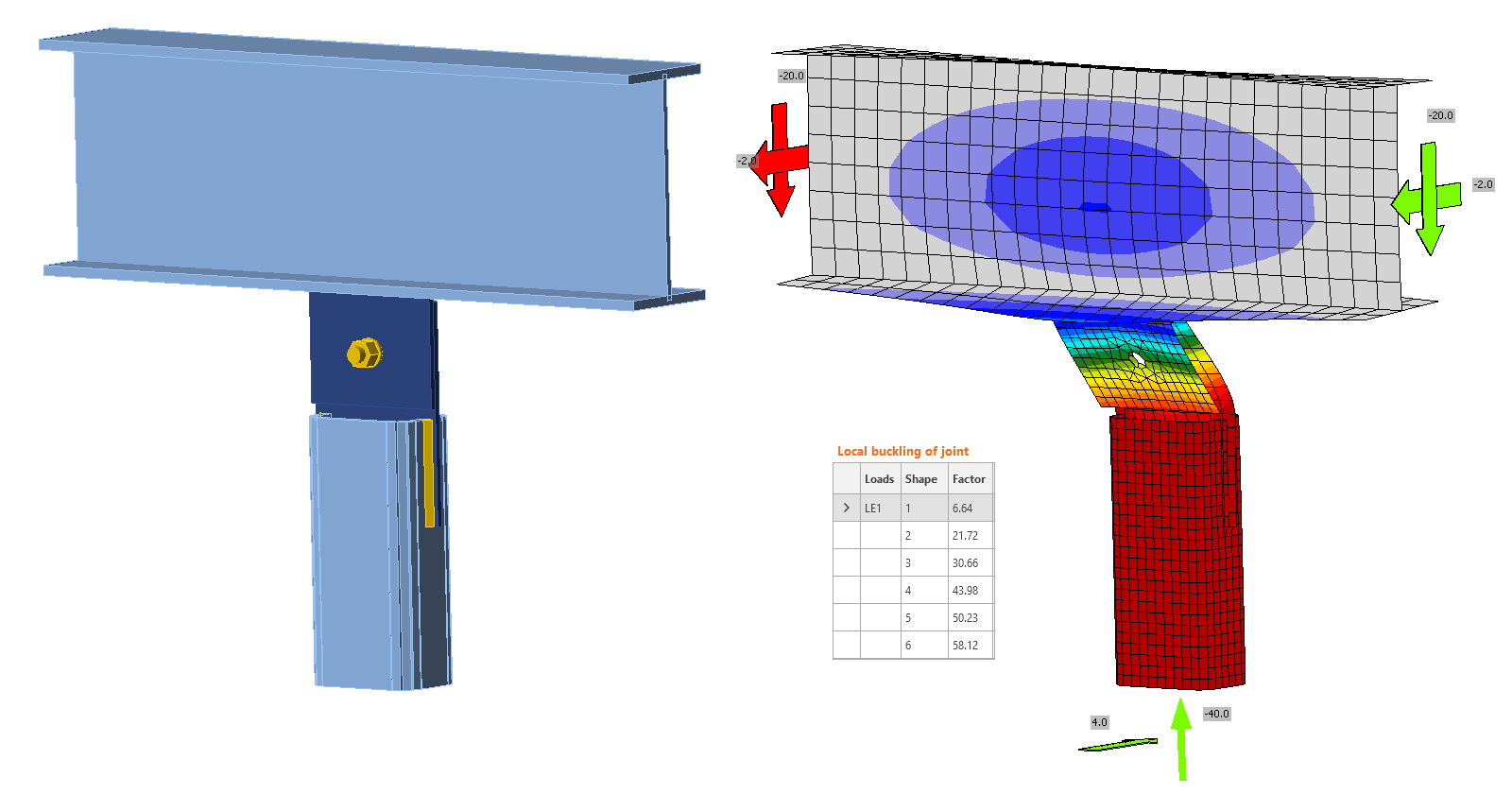
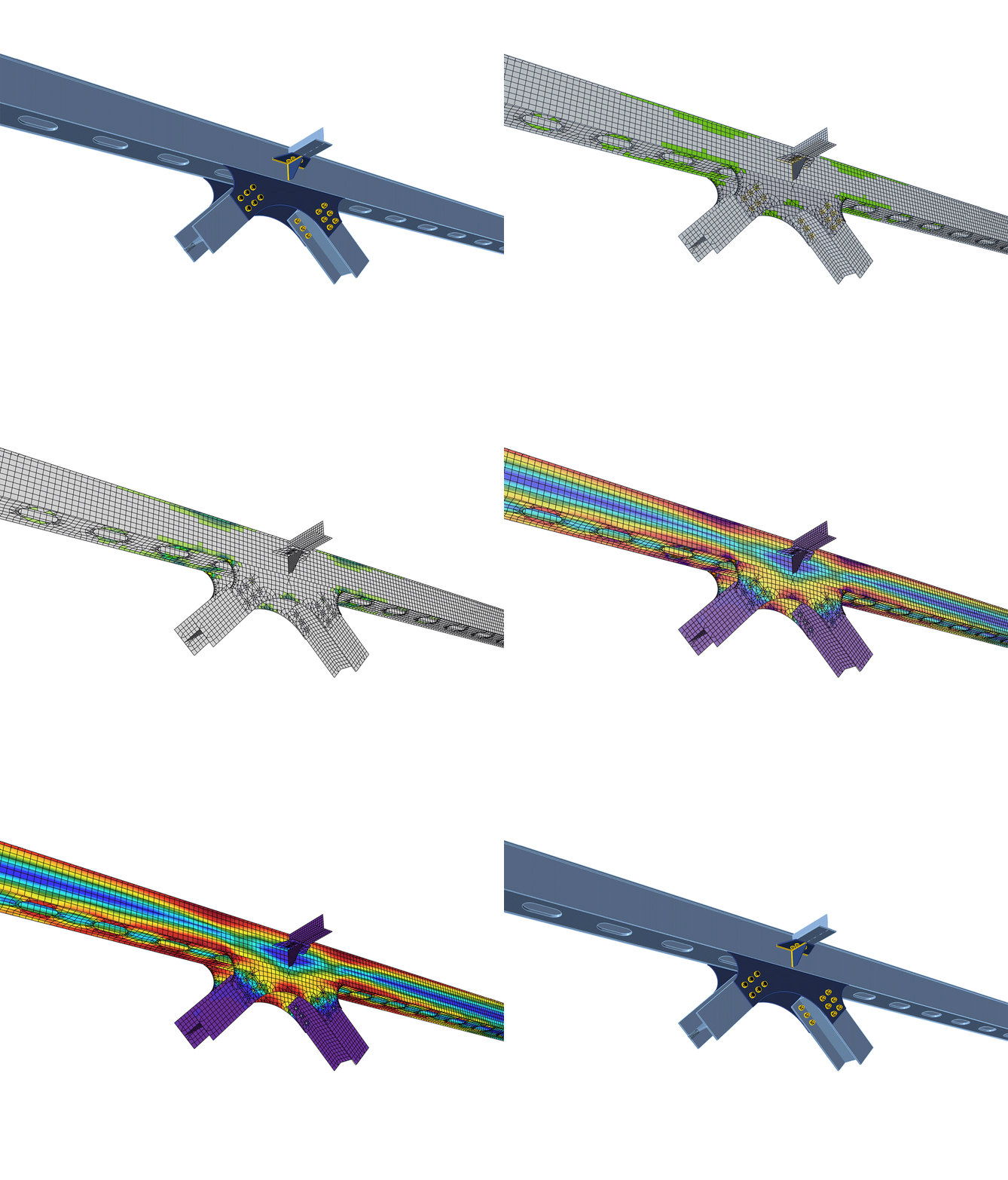
IDEA StatiCa Connection is able to perform linear buckling analysis of a model of a joint. The results are predicted in buckling modes. Critical load, at which buckling of the perfect model occurs, is calculated for each buckling mode. The critical load is presented by multipliers of the load acting on the joint. According to the buckling mode and critical load multiplier, the user can determine the safe buckling design. General information about the buckling analysis in IDEA StatiCa may be found in our Theoretical background.
Do you search for the buckling analysis in the application? Just follow the tutorial for EN or for AISC standard.