As you probably know, the Ultimate Limit State check indicates how much load a structure can handle before failure. It is valid that the load effects are resisted by a pair of internal forces on a lever arm.
It doesn't matter whether it is prestressed concrete or reinforced. With the same amount of steel with the same yield strength, the prestressed and the reinforced structures withstand the same load before reaching the bearing capacity. The additional compressive stress in prestressed concrete does not help the structure to resist for a longer period. So what's all the hype about?
Let's take a closer look
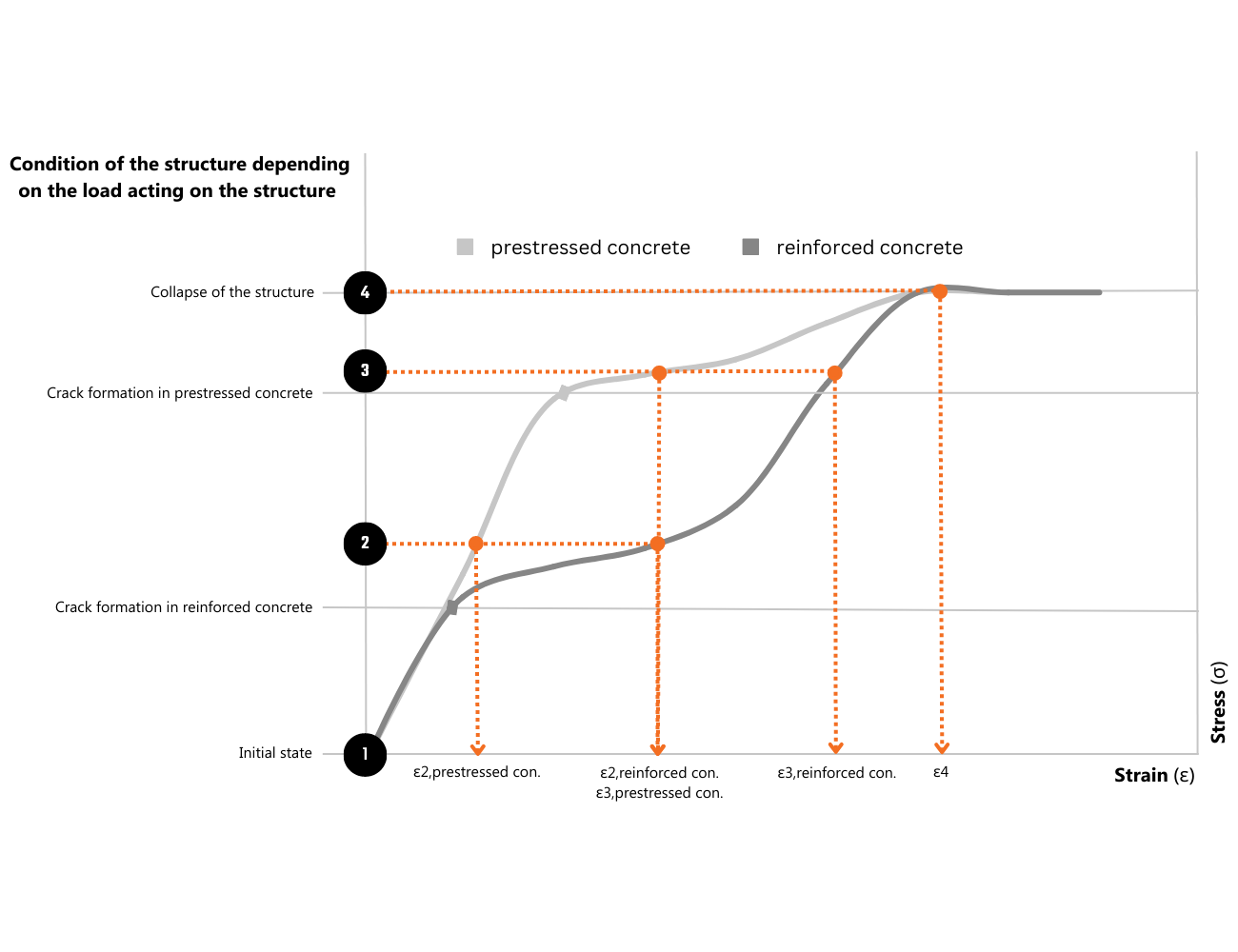
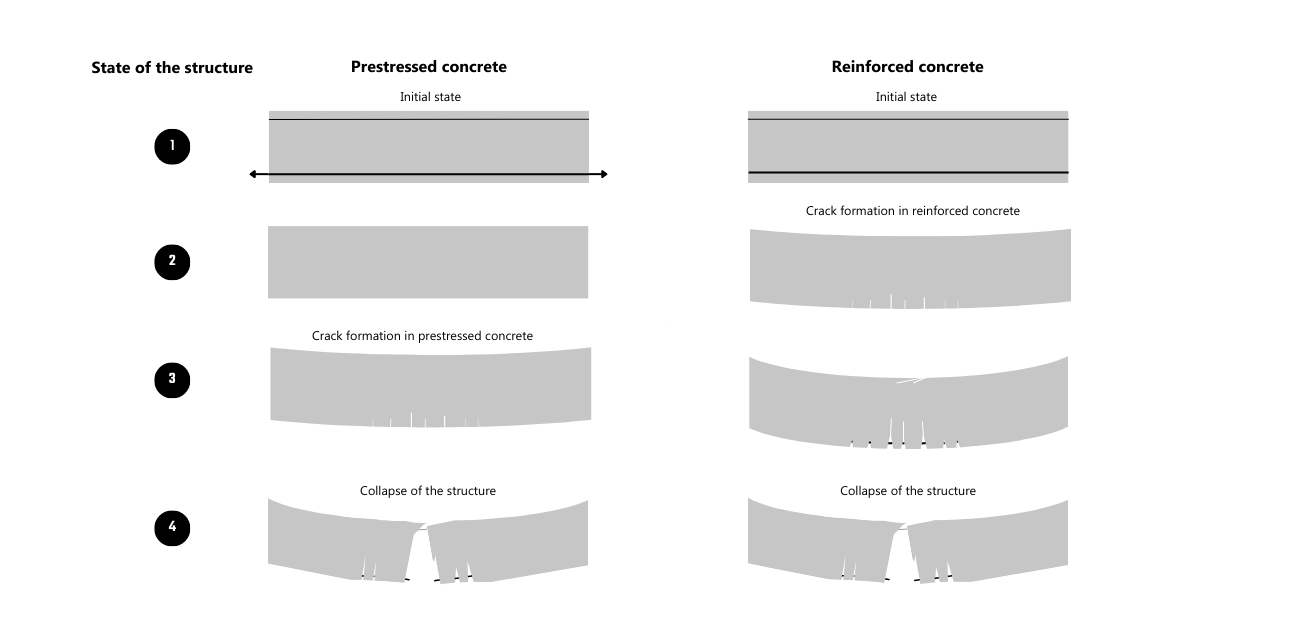
By prestressing, we add compressive stress to the concrete, significantly changing the material's behavior. Crack formation is delayed as the stress reserve resists the first load. With other load increments, concrete reaches a state of decompression. Later, the concrete resists tension until the tensile strength is exceeded.
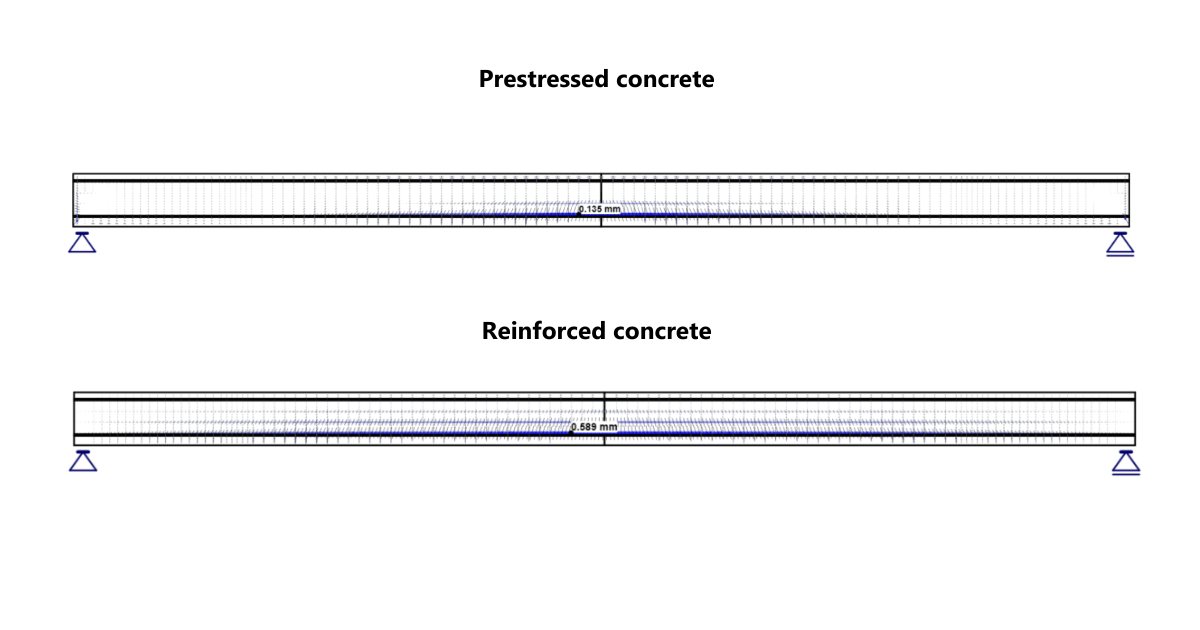
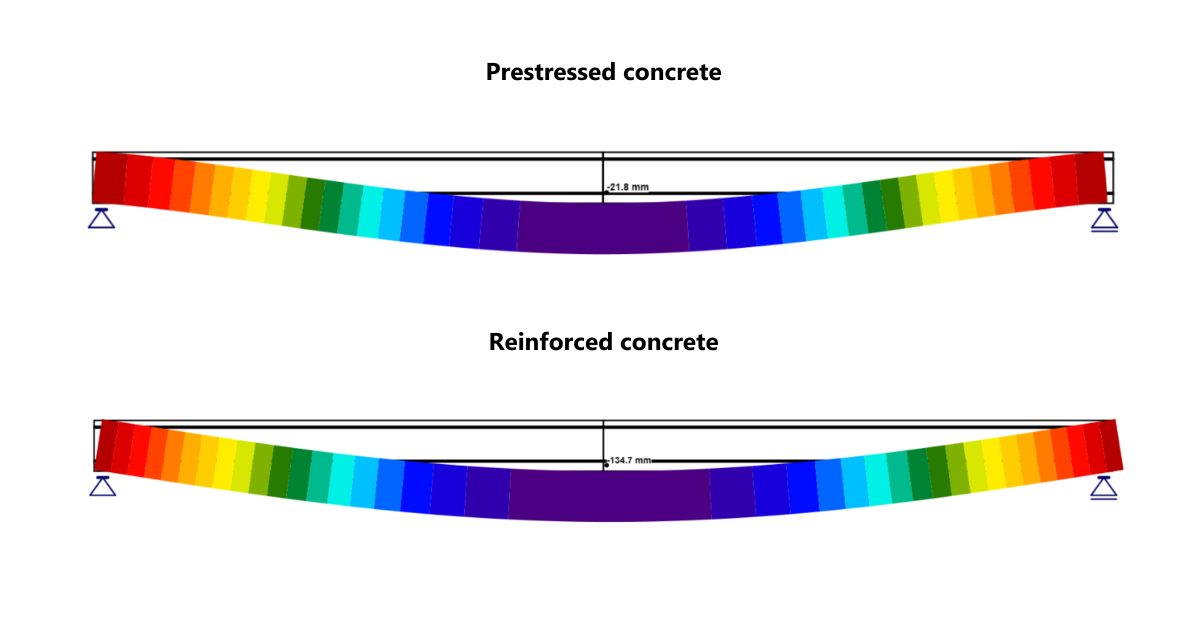
Crack formation, therefore, occurs much later compared to reinforced concrete. Also, crack development is slower for the same load and with smaller crack widths in prestressed concrete. This is important because of the corrosion of the reinforcement. But it is also related to the structure's stiffness. Higher stiffness of prestressed structures leads to smaller deformations.
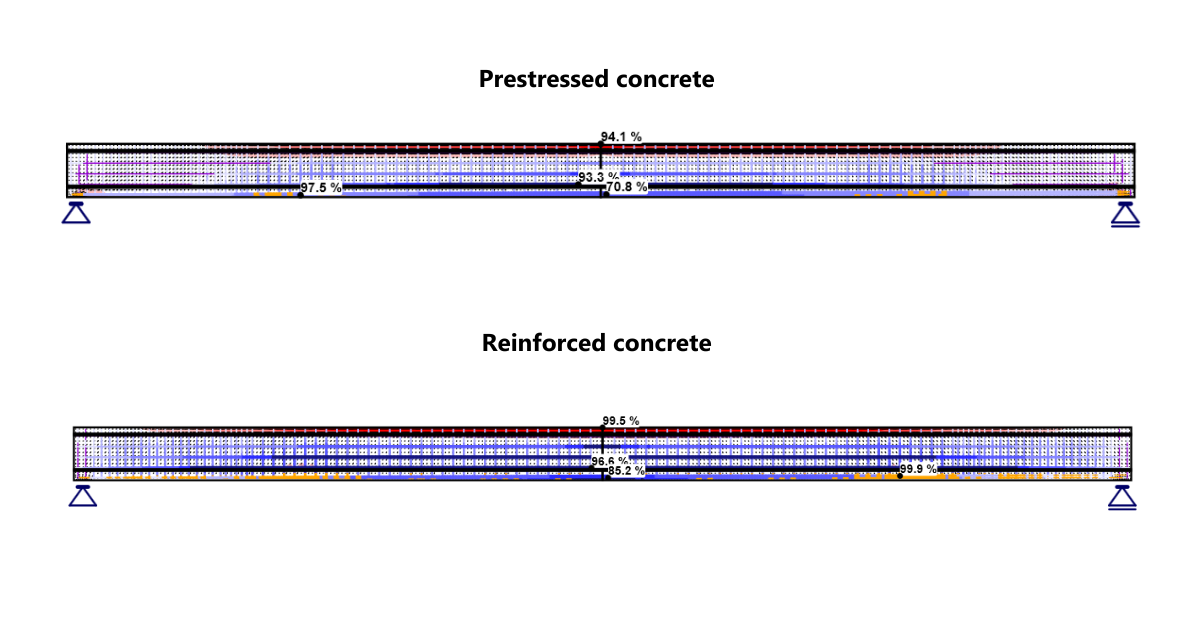
In the figure below, you can see a theoretical comparison of the prestressed and reinforced elements loaded by an external axial tension force. Assume the steel strands and reinforcement are of the same steel with the same yield strength. The amount also corresponds to each other. The only difference is that the strands are tensioned.