Until version 21 was released, there were not many ways to model the steel member connections more realistically than using the IDEA StatiCa application. But still, there were situations where the edge stress values were inaccurate and didn't correspond to the real behavior of the steel members. It wasn't easy to find the correct way to stay focused on the connection design, solve just the area close to the structural node and at the same time take into account the behavior of the rest of the connected members.
But the development team managed to find the way. They have enlarged the model drastically by adding member parts that are not visible but essential for the whole model. These parts are called condensed superelements and they do all the hard work with the behavior improvement.
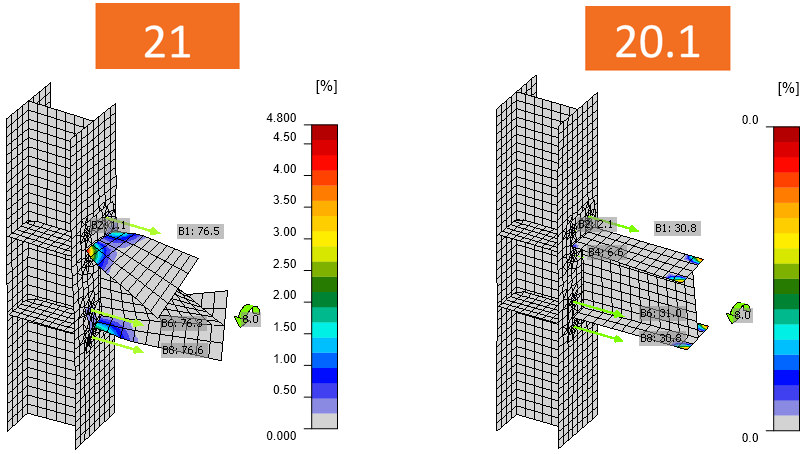
This change secures that the ends of the members visible in the model scene are not the ends at all. In previous versions, the end sections were fixed in their plane and often non-realistic stress peaks could evolve here. Now, they can deplane – they can deform not only within the cross-section plane but also perpendicularly to this plane.
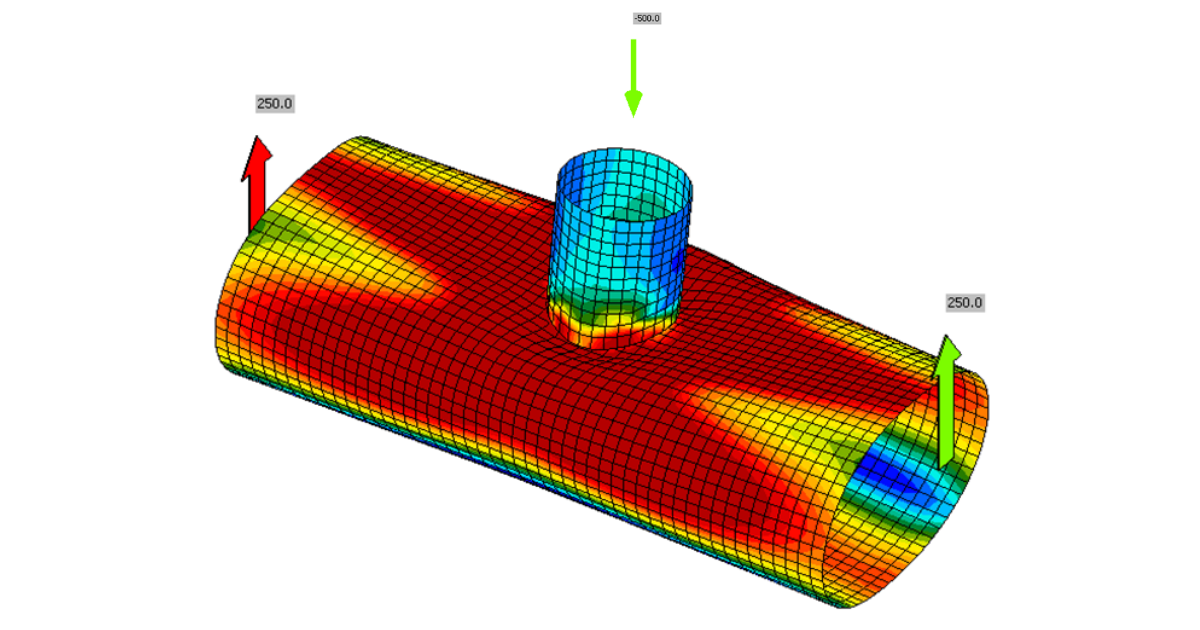
Especially with the hollow section connections, the results show better compliance with experimental tests and design code formulations.
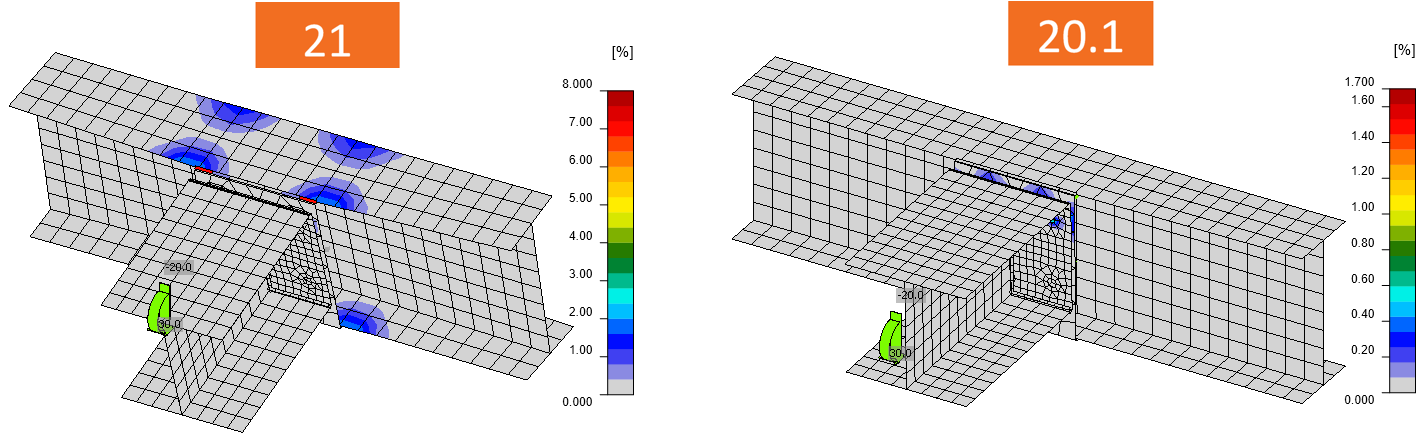
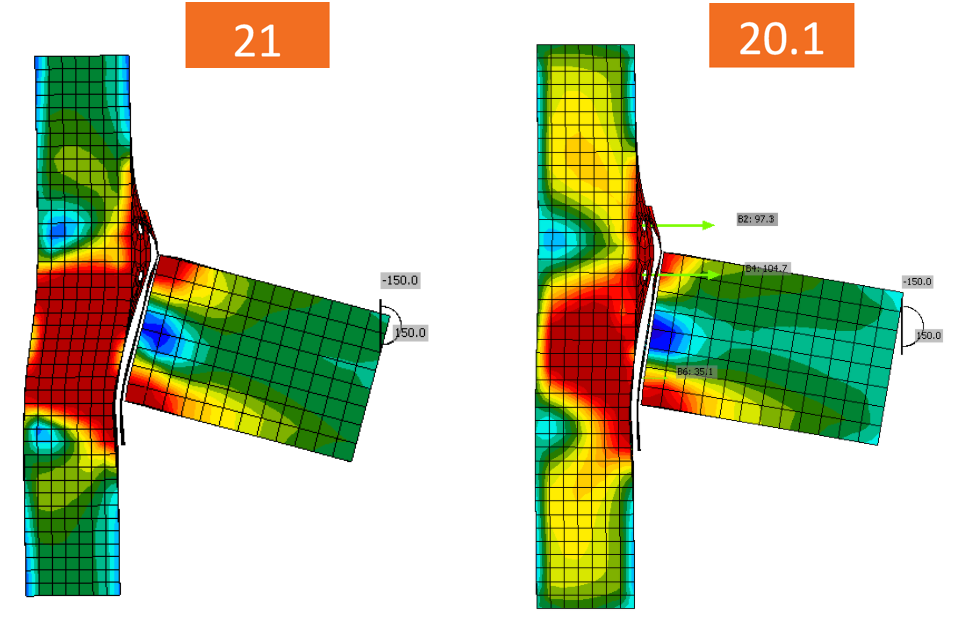
On the other side, this change also means that the stress peaks originally located in the end sections can and will move closer to the connection node. In some cases, the connection elements can be exposed to bigger forces in 'condensed superelements times'.
Three benefits for you
This improvement brings also very convenient side effects – the member stubs simulated by shell elements may now be shorter. The main benefits of this change are: