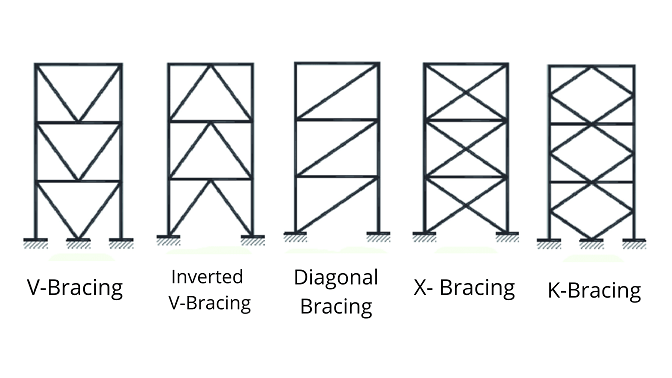
This is the follow-on article to the one taking a look at trusses written by my colleague – Ralph Pullinger. Firstly, the ultimate question is – what is the difference between bracing and truss? There is a little bit of a cross-over on these topics, as you might imagine.
Essentially, a brace is a single member that supports, strengthens, or reinforces something while a truss is usually a whole part of the structure and is formed by many members. In other words, bracing can be a part of a truss structure. Of course, some truss systems necessarily require braces to make them complete – especially in the housing market. Even members within some trusses act as braces.
But where are they found, and is the bracing system used only in steel structures? Not at all. You will usually find them in steel as well as timber-framed buildings. Less so in a concrete frame, unless there are specific reasons, such as a retrofit or strengthening.
Bracing systems used in steel structures
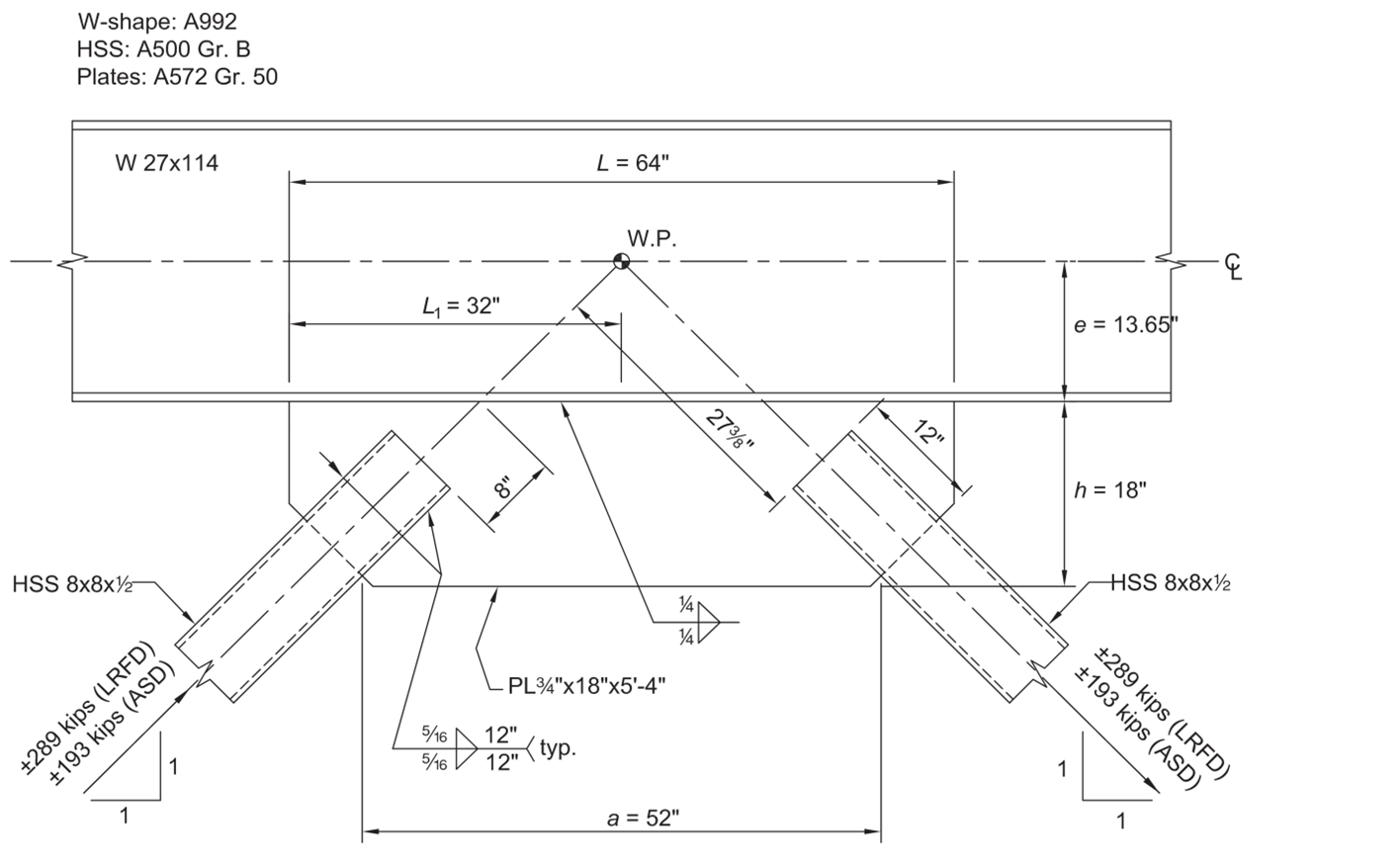
In steel structural systems, a brace is usually defined as taking axial load only (either compression or tension). If a brace was to take a moment, then this would mean that it should be defined as a beam or column. Braces are not restricted to the horizontal or vertical axis. They are also used within inclined planes (such as a roof plane). Braces invariably transfer actions. Predominantly, they aim to transfer horizontal load, such as wind, down to a supporting mechanism – usually foundations.
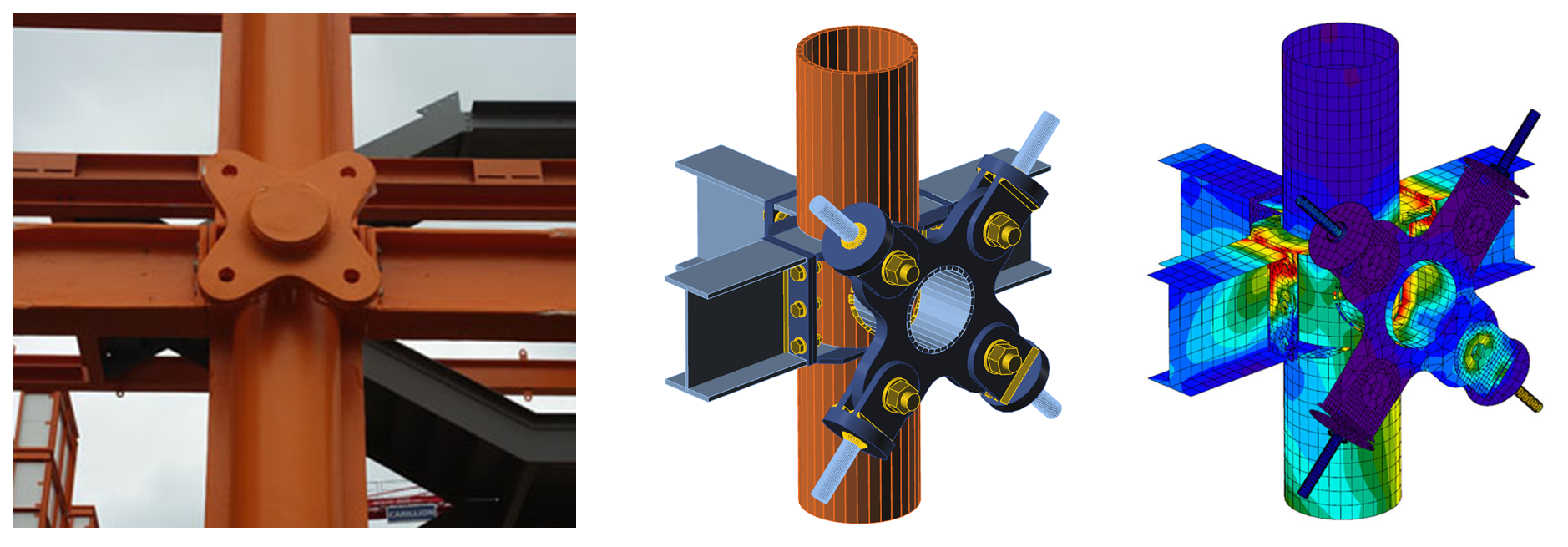
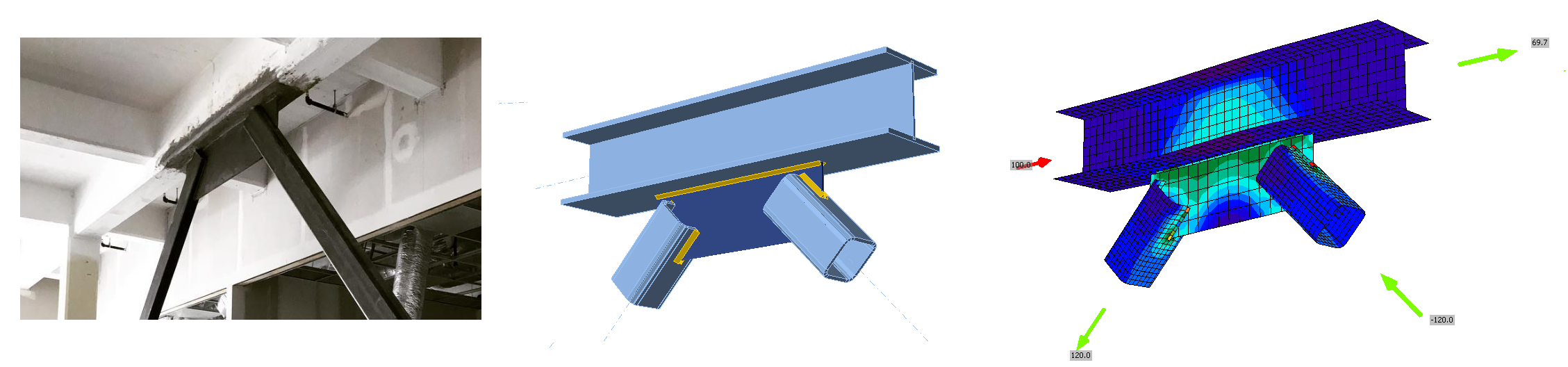
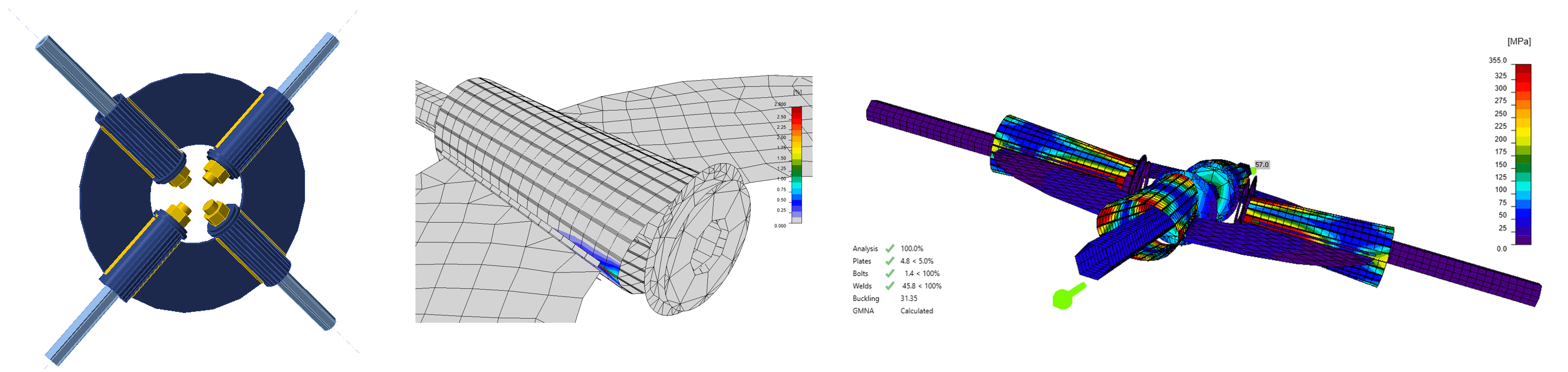
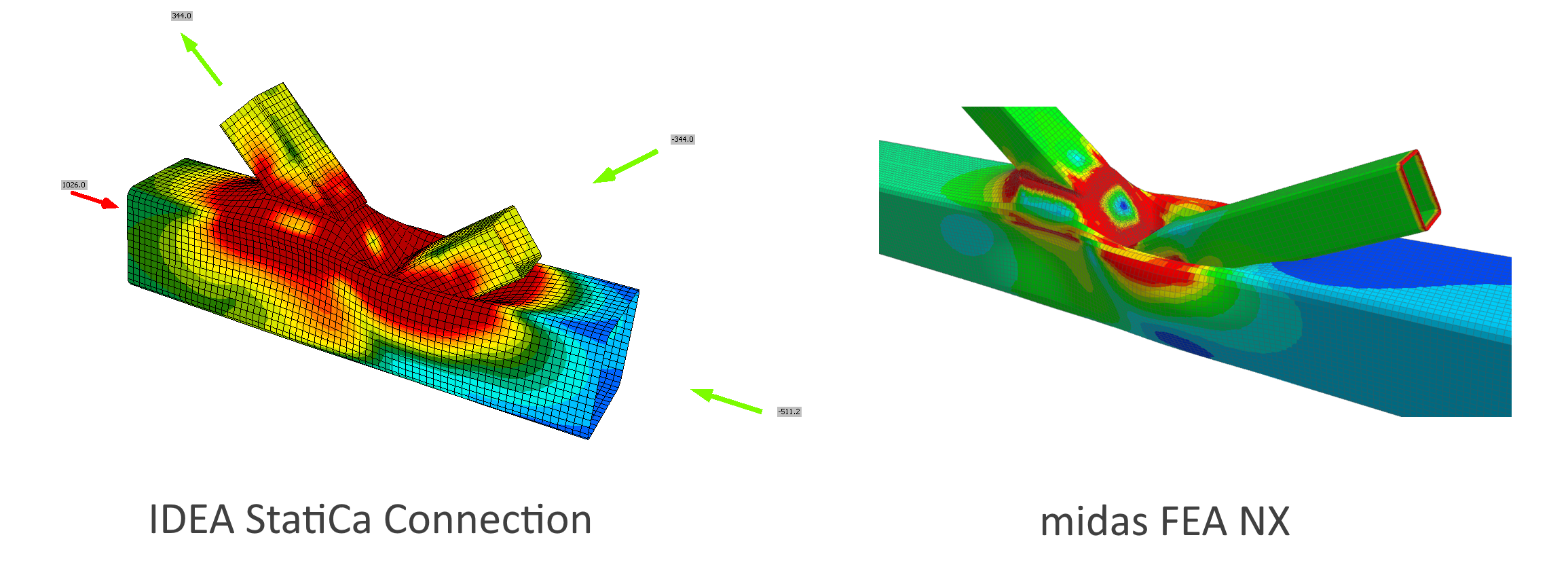
Braces can take the form of wires, strips, angles, rods, hollow sections, and even I sections. They were traditionally always conceived to be hidden, but there are also several examples of them being exposed and enhanced.
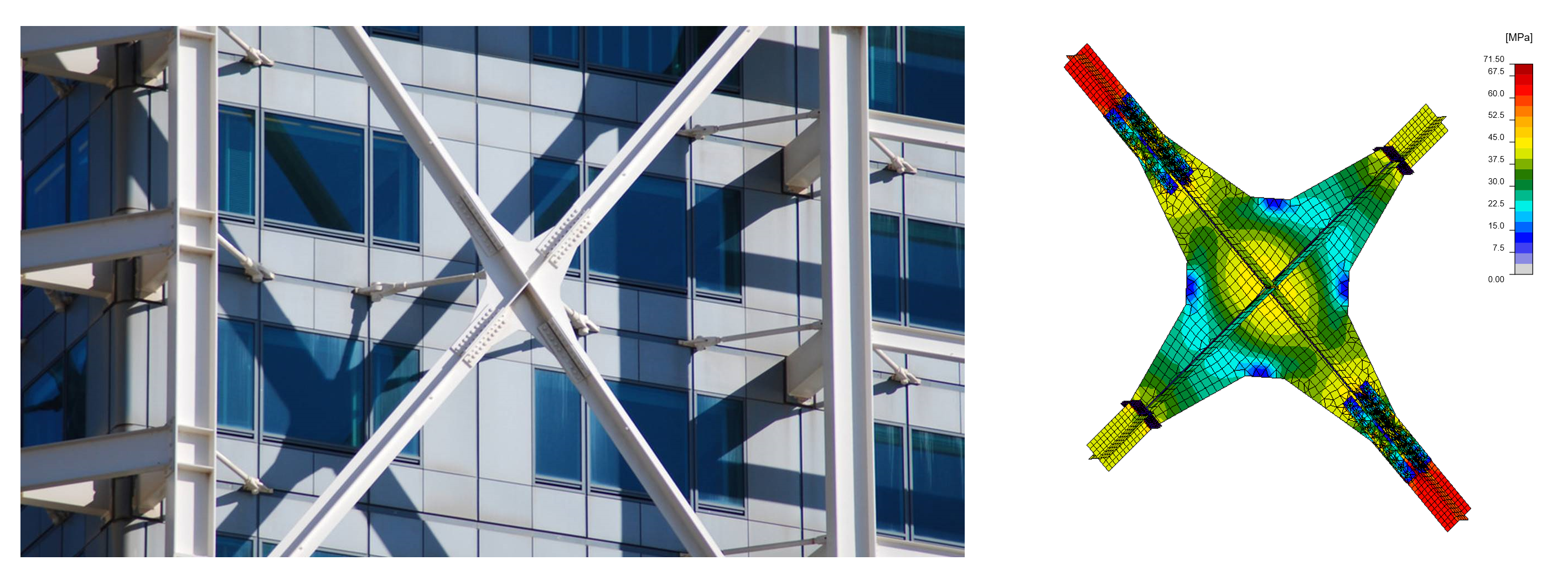
A beautiful example of architectural and structural engineering symbiosis revealing the bracings and its brace connection details on the façade can be found in Spain on the building nowadays known as the Hotel Arts Barcelona. Here, the structural steel connections are almost close enough to touch and are observable by the hotel guests. See how we performed this bracing design calculation in one of our webinars.