Walls can be sorted according to various criteria like material, purpose, or bearing function. If we focus on the material point of view walls can be built from steel, wood, composite, but we will aim at concrete walls, their benefits, and design in practice.
Concrete walls are part of almost all structures like bridges, buildings, or liquid retaining and containment structures. For the preservation of the long-term service of the structure is important to cover crack widths, inadmissible deformations, stability point of view, or rheology effect of the concrete. The mentioning effects should be involved in the internal forces which will be assessed according to codes. Let's check it out, how could this help us with the applications from the family IDEA StatiCa.
Walls in RCS
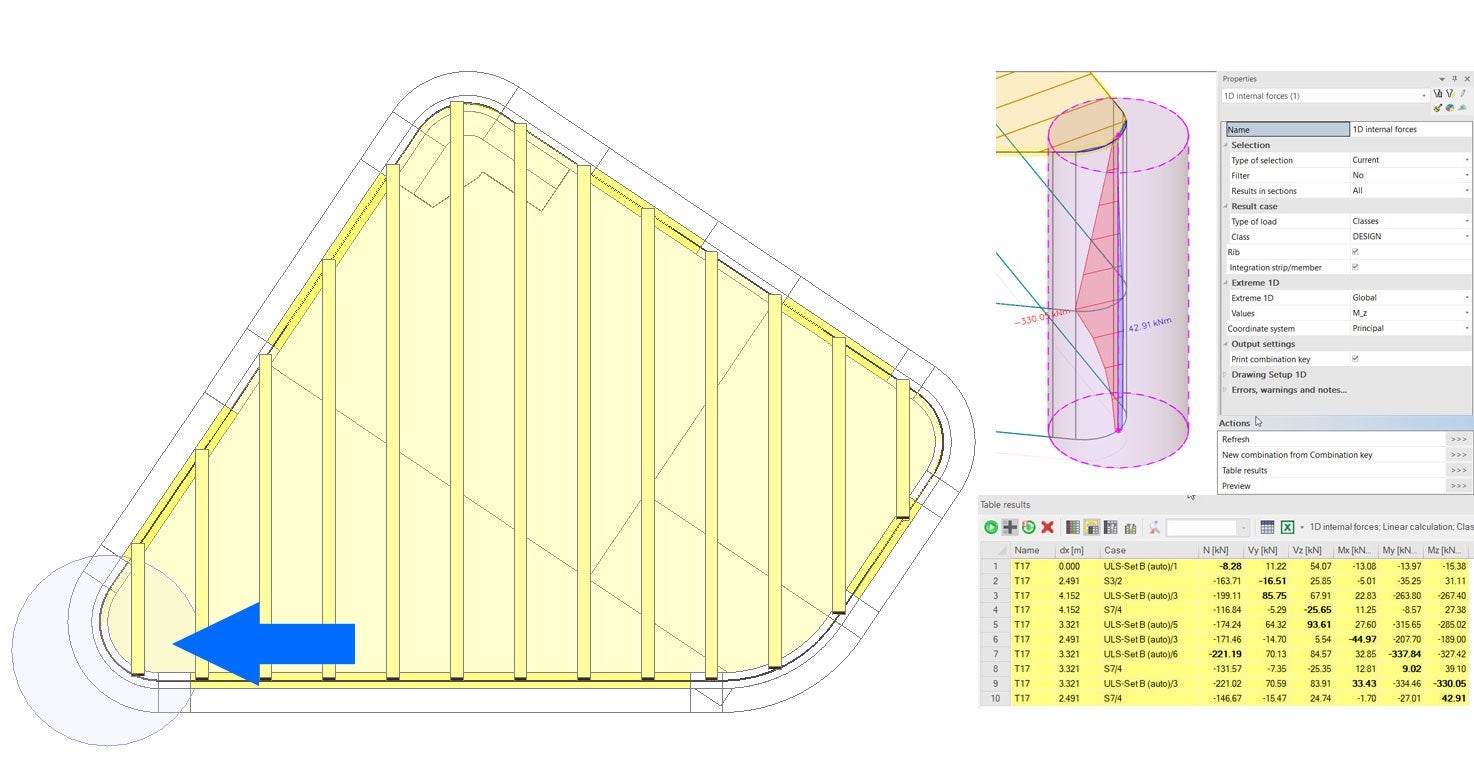
The evolution of the finite element method enables us to calculate any shape of the structure. The main question is then, how to interpret the results of the analysis and do correctly the code-check of shells/ walls.
For frequently used elements or part of the structures, the majority of engineers use their own excel spreadsheets coded by themselves. But, what will happen, if the new project comes and the excel spreadsheet seems insufficient?
At this moment, there are two options available. To have another tool for code-check or start seeking the new software, which does not have the drawbacks of an excel spreadsheet.
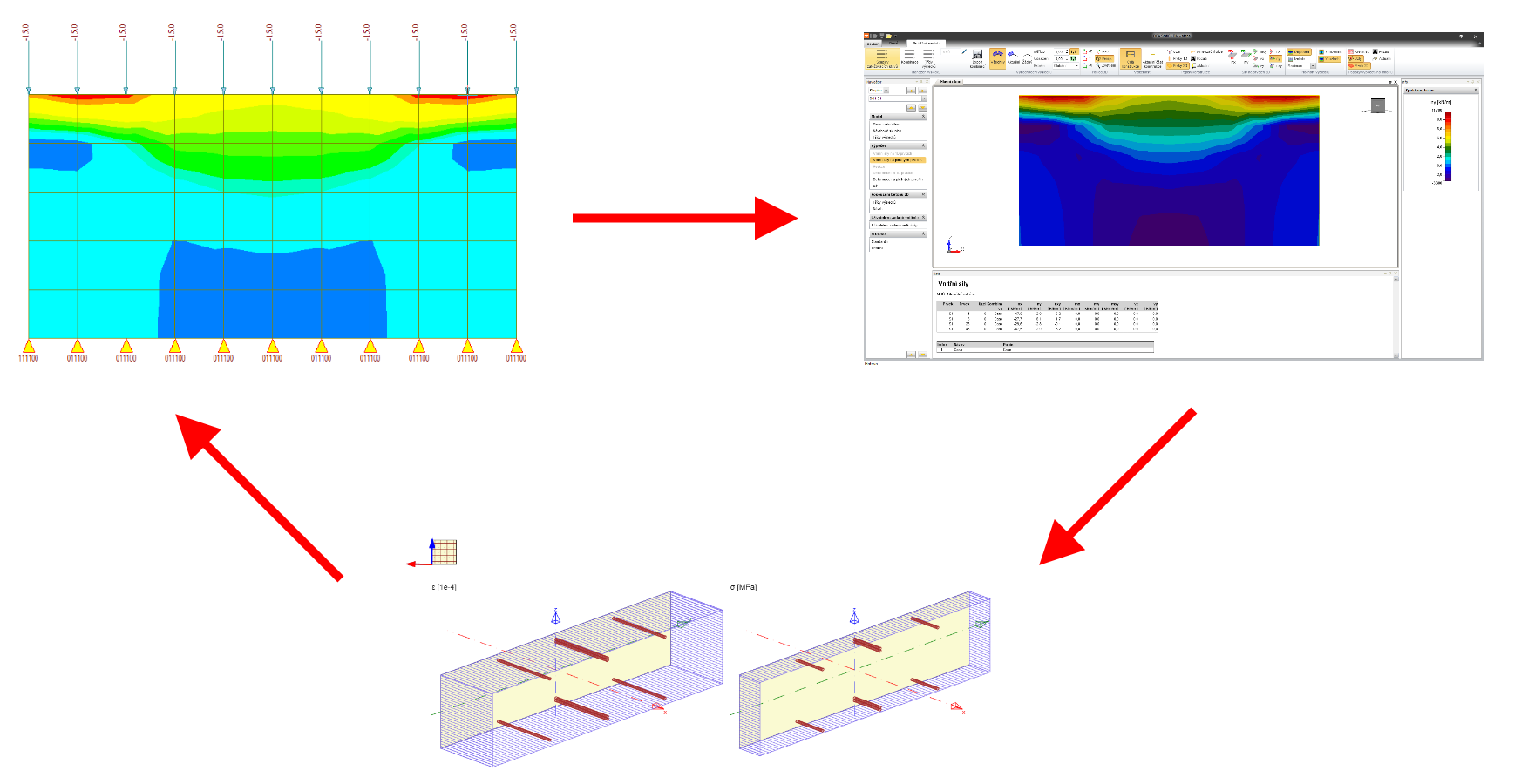
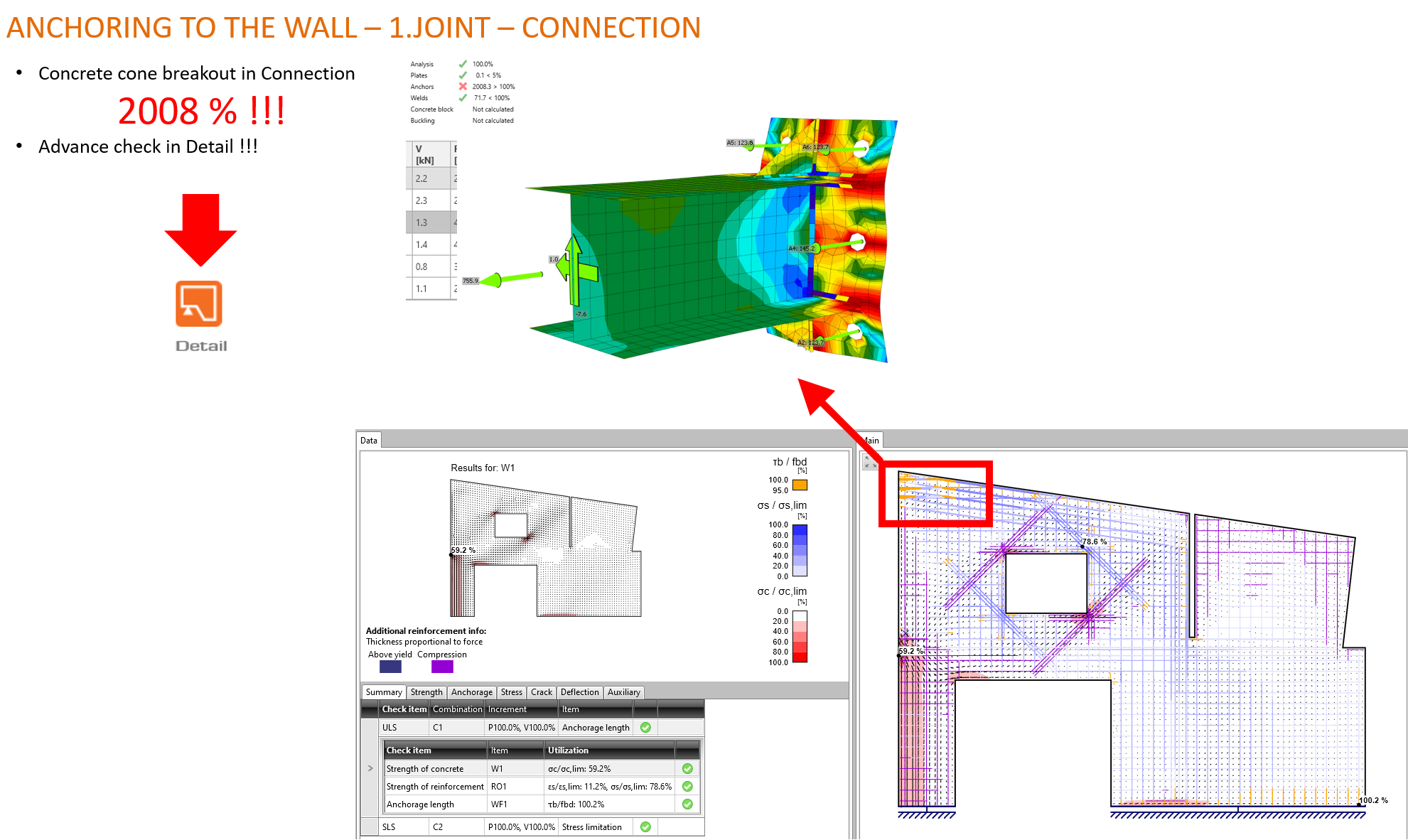
The global analysis has been performed and the internal forces on the wall can be inserted 1:1 to IDEA StatiCa RCS. Internal forces from the global analysis are automatically recalculated according to Baumann's theory to the design internal forces where is considered the effect of shear stress flow in the wall for designing the reinforcement. The final steps are putting the reinforcement, selecting the code, and running the analysis.
The stability code-check ought to be performed in the global FEM analysis to prevent the buckling of the wall. This code-check is not on the menu of the code-checks in IDEA StatiCa RCS. More information about the method and analysis of the walls is in the theoretical background RCS for 2D members.