Comparison of GMNIA results in IDEA Member to an analytical solution
1. The objective
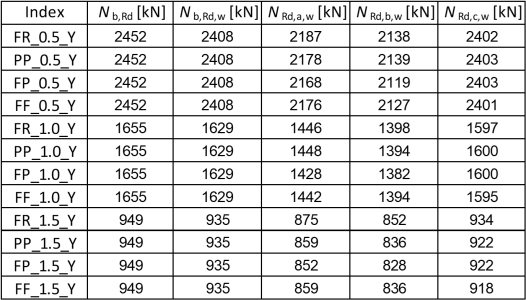
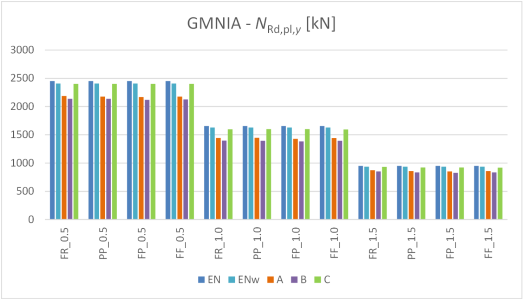
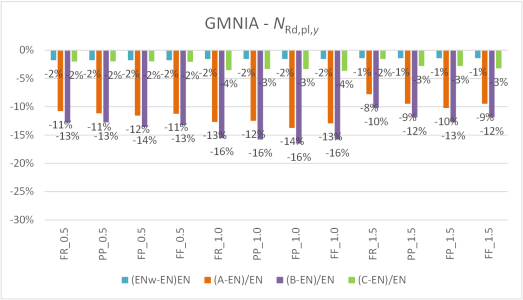
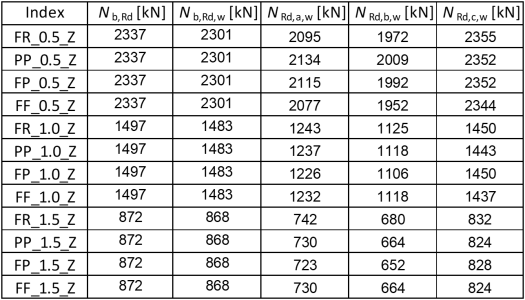
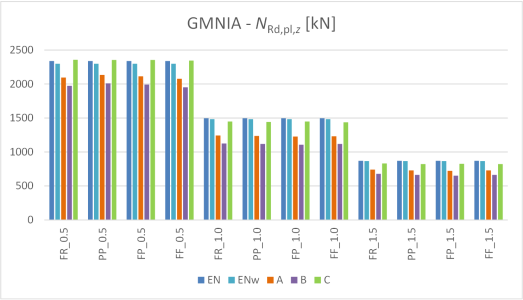
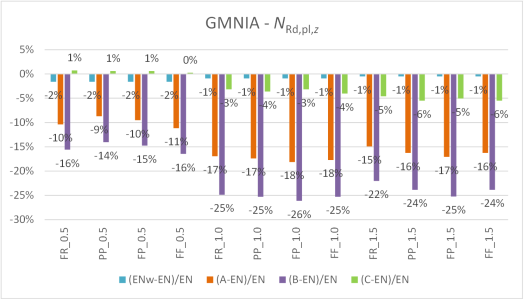
The objective of this article is the verification of the GMNIA (geometrically and materially nonlinear analysis with imperfections) module of the IDEA Member application. The resulting resistances from IDEA Member are compared to EN 1993-1-1 [1] analytical solution for columns in compression.
2. Model description
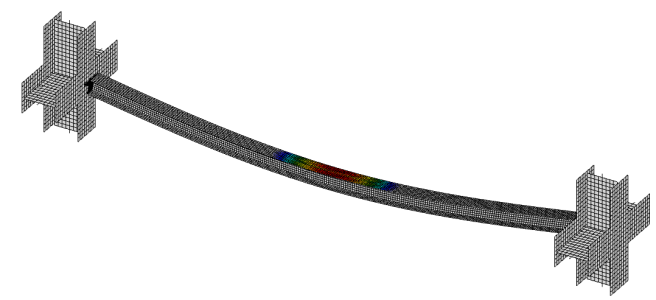
A total of 24 individual cases were analyzed to verify the GMNIA module. All of them share the same cross-section HEB 200 and the same steel grade S 355. Four different boundary conditions were investigated (FF; PP; FP; FF), each with varying values of column relative slenderness (0.5; 1.0; 1.5). Buckling resistance in direction of both principal axes is verified.
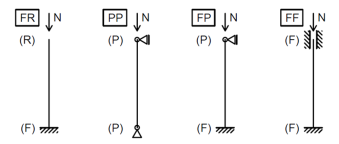
Fig. 1: Various boundary conditions used for verification
All cases are designated in the following manner: “FR_0.5_Y”, where “FR” indicates boundary conditions, “0.5” the relative slenderness, and “Y” the buckling axis.
3. Initial imperfections
Three approaches were used to calculate the initial imperfection of a column in compression. These are designated A, B and C.
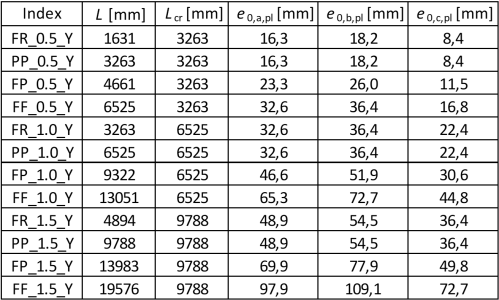
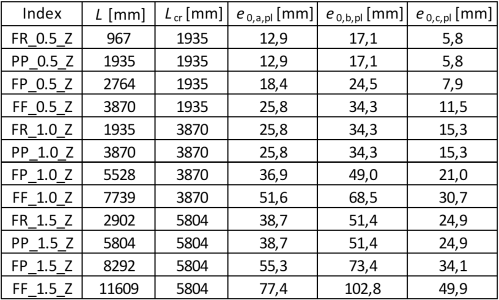
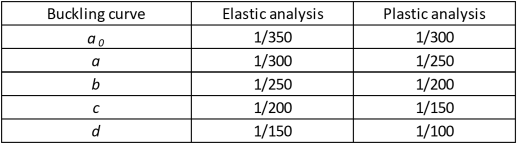
Approach A – according to EN 1993-1-1:2005, Table 5.1
Tab. 1: Design value of initial bow imperfection e0/L for members
Approach B – according to prEN 1993-1-1:2020, second draft [2], Clause 5.3.3.1
\[ \frac{e_0}{L}=\frac{α}{ε} \beta \]
where: